SEOUL — Stepping onto the soil of her birthplace, Michelle Steel, the newly appointed United States Ambassador to the Republic of Korea, arrived in Seoul on July 30 to a reception that perfectly encapsulated the deeply polarized political and social climate of her host nation.
Welcomed by a cacophony of chanting crowds at the airport, the conservative stalwart’s highly anticipated homecoming was immediately framed by soaring diplomatic rhetoric on one side and blistering domestic labor grievances on the other.
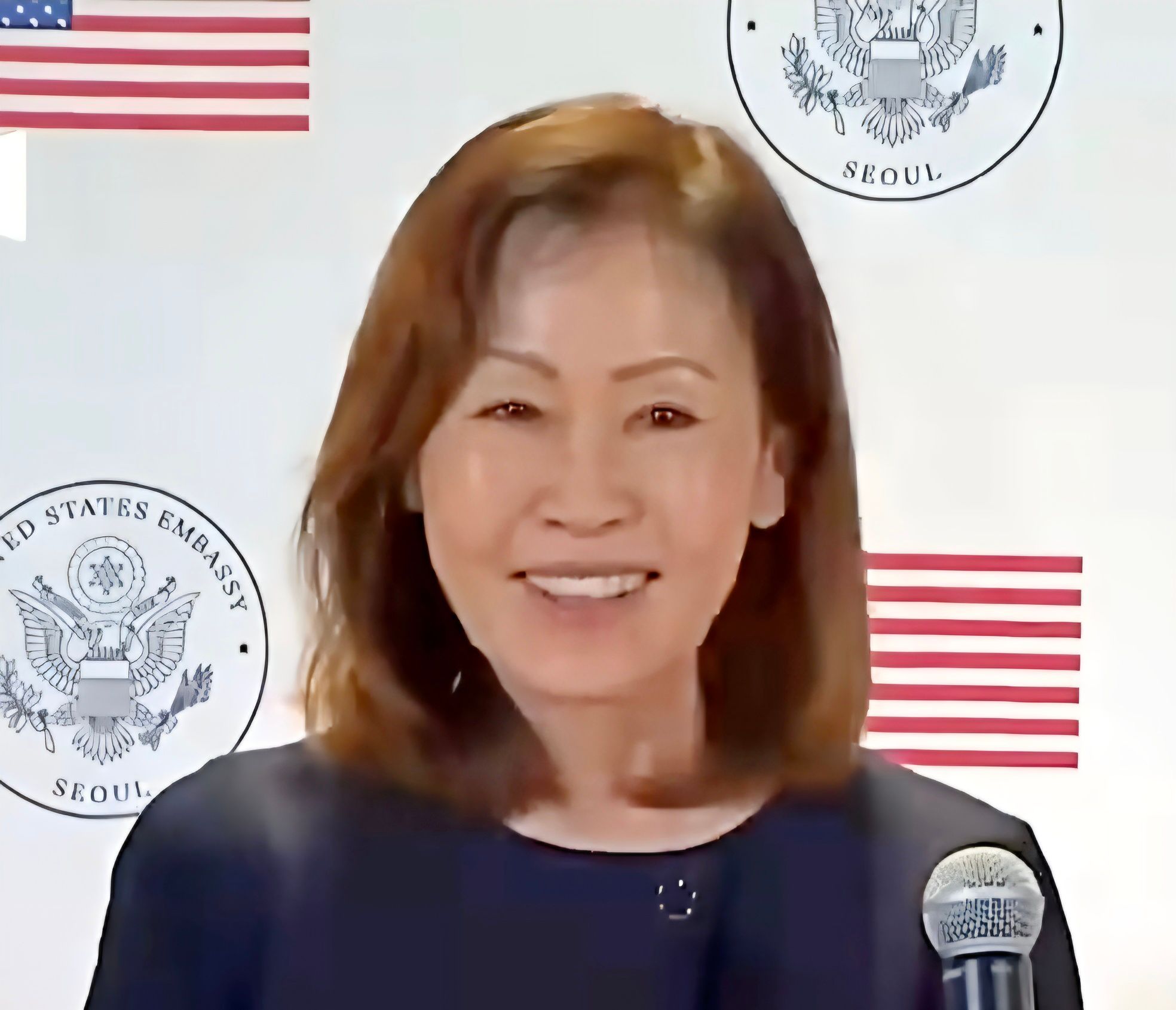
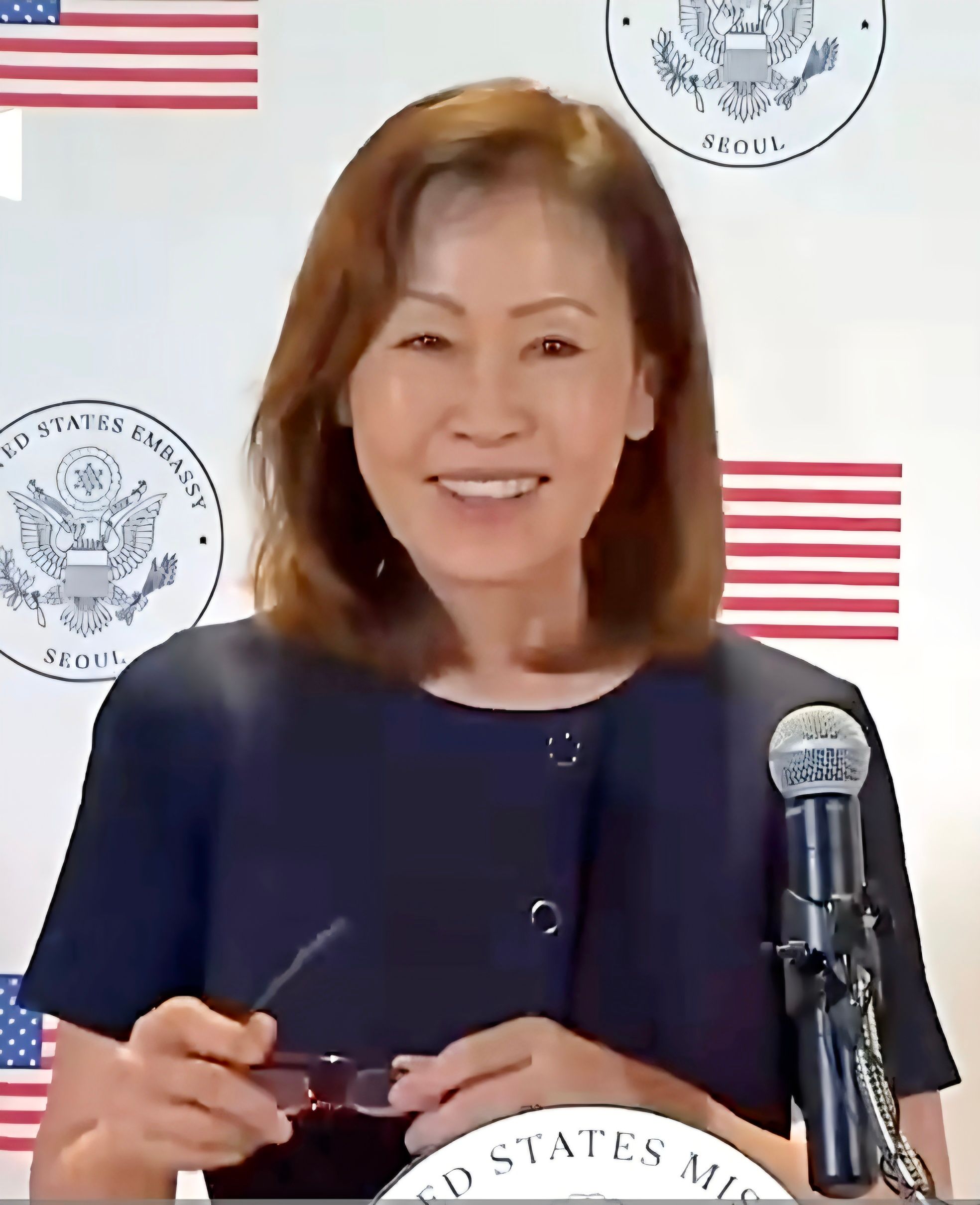
Taking the podium shortly after her arrival, Ambassador Steel skillfully navigated her dual identity, immediately disarming the press and the public with her fluent Korean.
“Hello. I offer my respectful greetings to the Korean people,” Steel announced, her voice carrying the weight of a deeply personal and historic moment.
“I was born in Seoul, but I stand here representing the United States. Standing here again, I am filled with mixed emotions.”
Pivoting seamlessly to English, Steel quickly established the core pillars of her diplomatic mandate, echoing the time-honored tenets of the Washington-Seoul relationship.
She highlighted the enduring resilience of a bilateral partnership that has weathered more than a century of geopolitical storms.
“The United States and the Republic of Korea have stood together for more than 140 years,” she stated.
“Our alliance was forged in war and secured by the blood of those who stood shoulder to shoulder to defend freedom.”
Emphasizing the diplomatic synergy between Washington and Seoul, Steel painted a picture of a robust, modernized coalition.
“It has been proven again and again through unwavering trust; today it stands as one of the world's strongest alliances,” she noted with unwavering conviction.
Tying the historical weight of the alliance to the current leadership, she added, “President Trump and President Lee opened a new chapter in our alliance. I look forward to working with the Republic of Korea to ensure that our ironclad alliance remains a linchpin of peace and security in the region.”
Before concluding her brief introductory appearance without taking questions—understandably citing the exhaustion of a grueling trans-Pacific flight—she offered a forward-looking promise:
“Together, we will carry President Trump's vision for this alliance forward, stronger, safer, and more prosperous than ever before.”
Ending on a warm, personal note in Korean, she added, “Thank you very much for allowing me to stand on this land again,” before playfully telling the press corps, “No Q&A today, so I hope that we have a time soon that, you know, we can meet all of you again. Just landed, so thank you so much.”
However, the warmth of her official remarks stood in stark contrast to the boiling friction outside the venue, where two fiercely opposed groups collided.
On one side, right-wing supporters organized a massive welcoming rally, fervently chanting Ambassador Steel’s name and waving intertwined American and South Korean flags.
For this crowd, her staunch conservative credentials represent a monumental victory for the US-ROK alliance.
“Ambassador Steel is the true guardian of our alliance against North Korean threats!” one supporter passionately shouted through a loudspeaker, ensuring their jubilant voices of support were heard loud and clear.
Yet, directly opposing them across the security barricades was a highly organized, intensely vocal contingent of labor rights activists and delivery workers.
Their anger was directed at multinational corporate practices, furiously accusing the newly minted Ambassador of acting as a political shield for the e-commerce behemoth Coupang.
“Michelle Steel, go back to the US!” the opposition crowd roared in unison, denouncing what they perceived as corporate overreach.
Taking the microphone, a frontline laborer laid bare the personal stakes of the protest, stating, “She didn't come here for diplomacy. She came to defend Coupang and plunder our economic sovereignty.”
These dueling protests underscore a complicated reality: the modern US-ROK relationship is deeply entangled in both traditional security alliances and fierce domestic disputes.
As Ambassador Steel settles into her residence in Seoul, her dramatic first day serves as a stark reminder of the multifaceted challenges ahead.
She will need to manage the high geopolitical expectations of the Trump and Lee administrations while simultaneously navigating the fierce, unforgiving currents of South Korean domestic politics and highly mobilized grassroots movements.
The military and political alliance may be "ironclad," but the battle for public opinion on the ground in Seoul has clearly only just begun.
Echoes of Controversy: From Senate Hearings to the Seoul Embassy
Adding fuel to the domestic fire are the deeply controversial remarks Ambassador Steel made during her US Senate confirmation hearings in May. According to recent news reports, she outlined an aggressive geopolitical agenda, pledging to strictly scrutinize the $350 billion investment agreed upon by the two nations.
She also drew significant scrutiny for emphasizing the need for a powerful trilateral alliance between Washington, Seoul, and Tokyo, effectively revealing an intention to legally and militarily bind South Korea and Japan as a unified front.
Critics further highlight her historically hardline stance against China and North Korea. In a previous interview, she provocatively hinted that South Korea could serve as a frontline defense against China in the event of a Taiwan contingency, suggesting the alarming possibility of mobilizing South Korean forces in broader regional conflicts.
Moreover, her deeply partisan ties in South Korean politics have raised massive alarms. Often described as having "far-right" leanings, Steel maintained a famously close relationship with former President Yoon Suk-yeol—who is currently imprisoned on charges related to the "December 3 insurrection." She actively facilitated his 2023 address to the US Congress and proudly boasted of their close ties, leading civic groups and political observers to question whether her appointment is a calculated maneuver by the Trump administration rather than a diplomatic coincidence.
Who is Michelle Steel?
Born in Seoul in 1955 as Park Eun-joo, Michelle Steel's journey to the highest echelons of US diplomacy is a vivid testament to the Korean-American immigrant experience. After spending part of her youth in Japan, she immigrated to the United States, where she built a formidable political career in California.
A staunch conservative and a formidable fundraiser, Steel served on the California State Board of Equalization and the Orange County Board of Supervisors. In 2020, she made history as one of the first Korean-American women elected to the US House of Representatives.
Known for her robust anti-communist rhetoric, unapologetic pro-business policies, and fierce loyalty to the conservative base, her arrival in Seoul marks a deeply consequential and highly polarizing new chapter in the US-ROK alliance.