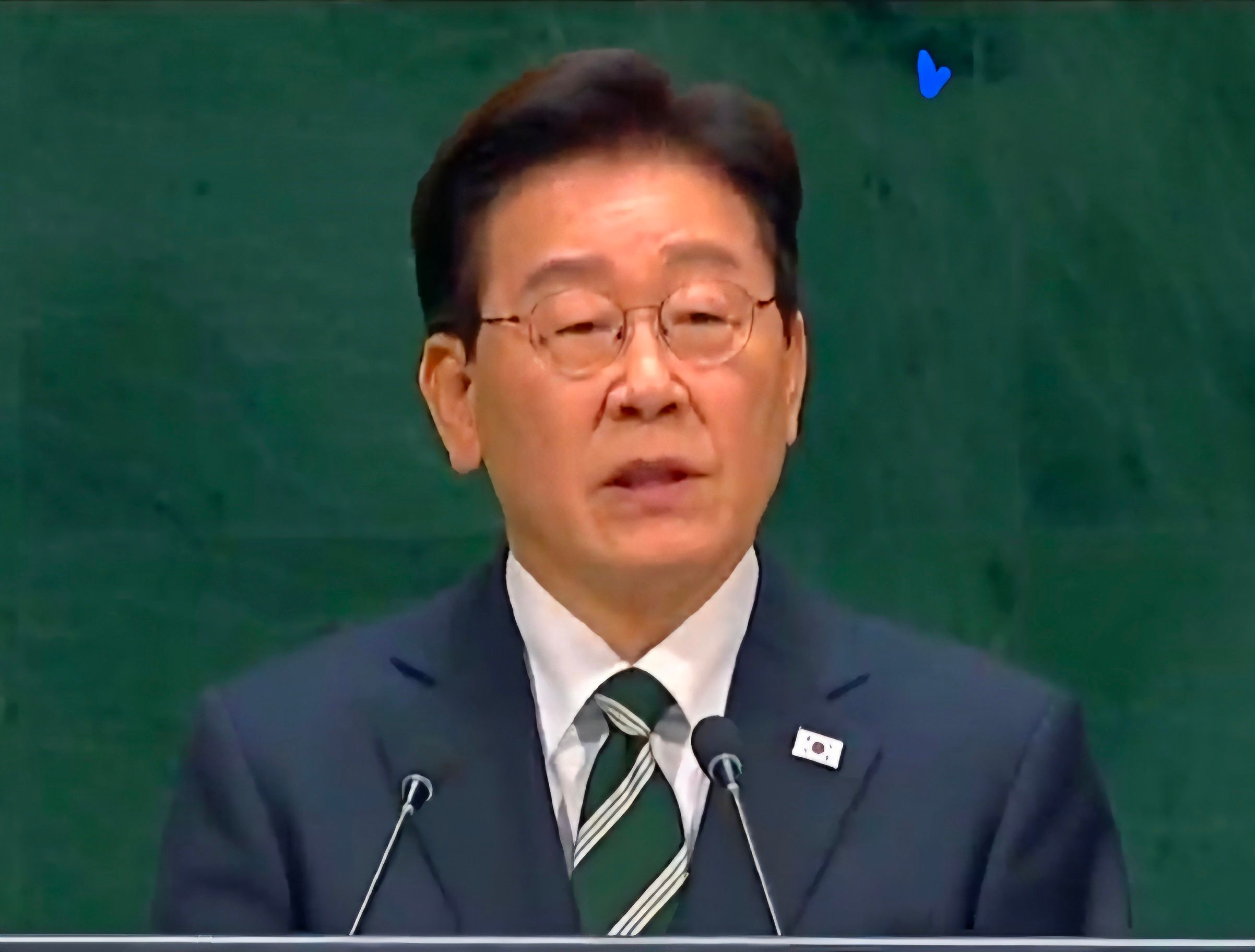
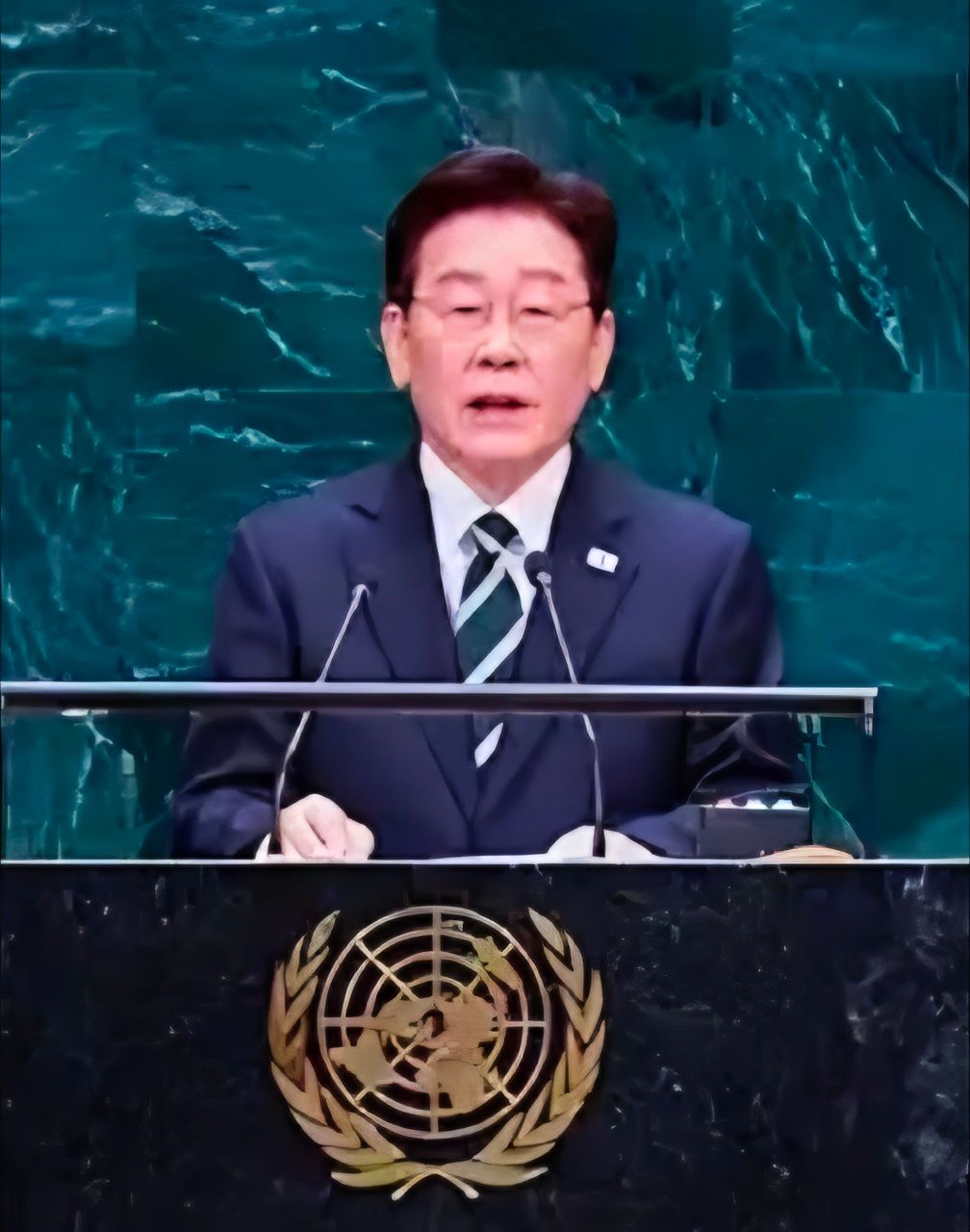
UNITED NATIONS, Sept. 22 — Mounting the iconic green marble rostrum at the 81st United Nations General Assembly on Tuesday, South Korean President Lee Jae-myung confronted an international community deeply fractured by regional conflicts, supply chain chokepoints, and institutional paralysis.
Invoking second UN Secretary-General Dag Hammarskjöld, Lee challenged the assembly by recalling that "the UN was created not to take us to heaven, but to save us from hell," before asking delegates whether today's world body is truly rescuing humanity from war, poverty, and disaster.
Rather than settling for standard diplomatic platitudes, the South Korean leader threw down an expansive foreign policy blueprint dubbed the "K-Initiative," urging capable middle powers to step into the vacuum left by gridlocked multilateral institutions.
"What is needed now and the most realistic method is for countries with the capability and will to supply global public goods to join hands first and expand the space for cooperation," Lee declared, proposing what he called a "Coalition of Constructive Contributors."
Securing Choke Points and the '8-Billion-Person Group Project'
The most immediate operational urgency in Lee’s address centered on maritime bottlenecks threatening global energy security in the Strait of Hormuz and the Red Sea.
"Free and safe navigation through international straits is a right guaranteed by international law and a firm foundation underpinning the global economy," Lee stressed, warning that "attacking merchant vessels and threatening the lives and safety of crews can never be justified for any reason."
He pledged that South Korea would actively utilize established multilateral architectures like the International Energy Agency (IEA) while weaving denser energy partnerships so that regional passage crises do not cascade into global livelihood emergencies.
Turning to climate action, Lee memorably characterized the planetary crisis as "a group project shared by 8 billion human beings," arguing that single-nation efforts are futile and that forcing nations to abandon growth will fail to build consensus.
He pledged to steer South Korea's 2035 Nationally Determined Contributions (NDC) through a home-grown "K-GX" green transformation strategy that converts decarbonization into industrial competitiveness, while looking ahead to co-hosting the 4th UN Ocean Conference with Chile in 2028.
The 'Global AI Basic Society'
Equally striking to delegates was Lee's bold internationalization of his flagship domestic agenda, presenting what he termed a "Global AI Basic Society."
"The standard of the new era we must build is clear: an 'AI Basic Society' where everyone shares in the benefits of technological advancement," Lee said, warning that without proper preparation, the swift pace of the AI revolution will trigger severe inequality and destabilize employment for youth worldwide.
Anchoring AI dividends to the United Nations Sustainable Development Goals (SDGs) and the principle of leaving no one behind, Lee announced plans to build an open platform in South Korea.
"The Republic of Korea dreams of a 'Global AI Basic Society' where no nation and no individual is left behind from the fundamental dividends of AI," Lee said, pledging to establish a "Global AI Hub" that convenes international agencies, multilateral development banks, and tech leaders to deploy algorithms against poverty, healthcare gaps, and climate disasters.
A 'Pacemaker' for Washington-Pyongyang Talks
The sharpest diplomatic scrutiny centered on Lee's proposals for the Korean Peninsula, coming exactly 35 years after both Koreas were jointly admitted to the United Nations.
Lee unveiled a three-part blueprint for peaceful coexistence: inclusive coexistence based on mutual institutional respect, stable coexistence built on restored communication channels that remove the necessity of conflict, and responsible coexistence contributing to global non-proliferation.
Seizing on recent diplomatic signals from Washington, Lee positioned South Korea as an active facilitator to break the long-standing nuclear impasse.
"Fortunately, recent decisions by President Trump are painstakingly opening a window for change," Lee observed, adding that "the Republic of Korea will lay the groundwork so that long-stalled North Korea-US talks can resume quickly and evolve into inter-party dialogue to end the war on the Korean Peninsula and transition to a peace regime."
He laid out a pragmatic, phased roadmap: halting the qualitative advance of North Korea's nuclear and missile arsenal first, securing reductions in the medium term, and achieving a nuclear-free peninsula over the long horizon.
"Our government will do everything in its power as a stakeholder and pacemaker for peace on the Korean Peninsula to open and maintain the path to dialogue," Lee said, calling on the UN Security Council to back the initiative with constructive action.
Demanding a More Accountable UN
Lee concluded with an unsparing call for institutional reform within the United Nations itself, endorsing the "UN 80 Initiative" to slash organizational redundancy and demanding that the Security Council operate in a more democratic and responsive manner.
"Agreements reached in conference halls must lead to changes on the ground, and global citizens must be able to feel those achievements in their daily lives," Lee asserted.
"The ultimate reason for the UN's existence will only be proven when children's laughter returns to where gunfire has ceased, when youth enjoy opportunities for learning and work, and when anyone anywhere can choose the life they desire," he finished, drawing sustained applause across the hall.
In laying out a daring agenda that spans maritime security coalitions, AI redistribution, and a high-stakes bid to restart Pyongyang-Washington diplomacy, President Lee made clear that Seoul is ready to shoulder the risks of leadership.
TAP HERE for an English-Korean bilingual version. [영한대역으로 보려면 여기를 누르세요]