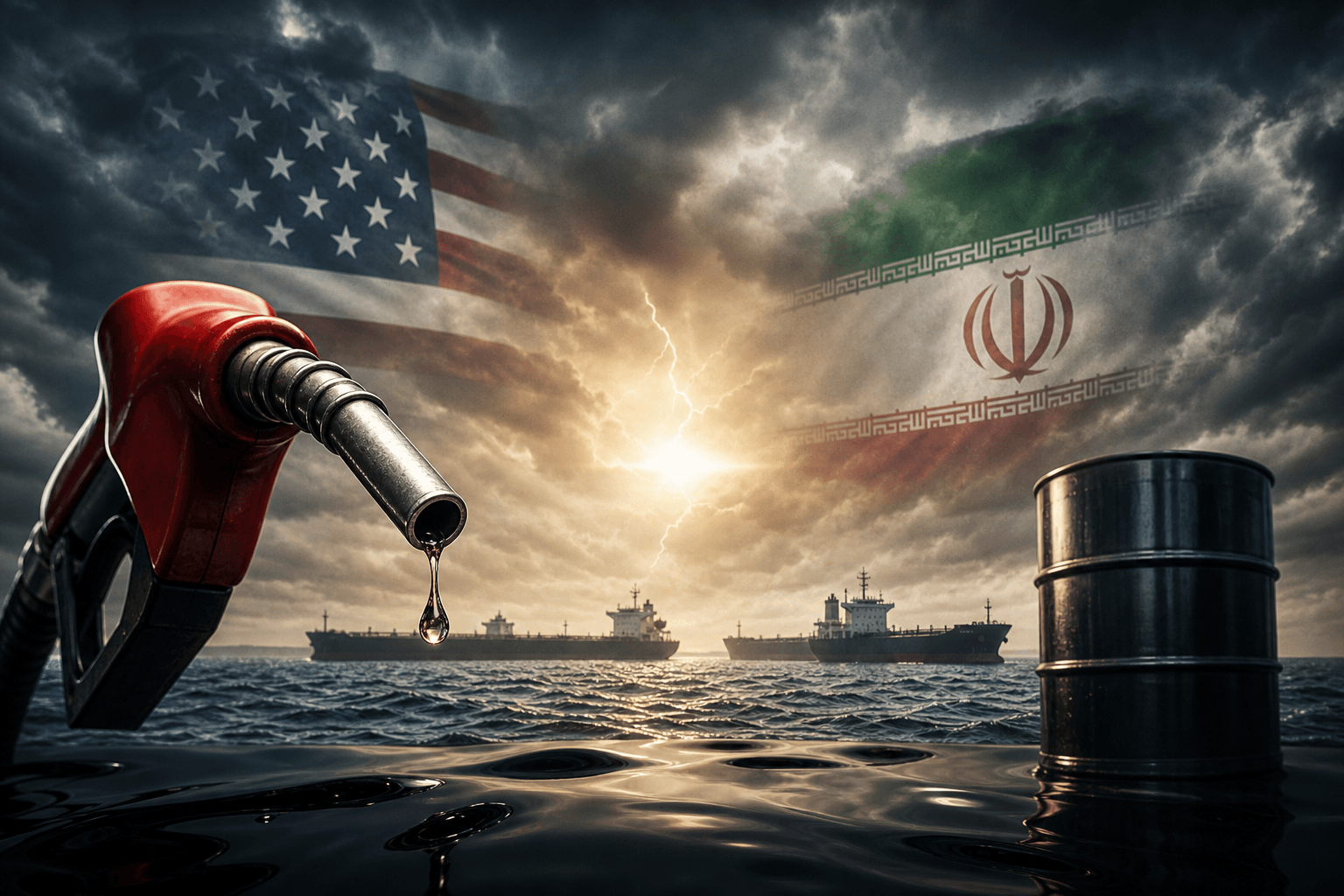
Renewed doubts over a U.S.-Iran ceasefire have pushed oil prices higher and revived concerns that consumers could face more expensive gasoline if fighting further disrupts shipping through the Strait of Hormuz. President Donald Trump said the ceasefire with Iran was over after Iranian attacks on commercial ships in the strait and on American military sites in other Gulf countries. U.S. benchmark crude rose to $75.80 a barrel on Wednesday, its highest level in more than two weeks, while Brent crude climbed to nearly $79. AAA said the U.S. national average price for regular gasoline edged up to $3.80 a gallon Wednesday from $3.79 the day before, though it remained below the month-ago average of $4.16.
Energy analysts said the market reaction reflected the strategic importance of the Strait of Hormuz, a major transit route for global oil flows. Jorge Leon of Rystad Energy said tanker traffic through the strait had essentially stopped, describing that as a sign of rising risk perception. The International Maritime Organization's secretary-general, Arsenio Dominguez, urged shipowners and relevant authorities not to expose seafarers to unnecessary danger while the region remained volatile. Data from Kpler showed some traffic still moved through the strait on Tuesday, though it was unclear whether those crossings occurred before or after the latest strikes, and some vessels were not broadcasting their locations.
Gasoline prices have not moved in lockstep with crude because refiners buy oil in advance and fuel must move through pipelines and trucking networks before reaching service stations. Gas station owners may also temporarily absorb part of higher oil costs to stay competitive. Even so, some market participants expect elevated fuel prices to persist. Traders on Kalshi were assigning a 75% chance that gasoline prices on Nov. 3 would be above $3.50 per gallon and a 39% chance they would top $3.75, both higher than before the latest escalation. At the same time, those traders did not appear to expect a return to the year's peak levels, putting the odds of prices rising above $4.60 this year at 43%.
A separate line of scrutiny has focused less on geopolitics and more on whether retail prices are falling as quickly as crude costs would suggest. The Justice Department and Federal Trade Commission have urged state attorneys general to step up investigations into gasoline pricing practices, including possible price-fixing, market allocation and deceptive conduct, as fuel prices remain elevated in some regions despite lower crude costs. Federal officials have not announced new enforcement actions or named specific companies, but said they are encouraging coordination with states. Those concerns stand alongside the market-based view that instability involving Iran and the Strait of Hormuz could keep upward pressure on oil and gasoline prices even without a return to earlier highs.