Click here to view the 2027 budget address.
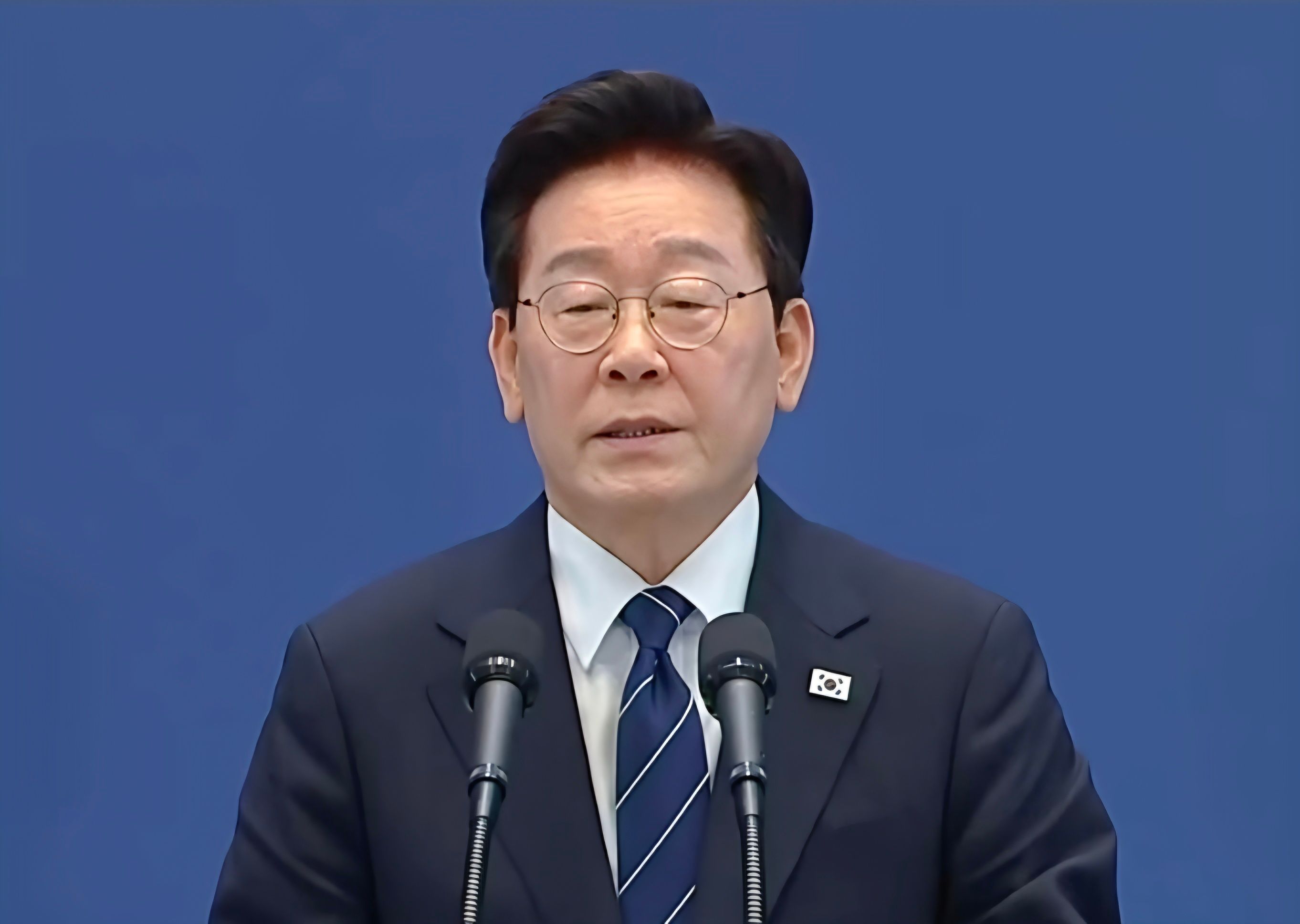
SEOUL — President Lee Jae-myung unveiled a record-breaking 820.9 trillion won national budget proposal for 2027 during an address to the National Assembly on Monday, pledging bold investments in social welfare, artificial intelligence and regional development, even as the parliamentary session underscored the nation's deep political polarization.
Presenting the spending plan—which marks a 12.8 percent increase from this year, the steepest growth rate and largest fiscal outlay in South Korea's history—Lee defined the proposal as a "future-preempting and growth-diffusing budget" designed to transition the nation from polarized "K-shaped growth" to inclusive "growth for all."
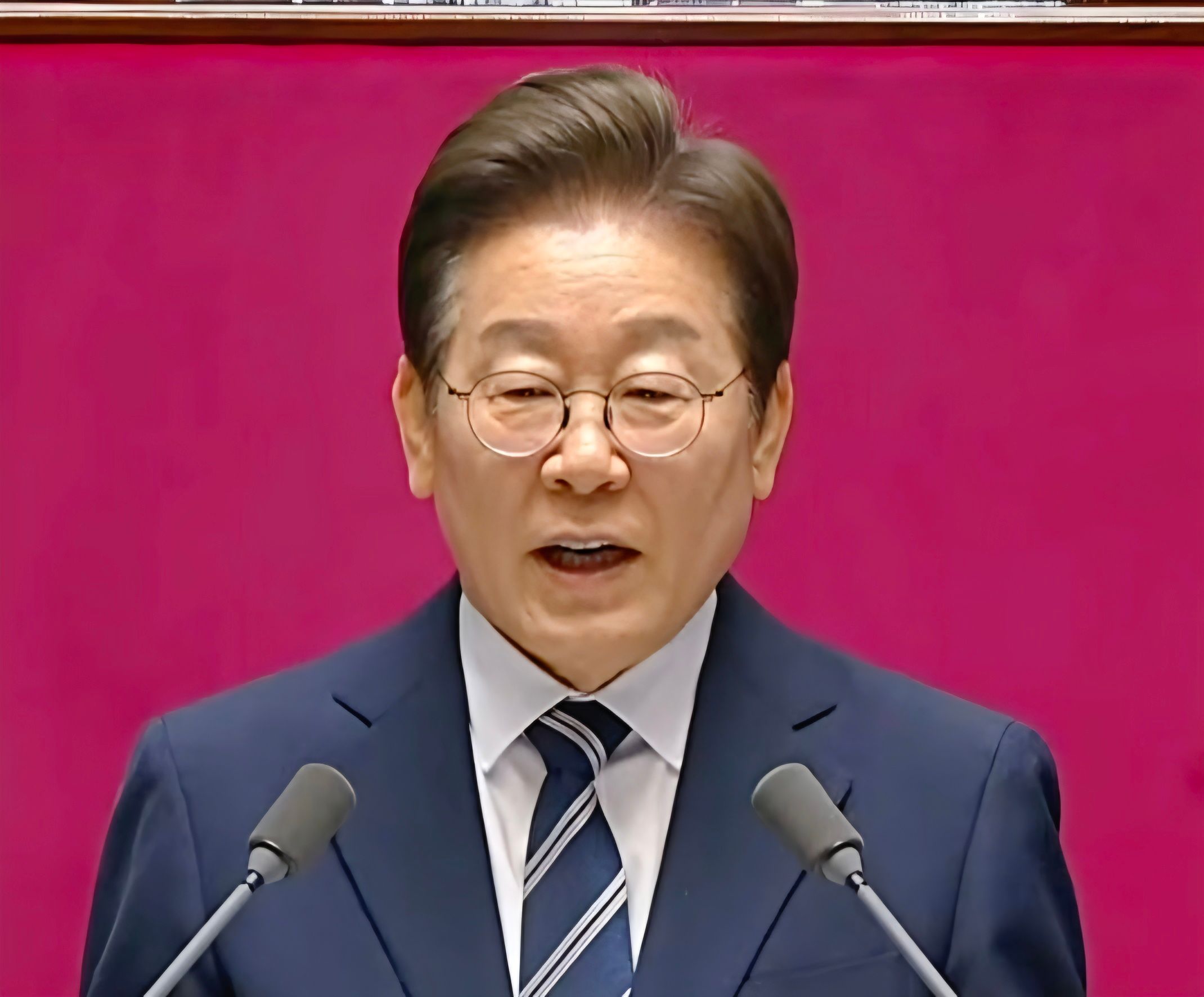
Yet the 27-minute speech played out against a sharply divided chamber. Lawmakers from the ruling Democratic Party of Korea (DPK) interrupted the president with applause 30 times, whereas members of the main opposition People Power Party (PPP) greeted him with protest placards and jeers.
Heckling, Some Walkouts and a Lone Handshake
Tensions were evident even before Lee entered the main chamber. PPP lawmakers gathered at the National Assembly Rotunda Hall as the president arrived, chanting slogans condemning the budget as "pork-barrel spending that ignores national debt" and accusing the administration and ruling party of "intimidating the judiciary and pushing impeachments to cancel trials."
Smiling faintly, Lee bowed lightly toward the protesting opposition lawmakers before moving to a pre-speech reception with National Assembly Speaker Cho Jung-sik, reportedly asking the speaker during the walk, "What is it that makes them act like that?"
Entering the plenary chamber at 10:02 a.m. in a navy suit and a striped navy-and-gray tie, Lee was welcomed by two rows of DPK lawmakers lining the aisle. He shook hands sequentially with former DPK Leader Chung Cheong-rae, Floor Leader Han Byung-do, current Party Leader Kim Min-seok, and Rep. Kim Seung-won, who previously withdrew as a justice minister nominee. Meanwhile, PPP lawmakers remained seated in silence, having taped signs reading "Stop Intimidating the Judiciary! Protect Trial Independence!" and "1,400 Trillion Won National Debt + 162 Trillion Won Future Debt Fund" onto the backs of their laptops.
A direct clash erupted mid-speech when Lee defended his administration's fiscal soundness. Noting that the managed fiscal balance deficit would improve from 3.9 percent of gross domestic product (GDP) this year to 0.1 percent next year—the healthiest level in 20 years—and that the national debt-to-GDP ratio would drop from 51.6 percent to 48.3 percent, Lee departed from his prepared text.
"Although we are issuing treasury bonds, almost all of them will be used to repay existing bonds, meaning there is virtually no net increase in national debt," Lee said.
At that remark, PPP Rep. Im Lee-ja and several opposition colleagues let out audible sighs of disbelief, shouting "Aigo" and accusing him of lying. Lee paused his address and looked toward the opposition benches.
"If you have something to say, please go ahead. I will listen a bit more before continuing," Lee said, drawing applause from the ruling party.
PPP Rep. Kim Mi-ae immediately shouted back from the floor, "Resume the trials!"
"I am in the middle of speaking, and you keep interrupting," Lee replied. "I would appreciate it if you gave specific opinions. May I continue now?" After DPK lawmakers shouted "Yes" in unison, Lee resumed reading his address, while PPP Reps. Lee Chul-gyu, Kang Min-kuk, Kim Jang-kyom and Kim Jong-yang walked out of the chamber in protest.
When the speech concluded, lawmakers from the DPK and minor progressive parties—including the Rebuilding Korea Party, Progressive Party, Basic Income Party and Social Democratic Party—stood in applause. In contrast, every PPP lawmaker exited the hall except for six-term Rep. Jo Kyoung-tae. When Lee walked toward the empty opposition benches and smiled awkwardly, some DPK lawmakers shouted that the opposition had "no manners."
Jo stood up with a bright expression to shake Lee's hand and exchange brief remarks. Explaining his decision in a subsequent media interview, Jo said, "Regardless of ruling or opposition party lines, it is only natural to show courtesy to the head of state. When the Democratic Party boycotted former President Park Geun-hye's budget speech while I was a member of that party, I was the only one who stood up and applauded then as well."
Lee lingered in the chamber for more than 10 minutes after his speech, shaking hands and obliging selfie requests from a long line of DPK lawmakers, prompting Speaker Cho to jokingly remark, "Mr. President, you have to leave so I can adjourn the session." Lee finally exited at 10:42 a.m., 40 minutes after entering the floor.
Macroeconomic Rebound and Fiscal Restructuring
In his address, Lee highlighted the economic milestones achieved over the 17 months since his "People's Sovereignty Government" took office. Crediting two supplementary budgets and an expansionary main budget for shielding the public from the fallout of the Middle East war, Lee declared that the South Korean economy is on a "clear V-shaped recovery path."
According to the president, the economy grew 3.8 percent in the first half of 2026 alone, with potential growth projected to rebound for two consecutive years for the first time in four decades. Bolstered by semiconductors and other flagship industries, annual exports are within reach of the $1 trillion mark, while per capita gross national income (GNI) is set to surpass $40,000—making South Korea the sixth nation in the world with a population of over 50 million to enter the so-called "50-40 Club."
Lee also announced that South Korea will finish repaying the public bailout funds injected during the 1998 Asian financial crisis next year, having paid back 97.2 trillion won over 25 years since 2003 to officially close the chapter on the IMF crisis after 30 years.
To fund the 820.9 trillion won budget without bloating national debt, the government conducted a zero-base review of all fiscal projects, executing a record 107.2 trillion won spending restructuring across 6,476 projects, including the outright abolition of some 2,100 initiatives. Furthermore, 17 tax expenditure items worth 1.9 trillion won—such as marriage and childbirth tax credits that previously failed to benefit low-income brackets—were converted into direct fiscal spending.
The government will also establish a new "Future Response Fund" utilizing excess tax revenues to invest in youth, future growth engines, regional development and talent cultivation, while acting as a fiscal buffer during economic downturns.
Automatic Welfare, Youth Assets and Regional Decentralization
To bridge social disparities, the 2027 budget introduces sweeping changes to welfare delivery and household support:
• Automatic Welfare System: Moving away from the traditional application-based system, major social security benefits will be paid out automatically to eligible citizens starting next year, supported by a public AI agent under the "AI for All" initiative.
• Expanded Safety Net: The standard median income—used to determine eligibility for roughly 60 welfare programs—will be raised by a record 6.7 percent, lifting the maximum monthly livelihood benefit for a four-person household to 2,218,000 won. Every municipality nationwide will operate "Just Give Centers" offering basic groceries to anyone in need, while households showing signs of crisis will receive 300,000 won in emergency living support on-site without screening.
• Seniors, Disabled Citizens and Small Businesses: Low-income seniors will receive up to an additional 30,000 won per month in basic pension, and a halved couple's deduction rate will raise combined monthly payouts for low-income elderly couples from 560,000 won to up to 684,000 won. Senior jobs will expand by 30,000 to 1.18 million. For people with severe disabilities, the family support obligation criterion will be abolished, expanding disability pension eligibility from 350,000 to 610,000 recipients. For small business owners, 500 billion won is allocated to restructure 5.4 trillion won in long-term overdue COVID-19 debts, alongside the issuance of 25.6 trillion won in local gift certificates and 4.5 trillion won in Onnuri vouchers. Self-employed workers and freelancers not covered by employment insurance will become eligible for a new 1.5 million won parental allowance.
• Youth and Family Packages: The youth budget will surge 53.5 percent to 43.3 trillion won. All income and eligibility barriers will be removed from the "Youth Future Savings Account" for citizens aged 19 to 34, while a new "Our Child Independence Fund" will allow parents and the government to co-save 2 million won annually from birth until age 18 to build a nest egg of roughly 70 million won. A new three-part family package will provide a 1 million won marriage grant to newlyweds, up to 20 million won in childbirth support, and an integrated "Basic Child Allowance" paying 200,000 won monthly (300,000 won in preferential regional areas) until age 12, plus an extra 300,000 won per month for families caring for infants aged 0 to 1 at home. Housing support includes 106,000 public rental units for youth and 20,000 spacious universal public rental homes near transit hubs for the middle class.
• Balanced Regional Growth: Investment in regional-led growth will more than double to 33 trillion won. Starting next year, 44 central administrative agencies in the Seoul metropolitan area will be relocated to Sejong in phases, accompanied by a fresh round of public institution relocations. The government will also fully subsidize tuition at 30 regional national universities, introduce a special subsidy covering up to 50 percent of facility investments for anchor companies relocating to the provinces, and double the coverage of Rural Basic Income to 35 counties.
Mega Projects in AI, Semiconductors and Defense
On the industrial and security fronts, Lee pledged 21.3 trillion won—nearly double this year's allocation—toward the "Three Mega Projects" (semiconductors, physical AI and AI data centers) and broader AI initiatives. This includes 4.7 trillion won for developing sovereign "Frontier AI" models, 2 trillion won for semiconductor production infrastructure, 2.1 trillion won for power and water grids at industrial complexes, and 500 billion won for field verification of physical AI across eight key sectors, including smart factories and defense.
Total research and development (R&D) spending will rise by 4 trillion won to an all-time high of 39.5 trillion won, alongside 13.8 trillion won for the "NEXT 10 Strategic Technologies." An additional 2.8 trillion won is earmarked for renewable energy expansion, while electric vehicle subsidies will be expanded to cover a record 430,000 vehicles. The culture and tourism budget will reach 11.6 trillion won.
For national defense, the administration proposed a 73.3 trillion won budget, up 8.2 percent from 2026. Lee vowed to secure core capabilities required for the early transfer of wartime operational control (OPCON), including nuclear-powered submarines, KF-21 fighter jets, and manned-unmanned combat systems powered by AI, robotics and drones. Monthly compensation for junior military officers will be raised to roughly 3 million won. To fortify supply chains, the government will launch a 1.4 trillion won Resource Security Fund and expand strategic petroleum reserve capacity by 20 million barrels.
"The key lies in execution and speed," Lee said in closing, urging lawmakers from both sides of the aisle to pass the 2027 budget bill and its accompanying legislation by the statutory deadline of Dec. 2.