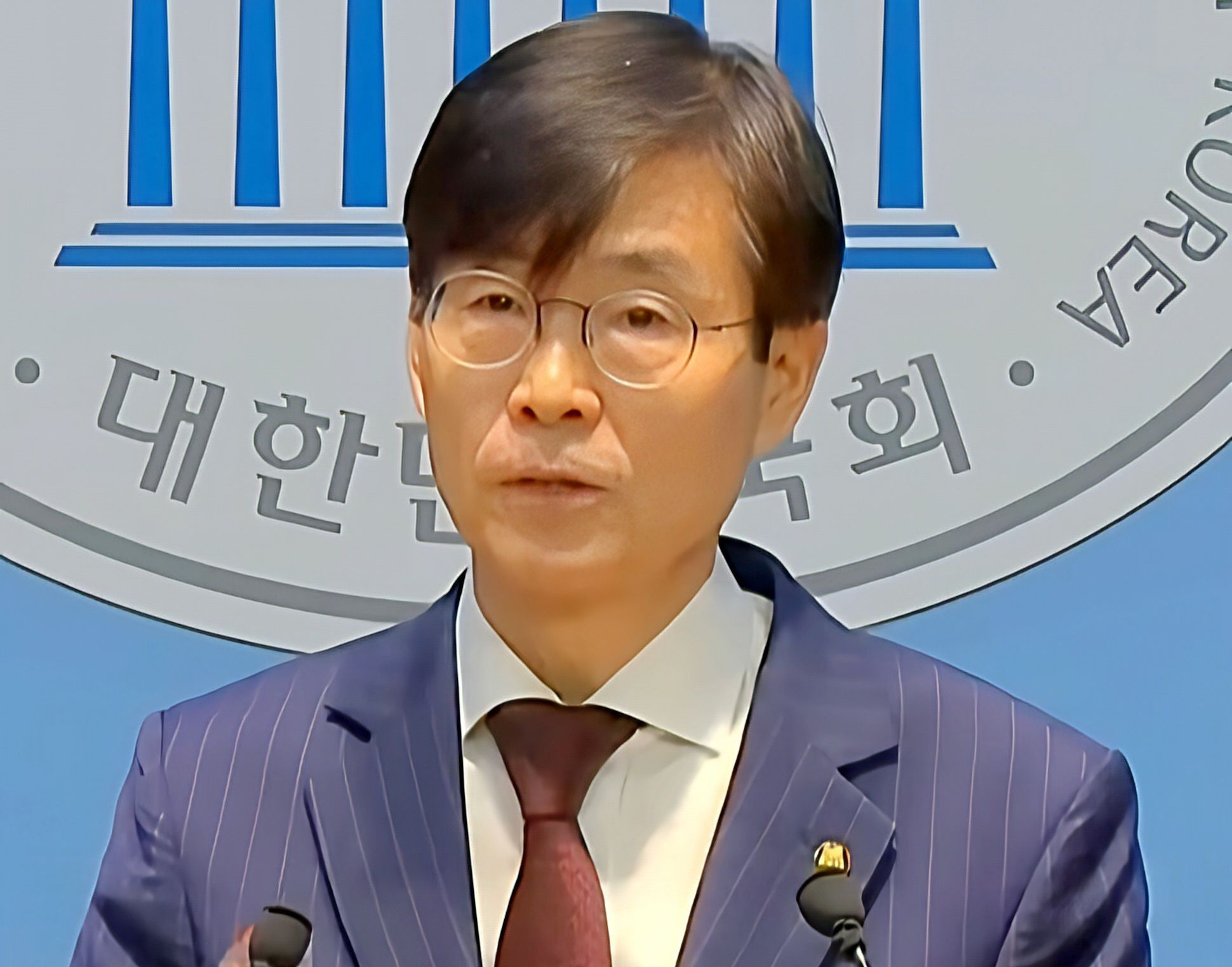
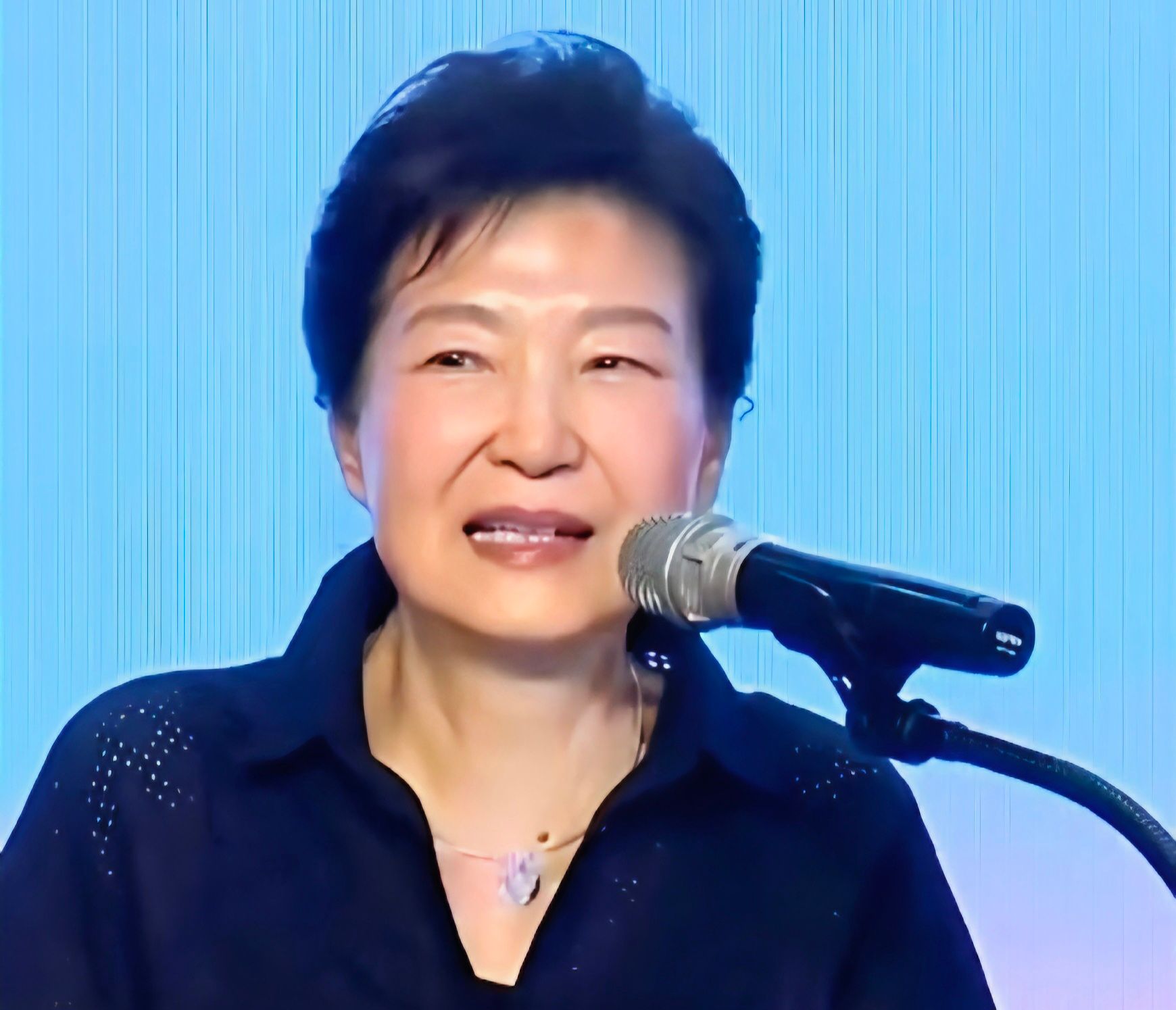
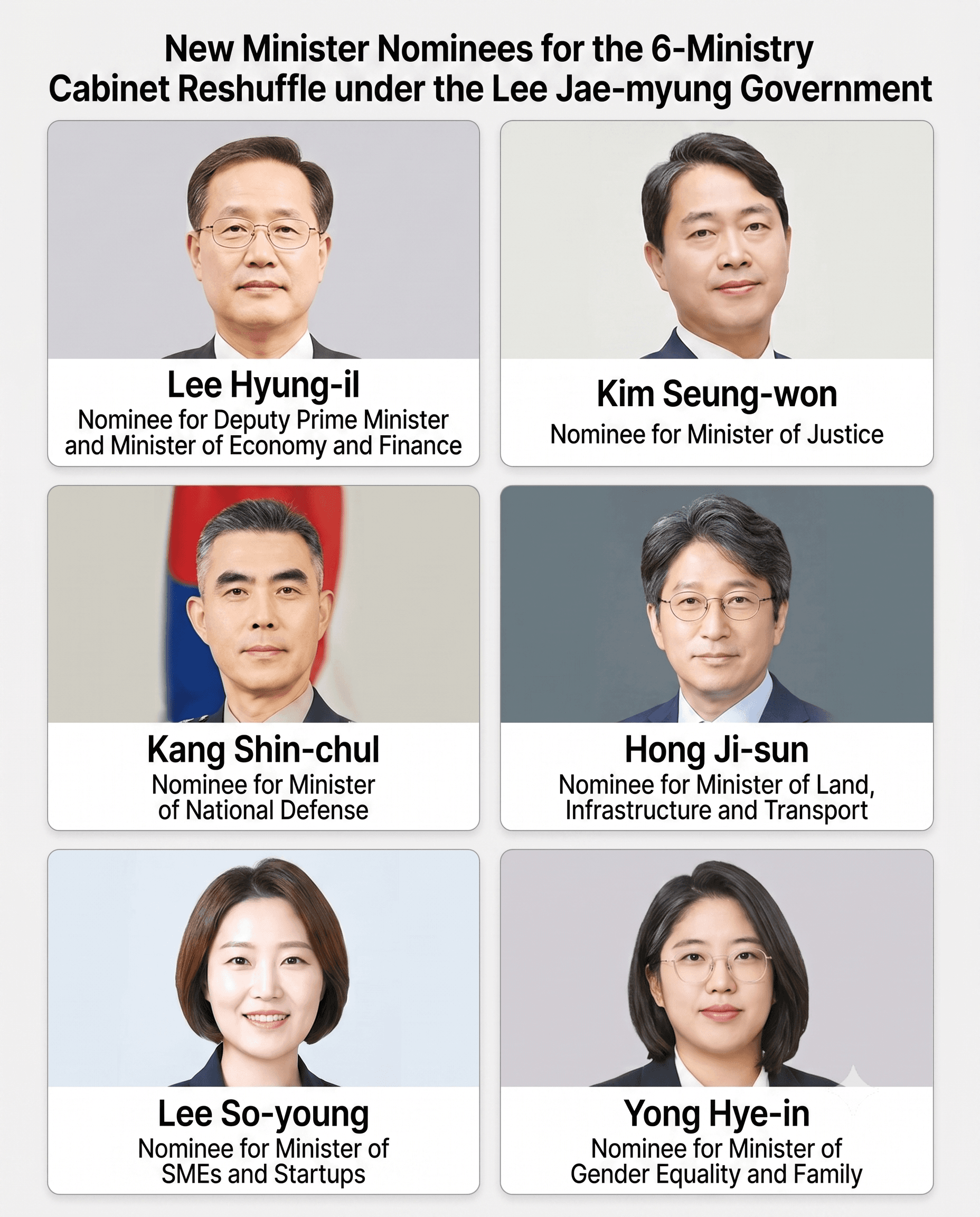
• Takes personal blame for post-election public discontent: "The people are always right"
• Rejects opposition attacks on constitutional revision: "Never even considered seeking re-election"
• Appeals for progressive unity: Roh, Moon, and Lee supporters are all "democratic comrades"
• Ruling party welcomes 'turning point' while opposition blasts speech as 'self-praising rhetoric'
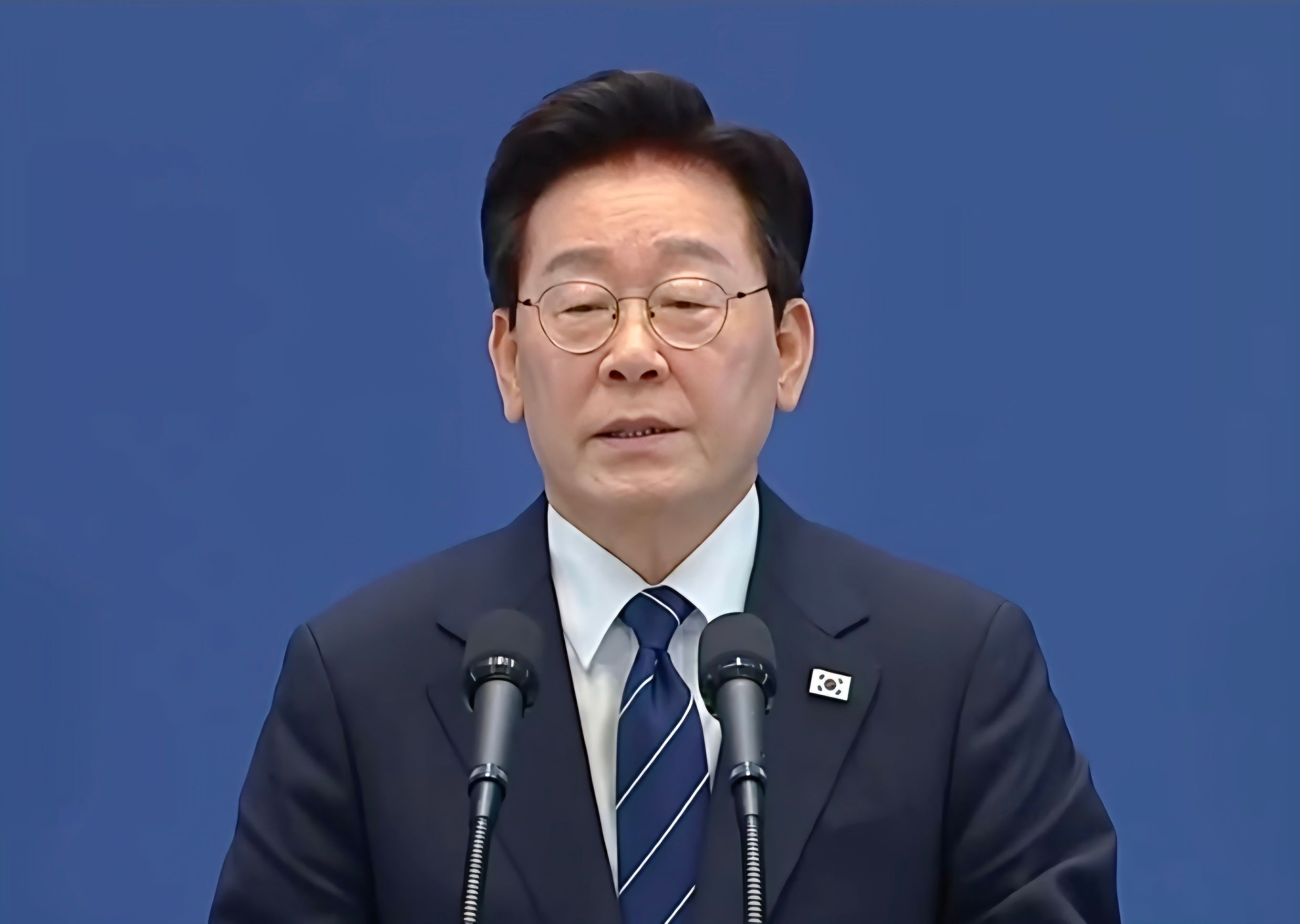
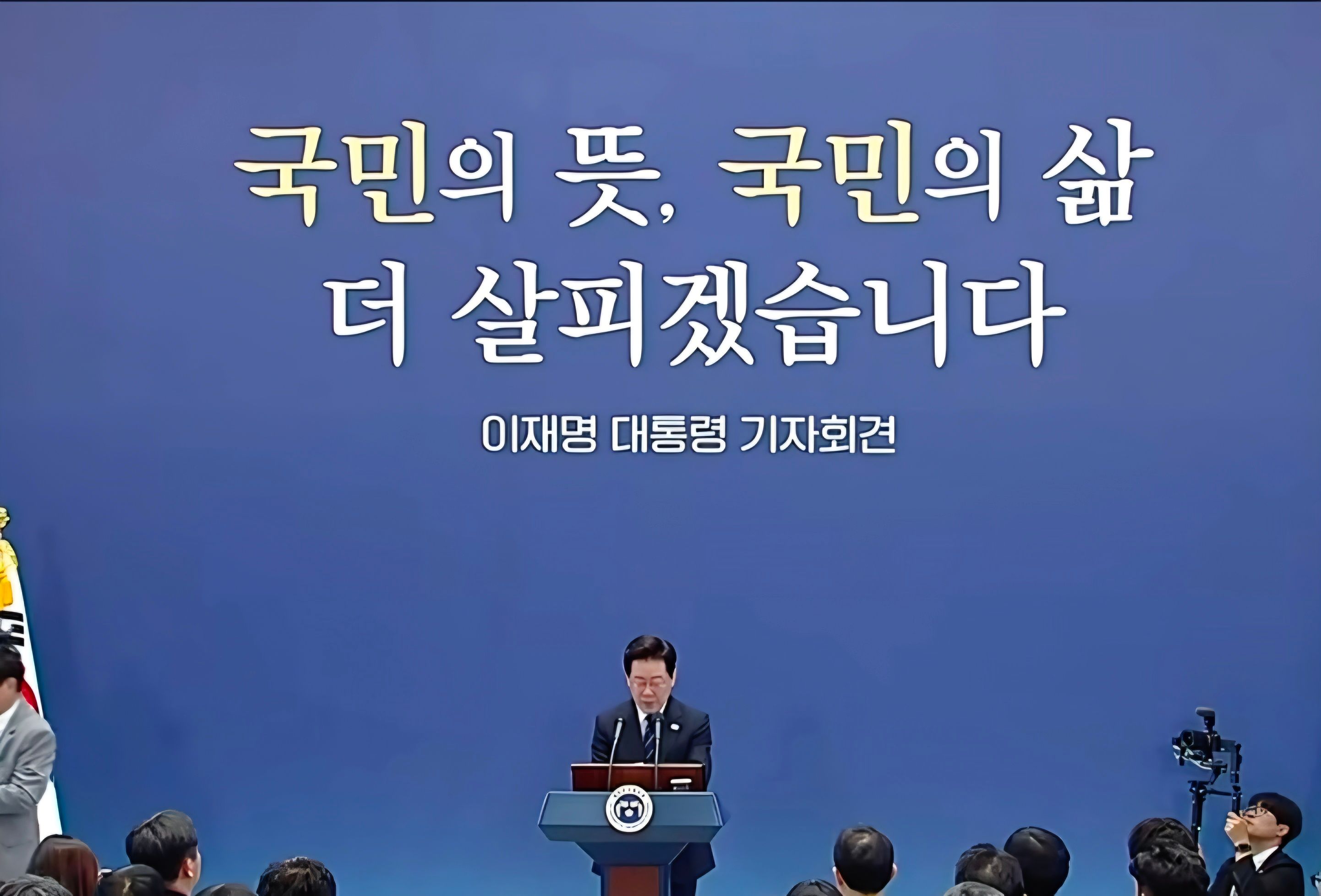
SEOUL — South Korea's President Lee Jae-myung bowed deeply in a live televised press conference on Friday, offering a sweeping public apology for his administration's sinking approval ratings and taking personal responsibility for mounting voter dissatisfaction. Facing reporters at the Cheong Wa Dae State Guest House, Lee also forcefully knocked down opposition speculation regarding his political future, declaring he has zero intention of seeking a second term.
The press conference, held ahead of the Chuseok thanksgiving holidays and marking his 472nd day in office, was widely viewed as a high-stakes bid to halt an erosion of political momentum following recent local election setbacks, heal festering factional fissures within the liberal camp, and regain the initiative on his signature reform agenda.
"The Public Is Always Right"
In an address lasting roughly 20 minutes, Lee dedicated a substantial portion of his remarks to soul-searching and self-criticism. He candidly admitted that the sharp turn in public sentiment caught his administration off guard.
"Following the local elections, I was frankly taken aback by the sudden disillusionment and anxiety expressed by the public," Lee confessed. "Yet after profound contemplation and introspection, the conclusion remains singular: the public is always right. It is entirely due to my own shortcomings."
Lee explained that an obsession with delivering measurable outcomes had blinded his government to the friction generated along the way. "Rushed by the sheer volume of national tasks, I failed to fully embrace the hearts of many," he said. "In the belief that governance must be validated through execution rather than mere rhetoric, I did not sufficiently empathize with the unavoidable pain and conflict that arise in the pursuit of livelihood policies, reform, and national unity. Faced with modest milestones and outsized public goodwill, our sense of humility receded. I will revive that reverence for the people and approach all affairs of state more attentively, more humbly, and more fiercely."
Slamming the Door on Re-Election
Lee took direct aim at conservative opposition claims that his push for constitutional reform is a clandestine attempt to engineer an extended stay in power or remodel the government into a parliamentary cabinet system.
Revisiting his longstanding support for modernizing South Korea's 1987 Constitution—such as enshrining the May 18 Gwangju Democratization Movement and the Bu-Ma Democratic Protests in the preamble, devolving presidential authority, and introducing a four-year, two-term presidency for future heads of state—Lee underscored that such changes would never apply to him.
"Under the current constitution, an incumbent president cannot benefit from amendments to serve an additional term, and I have made it clear across multiple channels that I have never once entertained the notion," Lee asserted. "Demands from critics that I pledge to renounce re-election were merely political ploys designed to frame me as someone reluctantly retreating from a hidden ambition. Let me state it unequivocally once and for all: I have no intention whatsoever of serving a second term."
Mending Progressive Fractures
Turning inward, Lee delivered an impassioned plea to soothe deepening animosities within his own progressive coalition, where hardliners have accused his administration of diluting core reforms in a misguided search for bipartisan compromise.
Drawing lessons from previous administrations—such as the medical sector standoffs that provoked prolonged social turmoil without tangible breakthroughs—Lee defended his preference for "subtle, low-friction execution," insisting that the administration's compass has never wavered.
"It is heartbreaking to see citizens who risked everything to overcome civil strife and build a sovereign government now hurling hateful rhetoric at one another and ostracizing fellow travelers," Lee said. "Those who cherish democracy, progress, and reform are all pro-Kim Dae-jung, pro-Roh Moo-hyun, pro-Moon Jae-in, and comrades of Lee Jae-myung. If feelings of bitterness arise and someone must be blamed, blame me and the deficiencies of this administration."
Overhauling Power Agencies and Decentralizing Capital
Reaffirming his policy blueprint, Lee vowed to bring South Korea's protracted prosecution reform to its final destination by structurally decoupling investigative jurisdiction from prosecutorial indictment, redistributing these roles between a serious crimes investigation body and a dedicated public prosecution office.
Addressing persistent concerns that stripping prosecutors of supplementary investigative powers could compromise victim protections or lead to enforcement loopholes, Lee promised exhaustive institutional safeguards. He added that the national police agency, set to absorb wider investigative mandates, will undergo rigorous structural checks to prevent it from mutating into an unchecked authority.
To tackle spiraling real estate costs in the Seoul metropolitan area and redress regional imbalances, Lee unveiled a "Dual Capital" framework. "We will decisively accelerate the construction of the administrative capital in Sejong," Lee stated, envisioning a division of roles modeled on the United States: "Seoul as the economic capital, and Sejong as the administrative capital."
Concluding the briefing, Lee pledged a thorough re-examination of the presidential personnel vetting apparatus. "It was the sovereign people who summoned an outsider from the periphery to the highest office of state responsibility," Lee said, promising to govern with renewed accountability to the collective will of the nation.
Political Reactions: Ruling Praise vs. Opposition Backlash
The political establishment responded to the briefing with sharply divided assessments.
The ruling Democratic Party of Korea (DPK) welcomed the address as a critical turning point for restoring public confidence, praising the president for confronting sensitive controversies with candor and humility. DPK leader Kim Min-seok affirmed that the party would listen to the public more attentively and focus on daily livelihood matters, while urging rival parties to halt "counterproductive political attacks now that the president has unequivocally laid to rest all rumors of a second term."
In stark contrast, the main opposition People Power Party (PPP) launched a scathing counteroffensive, denouncing the event as a "solo hymn of self-praise" masked by flashy rhetoric that dodged genuine accountability and shifted blame elsewhere. PPP leader Jang Dong-hyeok took to social media to criticize the president, arguing that Lee's mindset remained unchanged and asserting that his overtures to pro-Roh, pro-Moon, and pro-Kim factions represented "left-wing factional consolidation rather than authentic national unity." PPP chief spokesperson Park Chung-kwon echoed that sentiment in a formal statement, asserting that the president delivered excuses rather than credible commitments on key issues spanning constitutional revision, personnel vetting, and public repentance.
TAP HERE for an English-Korean bilingual version. [영한대역으로 보려면 여기를 누르세요]