Click here to watch the news broadcast
WASHINGTON — In the immediate, adrenaline-fueled aftermath of a historic U.S. midterm election, the narrative seemed remarkably straightforward: a "Blue Tsunami" had crashed over the American political landscape. By capturing a projected 244 seats in the House of Representatives and seizing at least 53 to 54 seats in the Senate, the Democratic Party did not just win; they executed a stunning, nationwide realignment. Nowhere was this more seismic than in Texas, where Democrat James Talarico shattered a 38-year conservative chokehold by defeating Republican Ken Paxton to win a U.S. Senate seat—marking a vulnerability in what was once considered the Republican Party’s most impenetrable "red fortress."
To the casual observer, the message from the American electorate seemed unequivocal. By handing Democrats complete control of the legislative branch, voters had seemingly built a fortress of their own—one designed to check, if not entirely paralyze, the unilateral governance of President Donald Trump during his final two years in office. The media immediately buzzed with talk of a "supermajority"—an overwhelming mandate that could dictate terms to the White House.
Yet, as the dust settles over Capitol Hill, a sobering mathematical reality is setting in. In Washington, the gap between "majority control" and the "supermajority" required to enact absolute power is as wide as the Grand Canyon.
A closer examination of the constitutional math reveals that the Democratic sweep is less of a mandate for smooth, progressive governance and more of a recipe for unprecedented gridlock, political war, and market anxiety. Ultimately, the numbers suggest that the next two years will not bring a systematic dismantling of Trump’s presidency, but rather a protracted, high-stakes war of attrition that will keep both Washington and global financial markets in a state of perpetual chaos.
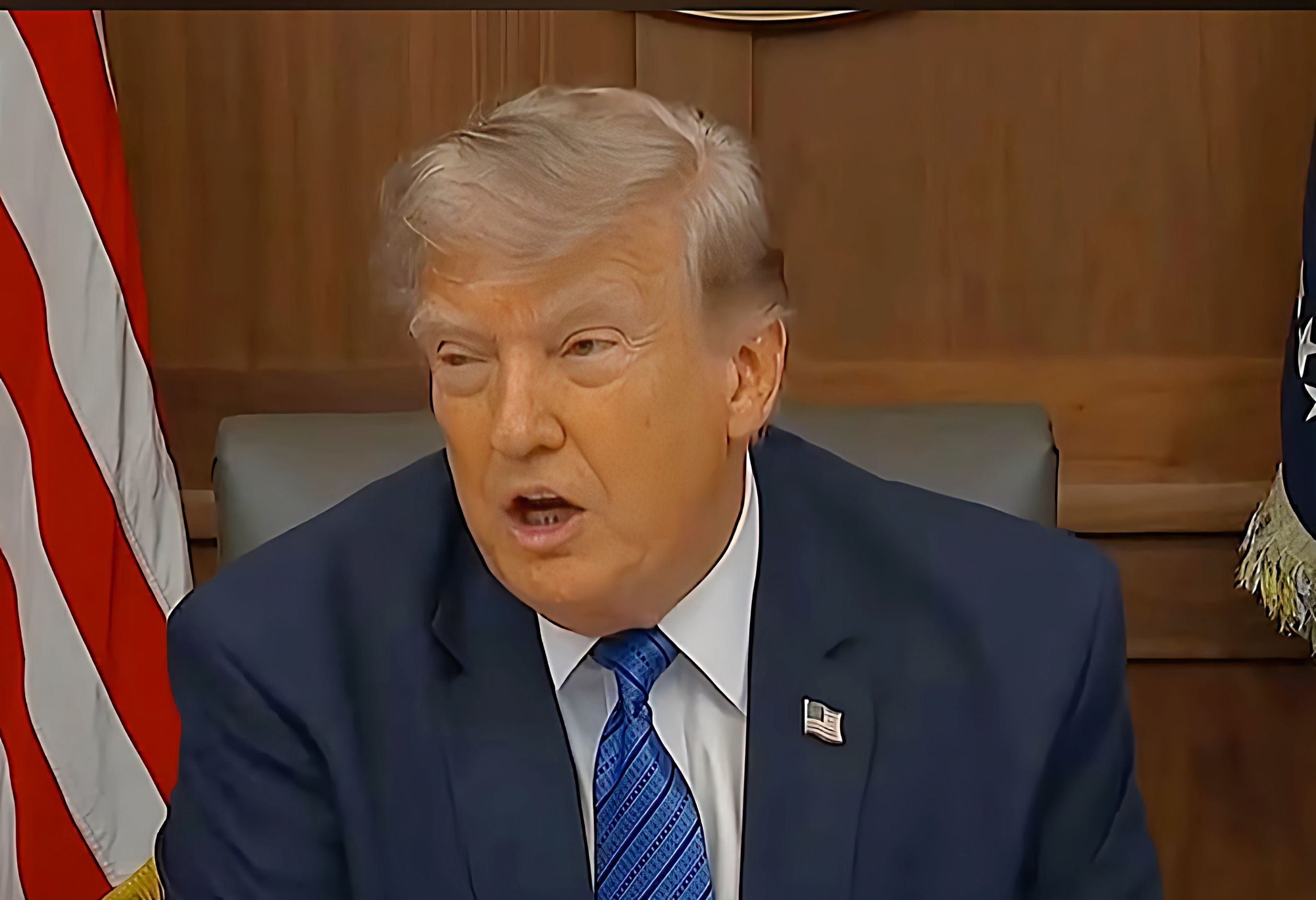
The Illusory "Supermajority"
To understand why Washington is about to descend into gridlock, one must look at the hard mathematics of the U.S. Constitution.
For Democrats, the goal of "total victory" is hampered by the high thresholds required to override a presidential veto or to convict a president during an impeachment trial. To achieve a truly "veto-proof" or "impeachment-proof" supermajority, a party needs two-thirds of the votes in both chambers: 290 out of 435 seats in the House, and 67 out of 100 seats in the Senate. Furthermore, ending a filibuster on standard legislation in the Senate typically requires 60 votes.
Despite their crushing victory, Democrats are nowhere near those numbers.
Even if the Democrats' House count edges toward the 254 seats projected by Decision Desk HQ (DDHQ), they remain 36 to 46 seats short of the 290 required to override Trump’s veto. In the Senate, their projected 53 to 54 seats leave them at least 13 to 14 seats shy of the elusive 67-seat threshold.
Conversely, the Republican minority, though bruised, still holds a vital defensive shield. According to DDHQ projections, Republicans have secured at least 39 seats in the Senate. Because only 34 seats are needed to sustain a presidential veto or block an impeachment conviction, the GOP retains a robust, mathematically unbreakable barrier. So long as the Republican delegation remains unified, any attempt by Democrats to override Trump's vetoes or to actually oust him via impeachment is, for all practical purposes, dead on arrival.
The Impeachment Math
This numerical barrier has significant implications for the inevitable calls for impeachment.
With a projected 244 to 254 seats, the Democratic House can easily pass articles of impeachment with a simple majority of 218. There is little doubt that the more progressive wing of the party will pressure House leadership to do exactly that, eager to hold Trump accountable for everything from his controversial immigration enforcement to personal business dealings.
But once those articles cross the Capitol to the Senate, the effort will hit a wall. Convicting and removing a president requires 67 votes. With Democrats holding 53 or 54 seats, they would need to persuade at least 13 to 14 Republican senators to cross the aisle and vote to oust their own party's leader. In today's deeply polarized environment, such a scenario is virtually unimaginable.
Therefore, any impeachment attempt will likely end in the same place as past efforts: a highly theatrical, emotionally draining Senate trial that ends in acquittal, serving to further polarize the electorate while doing nothing to alter the tenancy of the Oval Office.
Veto vs. Subpoena: The Real Battlefield
If the supermajority is an illusion, does that mean Trump escapes unscathed? Far from it.
While the legislative path to undoing Trump's agenda is blocked by the veto, Democrats do not need a supermajority to deploy their most lethal weapon: the power of congressional oversight, investigation, and the subpoena.
As the majority party in both chambers, Democrats will assume the gavel of every single House and Senate standing committee. This grants them unilateral authority to:
• Launch expansive investigations into the Trump administration, his family, and the business dealings of his close associates.
• Subpoena tax records, internal communications, and government documents, particularly targeting the exercises of authority by immigration enforcement agencies.
• Force high-ranking officials and corporate executives to testify under oath in front of televised, high-stakes public hearings.
• Effectively stall the confirmation of conservative judges and executive branch nominees in the Senate.
For Trump, this means his administration will be forced onto a permanent defensive footing. The White House will be inundated with document requests, and a steady stream of controversies will likely dominate the news cycle.
Trump's primary countermeasure will be his constitutional veto power, which allows him to reject any piece of legislation Democrats manage to pass. Because the Senate is nowhere near the 67-vote override threshold, those vetoes will hold.
This dynamic is a recipe for a permanent war of attrition. Democrats will pass bills they know Trump will veto solely to highlight their policy priorities, while Trump will strike them down and accuse the Democrats of obstructionism. Meanwhile, Republican hopes for additional tax cuts and expanded fiscal spending have been effectively extinguished by the new Democratic majority.
Wall Street's Nightmare: The Dreaded "Black Swan"
For the financial sector, this impending, prolonged conflict is more than just political theater—it is a tangible, systemic risk. The prospect of two years of relentless investigations, legislative paralysis, and a combative administration has Wall Street deeply concerned about a potential "Black Swan" event—a rare, unpredictable shock with severe market consequences.
Financial analysts warn that investors must now price in the risk of relentless political brinkmanship.
"It becomes a scenario where the market sells off in November out of fear of how far the Democrats will go to disrupt the current administration," Philip Blancato, Chief Market Strategist at financial services firm Osaic, told CNBC, warning that an aggressive Democratic majority could deal a "very heavy blow" to the stock market.
"That could lead to impeachment and broad investigations," Blancato added. "That is tomorrow's Black Swan for the market."
Ultimately, what Wall Street fears most is not the actual removal of the president—which the math makes nearly impossible—but the amplification of policy uncertainty as congressional investigations collide with executive defiance. With Democrats eager to challenge Trump's policies on trade, immigration, and spending, and with the White House unlikely to back down, the threat of government shutdowns and prolonged policy paralysis will loom large over the next two years.
A Fragmented Future
The "Blue Tsunami" of this midterm election has undoubtedly reshaped American politics, but it has not granted the Democrats the absolute power of a supermajority. Instead, it has created a highly volatile, divided government.
For the next two years, the United States will be governed by a fractured system, where an emboldened Democratic Congress uses its investigative powers to corner the administration, and a defiant President uses his veto pen to hold the line.
The math is clear: Washington will not be a place of sweeping legislative compromise or dramatic presidential removal. It will be a battlefield of constant oversight, frequent vetoes, and relentless political combat, ensuring that the nation's capital—and the global markets that rely on its stability—will remain in a state of unpredictable turbulence.