SEOUL — An unprecedented buzz has gripped the South Korean film industry following the sudden decision by the team behind the upcoming political thriller Assassin(s) to skip opening ceremony festivities at the Busan International Film Festival (BIFF), requested directly by the film's production company.
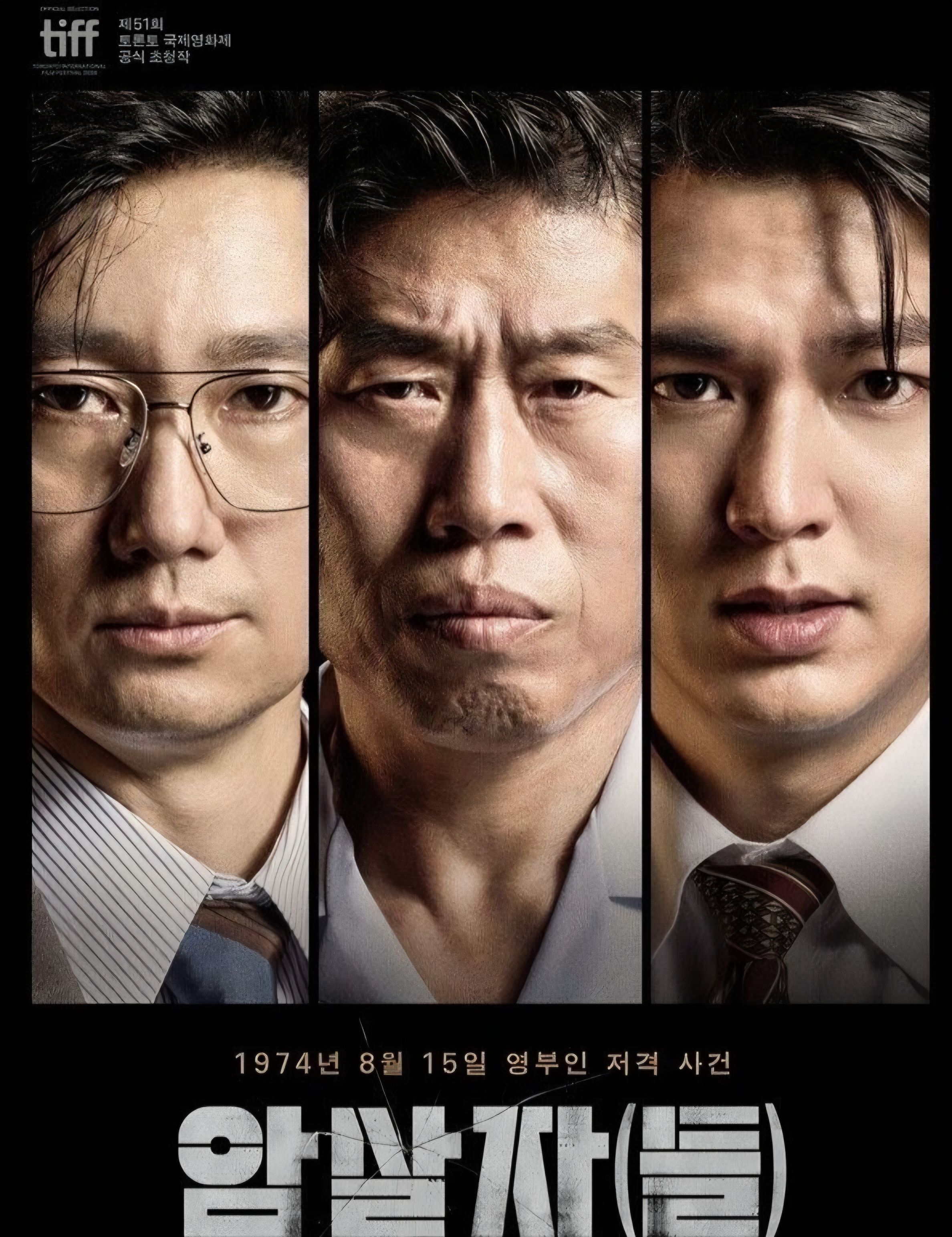
While the film remains an official selection and will proceed with its scheduled festival screenings, the abrupt red-carpet absence has shifted public attention away from typical festival glitz and squarely onto the explosive questions embedded within the film itself. Fresh off its official selection at the 51st Toronto International Film Festival (TIFF) and anchored by a powerhouse trio—Park Hae-il, Yoo Hai-jin, and Lee Min-ho—the project has provoked widespread curiosity: What historical Pandora’s box has this production pried open to cause such palpable unease?
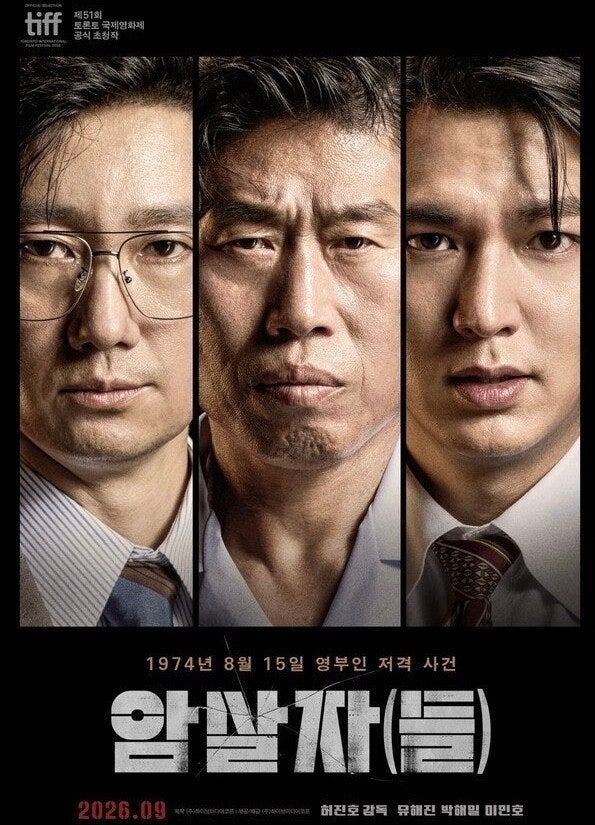
At the core of Assassin(s) lies one of modern Korean history's most traumatic and enigmatic chapters: the August 15, 1974, assassination attempt at the National Theater in Seoul. While military strongman President Park Chung-hee (1917–1979) survived the shooting, First Lady Yuk Young-soo (1925–1974) was fatally struck. The state swiftly concluded that the incident was the lone work of Mun Se-gwang (1951–1974), a 23-year-old ethnic Korean from Japan operating under orders from the pro-Pyongyang General Association of Korean Residents in Japan (Chongryon).
Half a century later, however, the official narrative remains haunted by critical discrepancies. Here are the three most chilling questions the film dares to resurrect.
1. Why the Plural Title in Parentheses: Assassin(s)?
The film's central provocation begins with its title punctuation—the unsettling bracketed plural "(s)". According to the 1974 official investigative record, there was only one gunman. Why, then, does the production explicitly signal multiple conspirators?
The movie zeroes in on physical contradictions documented in the live broadcast audio recordings and forensic reports from that fateful Liberation Day ceremony:
• Five-Shot Revolver vs. Seven Gunshots: Mun carried a .38-caliber Smith & Wesson 5-shot revolver stolen from an Osaka police substation. He could physically fire no more than five rounds. Yet acoustic analysis of the live broadcast and witness testimonies documented between six and seven distinct gunshots echoing through the theater. Where did the extra shots originate?
• The Fatal Bullet and Vanished Ballistics: Did the bullet that took the life of First Lady Yuk Young-soo truly come from Mun’s barrel as he dashed chaotically down the aisle, or was it an errant round fired in the crossfire by Presidential Security Service Chief Park Jong-gyu (1930–1985) or other bodyguards? The full autopsy and ballistics records were never transparently released to the public, and the critical slug that pierced the First Lady's head was inexplicably listed as "lost." Coupled with the tragic death of high school chorus member Jang Bong-hwa (1957–1974) on stage, the film relentlessly pursues the possibility of another trigger pulled in the shadows.
2. How Did a Severely Nearsighted Novice Bypass Level-1 Presidential Security?
Scrutiny of Mun Se-gwang’s background only deepens the puzzle. Mun was severely nearsighted—unable to distinguish targets clearly without thick glasses—and lacked formal firearms training.
Yet this agitated young man somehow carried a concealed weapon into a top-tier state function and penetrated the inner perimeter of the head of state.
• Entry Without Security Clearance: Admission to the National Theater strictly required high-level security lapel badges (bipyo). Even cabinet ministers were barred entry without them. Mun arrived without a badge, driving a rented luxury Ford 20M sedan and presenting a forged Japanese passport under the alias "Yukio Yoshii."
• Bypassed Metal Detectors and Pat-Downs: Presidential guards neither searched Mun nor routed him through metal detectors, waving him through VIP access lanes simply because he posed as a foreign dignitary speaking broken Japanese. Despite lingering nervously in the lobby for an extended period, he was never challenged. The film forces audiences to confront an uncomfortable dilemma: Was this monumental security breach mere bureaucratic negligence, or did invisible hands open the doors to let him reach the auditorium?
3. Rapid Crime Scene Cleanup and Hasty Execution: Who Benefited Most?
Even allowing for the primitive forensic standards of the 1970s, the authorities' immediate response resembled evidence destruction rather than an investigation.
• A Crime Scene Painted Over Within Hours: Within hours of the assassination, the auditorium was washed down and freshly repainted, obliterating blood spatter, trajectory marks, and shell casings. Investigators themselves dug bullets out of the theater walls without standard ballistic mapping.
• Execution in Just Four Months: Arrested on August 15, Mun was executed on December 20, 1974, barely four months after the incident and immediately following the Supreme Court's dismissal of his appeal. The state permanently silenced the only living witness who could have verified the masterminds or co-conspirators.
• The Ultimate Political Reversal: In 1973, following the state-sponsored Tokyo kidnapping of opposition leader Kim Dae-jung (1924–2009), the Park regime had faced severe diplomatic isolation and international condemnation. The 1974 shooting dramatically flipped the geopolitical script. It fueled intense anti-communist sentiment, neutralized domestic democratic protests, and provided ironclad justification to tighten the authoritarian Yushin order. While the young gunman went swiftly to the gallows, the film quietly asks who truly reaped the greatest political harvest from that tragic day.
The stark visual contrast among Park Hae-il, Yoo Hai-jin, and Lee Min-ho in the promotional materials hints at the film's relentless multi-perspective clash: an investigator struggling against forensic manipulation, a journalist navigating suffocating censorship, and a state architect orchestrating political survival.
The friction surrounding the film's red-carpet cancellation at BIFF suggests that even fifty years later, these historical questions remain razor-sharp knives. As the film meets festival audiences, viewers are left to ponder a haunting reality: Was the assassin who shattered a nation in 1974 truly acting alone?