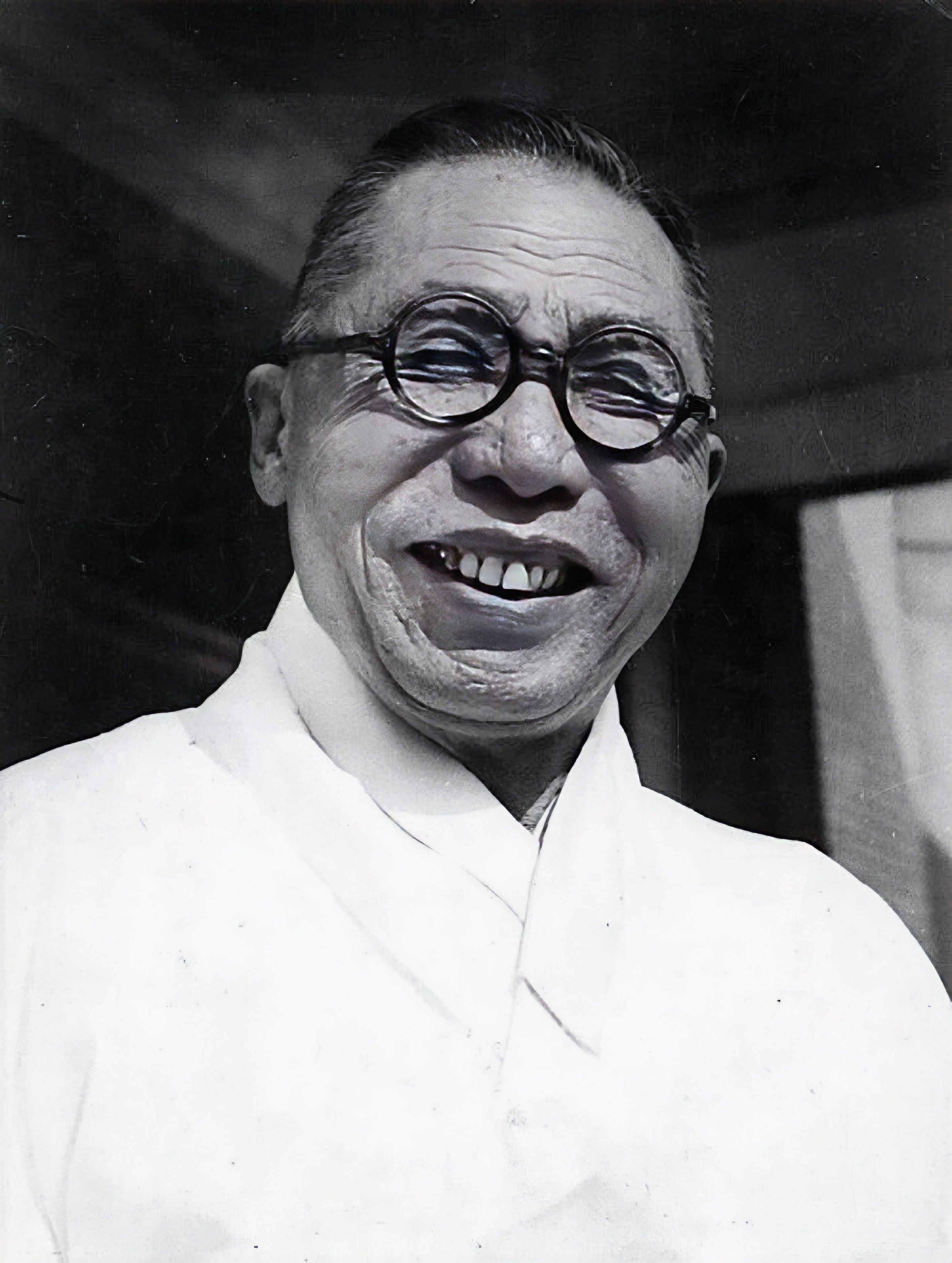
SEOUL — August 29 occupies a poignant and paradoxical place in the collective memory of the Korean people. On this exact date in 1910, the nation lost its sovereignty under the Japan-Korea Annexation Treaty—a dark chapter preserved in modern history as National Humiliation Day (Gyeongsul Gukchi). Yet thirty-four years prior, on August 29, 1876, a child was born who would dedicate his entire life to restoring that stolen dignity: Baekbum Kim Koo (1876–1949).
Who Was Baekbum Kim Koo? (1876–1949)
Revered as the spiritual father of modern Korea, Baekbum Kim Koo lived through the most turbulent chapters of Korean history, spanning the late Joseon Dynasty, the Donghak Peasant Revolution, the Japanese colonial era, and the chaotic post-liberation period. Following the nationwide March 1st Independence Movement in 1919, he crossed into Shanghai to join the Provisional Government of the Republic of Korea, serving as its Premier and President while steadfastly guiding the independence struggle for nearly three decades.
Adopting the pen name "Baekbum"—derived from the lowest social class of butchers (Baekjeong) and ordinary citizens (Beombu)—he embodied the democratic principle that true national independence could only be realized when every ordinary person achieved the patriotic wisdom of an enlightened citizen.
Following Korea's liberation on August 15, 1945, the joy of freedom was swiftly eclipsed by the tragic partition of the peninsula along the 38th parallel, carved up under military occupation by the United States and the Soviet Union. Deeply alarmed that establishing separate regimes in the North and South would cement permanent national division and ignite fratricidal conflict, Kim Koo poured his remaining strength into preventing a fractured homeland.
In April 1948, the 72-year-old patriot made the perilous journey across the 38th parallel to Pyongyang for inter-Korean negotiations, leaving behind his legendary resolve: "I would rather collapse and breathe my last on the 38th parallel than participate in establishing a divided government for the sake of personal survival." Yet the relentless geopolitical tidal wave of the Cold War and entrenched ideological rifts thwarted his desperate unifying mission, leaving the peninsula bitterly divided into two separate states later that year.
Tragically, on June 26, 1949, at the age of 73, Kim Koo was assassinated at his residence, Gyeonggyojang in Seoul, struck down by four bullets fired by Army Second Lieutenant Ahn Doo-hee. His sudden martyrdom plunged the entire peninsula into profound sorrow, drawing millions of weeping citizens onto the streets for modern Korea’s first de facto National Funeral held on July 5, 1949, before he was laid to rest at Hyochang Park.
Even amid the geopolitical heartbreak that shadowed his final days, Kim Koo left behind an enduring intellectual compass in his celebrated 1947 treatise, My Wish (Naui Sowon). In that visionary text, he articulated a destiny defined by cultural generosity rather than armed domination: "I wish our country to become the most beautiful nation in the world. I do not desire that our nation become the most powerful... The only thing I desire without limit is the high power of culture. For the power of culture enriches our own happiness and brings happiness to all humankind."
A Global Resonance, 150 Years Later
One hundred and fifty years after his birth in 1876, that visionary testament has gained universal acclaim across the international community. The United Nations Educational, Scientific and Cultural Organization (UNESCO) officially designated 2026 as the "150th Anniversary of the Birth of Kim Koo" celebrated in association with UNESCO at its 43rd General Conference. Proposed by the Republic of Korea and jointly endorsed by partner nations across Asia and Africa, the designation affirms Kim Koo’s humanistic philosophy as a shared international heritage for humanity.
Commemorating this milestone, government leaders, diplomats, and civic representatives gathered on August 29 at the Baekbum Kim Koo Memorial Museum in Yongsan, central Seoul. Addressing more than 400 attendees—including Minister of Patriots and Veterans Affairs Kwon Oh-eul, Baekbum Memorial Association Chairman Park Yoo-chul, Korean National Commission for UNESCO Secretary-General Hong Hyun-ik, Museum Director Kim Mi, and the descendants of independence patriots—Prime Minister Han Seong-sook reflected on Kim's enduring relevance.
"Kim Koo’s wish did not end with the achievement of national independence," Prime Minister Han stated in her address. "He dreamed of an exemplary nation that contributes to global peace and human happiness through the elevated power of culture, rather than armed force or material dominance. UNESCO’s recognition of this anniversary proves that his spirit of coexistence directly aligns with the universal values our fractured world desperately requires today."
Prime Minister Han noted that UNESCO’s founding premise—that "since wars begin in the minds of men, it is in the minds of men that the defenses of peace must be constructed"—mirrors Kim Koo’s belief that human suffering originates from a lack of benevolence, love, and compassion. "The cultural strength he championed has expanded beyond our borders to unite the hearts of people worldwide," she added.
From Remembrance to Living Practice
The anniversary initiatives extend well beyond ceremonial tributes into tangible cultural projects. A government task force is operating cultural weeks and nationwide exhibitions on Baekbum’s philosophy, while advancing legislation to elevate Hyochang Park—where Kim Koo and fellow independence leaders rest—into the National Hyochang Independence Park.
Simultaneously, the Korean National Commission for UNESCO inaugurated the "2026 70GETHER Walking Campaign," running through November 8 in partnership with Woori Bank and the Ministry of Patriots and Veterans Affairs. The campaign's title, "70GETHER," is a clever synthesis of the word "TOGETHER" and the number "70"—reflecting over seven decades of the Korean National Commission's heritage-building history since its foundation in 1954, while symbolizing the participant mission to walk a 7-kilometer course.
The initiative invites citizens to complete this 7-kilometer walk along either the "Peace Trail," linking domestic UNESCO World Heritage sites, or the "Baekbum Trail," exploring historic independence landmarks across Seoul.
"Walking is the most accessible everyday action through which anyone can honor our heritage and foster a culture of peace," said Hong Hyun-ik, Secretary-General of the Korean National Commission for UNESCO. "When our collective steps unite for a sustainable future, we bring Kim Koo’s dream of universal peace through culture one step closer to reality."
A Timeless Compass for a Divided World
In the mid-20th century, when global powers measured prestige through naval fleets, nuclear arsenals, and territorial dominance, Kim Koo’s insistence on cultural benevolence was a revolutionary departure from conventional statecraft. Today, as Korean creative arts, storytelling, and civic values resonate across continents, his 1947 words read as a fulfilled prophecy for the modern age.
By transforming a day once shadowed by loss into an international celebration of cultural empathy, Baekbum Kim Koo’s 150-year legacy delivers a clear message for the twenty-first century: true greatness is found not in the ability to subjugate, but in the capacity to inspire and heal.