To see the announcement video of the 2026 Nobel Prize in Literature, click here.
Click here to watch the CBC News report video on this story.
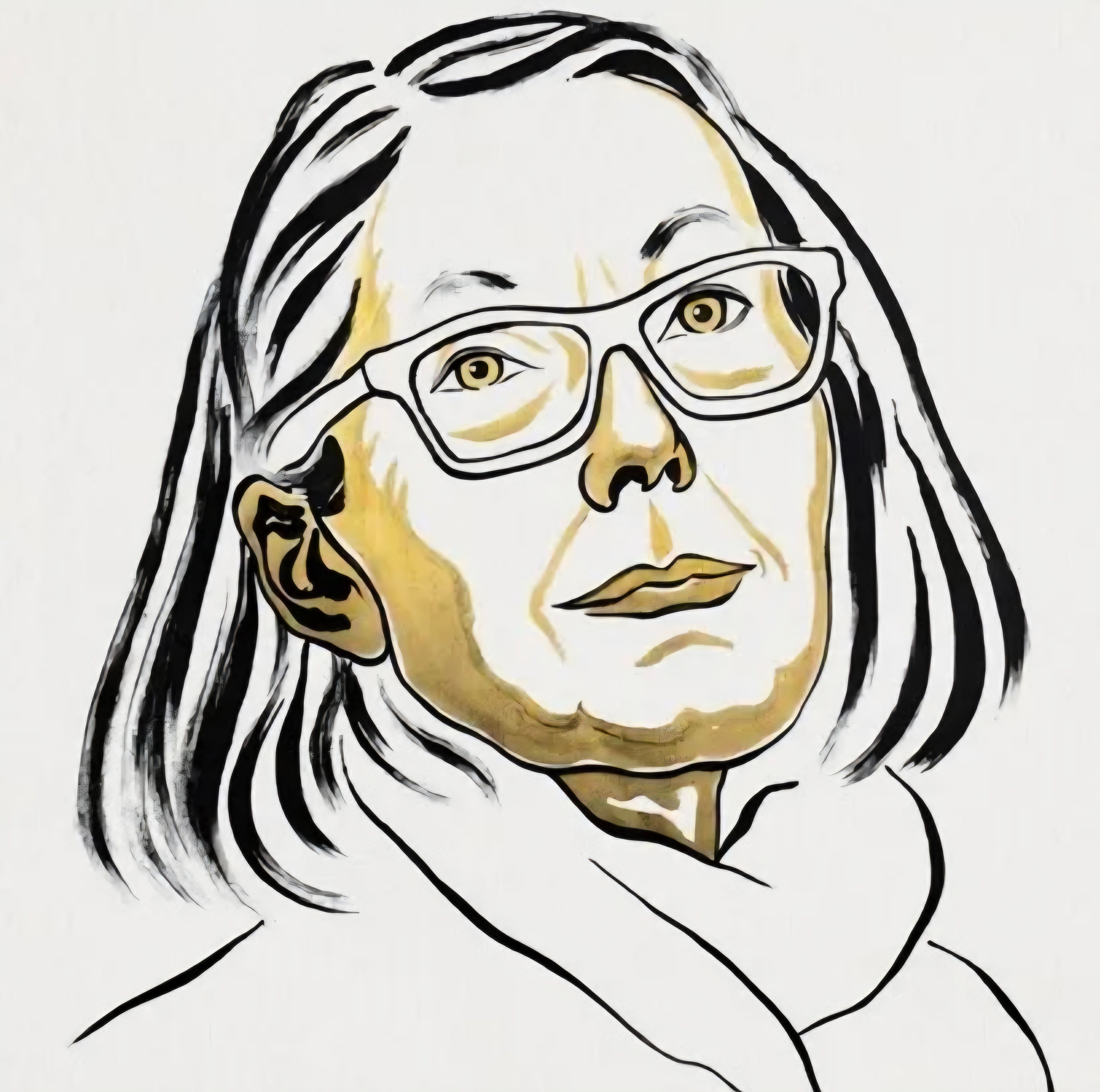
From mopping floors to dodging spam calls, the 76-year-old Canadian classicist brings deadpan humor, boxing gloves, and a genre-shattering catalog to the 2026 Nobel Prize in Literature.
TORONTO — For seventy-six-year-old Anne Carson, the morning of the Nobel announcement was meant to follow an ordinary, unglamorous routine: brew a warm cup of tea, grab a bucket, and mop down the floors.
Then the telephone started buzzing.
Displaying an unfamiliar international country code, the device rang persistently, looking for all intents and purposes like yet another overseas telemarketing nuisance or automated insurance pitch. Carson was fully prepared to ignore it and get on with her domestic chores. It was only after her husband intervened—urging her to pick up because "you never know, it might actually be important"—that she reluctantly lifted the handset to her ear.
On the other end of the line was the Swedish Academy, informing her that she had been awarded the 2026 Nobel Prize in Literature.
When Carson finally hung up, she did not dissolve into theatrical tears, nor did she deliver a rehearsed speech on the profound sanctity of art. Instead, she offered a classic, razor-sharp summation of the world's most prestigious literary institution:
"They must be crazy."
That unflappable, freeze-dried coolness—instantly celebrated by readers across the globe—captured the very essence of a writer who has spent half a century dismantling literary pieties. In Stockholm, the Swedish Academy commended Carson for "combining classical rigor with fearless intellectual freedom to forge a singular, sensuous poetics." Meanwhile, in bookstore hubs from London to Seoul, readers stampeded to secure her titles; South Korean retailers reported that sales of Carson’s translated volumes exploded by more than 180-fold within hours of the announcement.
Yet to understand the woman behind the headlines is to encounter a life marked by radical curiosity, personal defiance, and a stubborn refusal to be categorized.
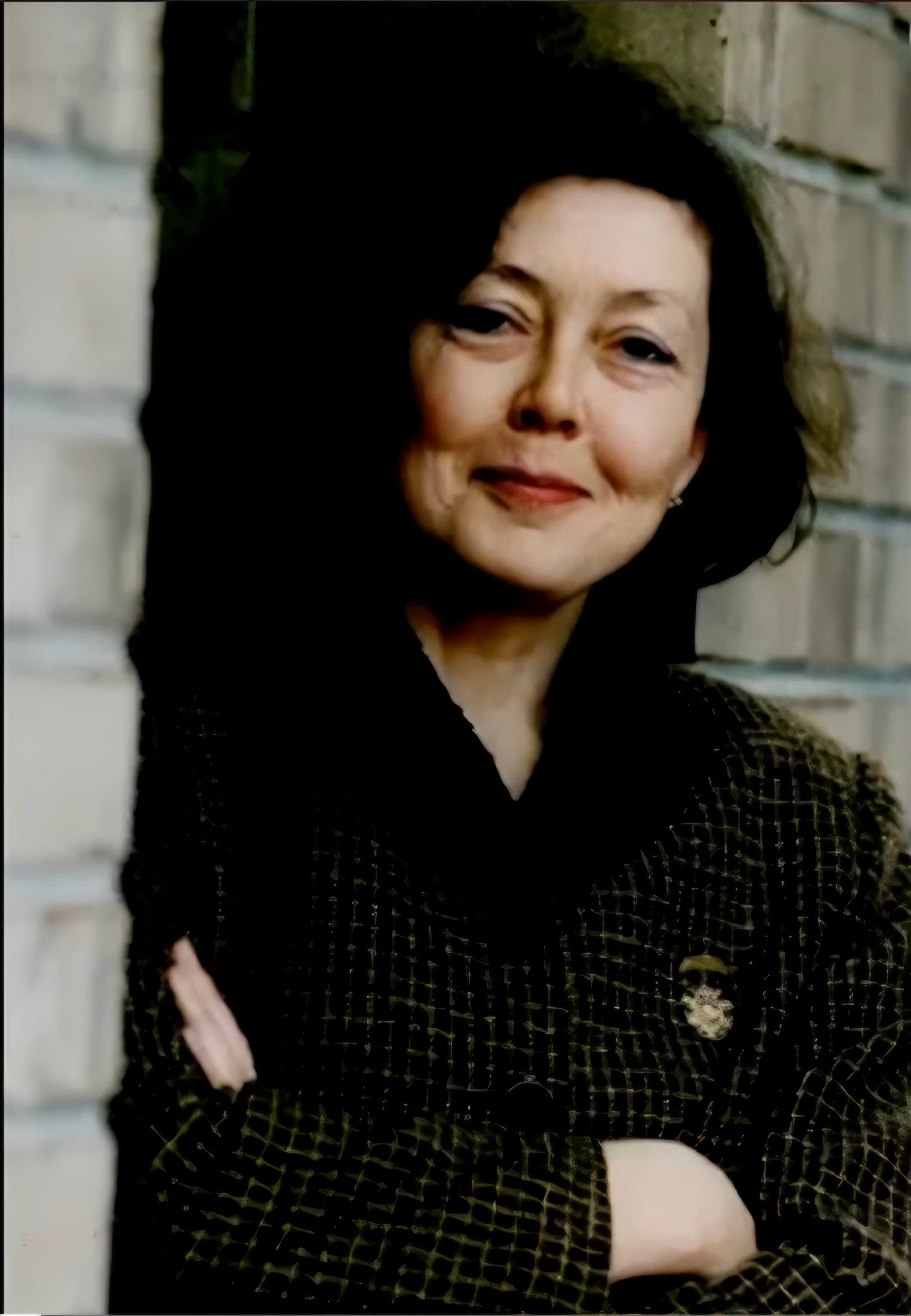
The Boxig Classicist Who Despises Boredom
Born in Toronto on June 21, 1950, Carson’s literary destiny was ignited not in an elite salon, but in a local bookshop where she stumbled across a bilingual edition of the archaic Greek lyricist Sappho as a high school teenager. Entranced by the fragmented beauty of ancient Greek, she immersed herself in antiquity, earning her bachelor's, master's, and doctoral degrees in Classics from the University of Toronto. For decades, she sustained herself as an academic, lecturing on Greek literature and classical philology across prestigious institutions, including McGill University, the University of Michigan, and Princeton University.
Anyone expecting a dusty, ivory-tower pedant, however, would be sorely mistaken. In recent years, Carson was diagnosed with Parkinson’s disease. Rather than retreating into quiet seclusion, she laced up a pair of boxing gloves and joined a local neighborhood boxing gym as part of her physical therapy regimen.
Even while sweating through heavy bag drills, Carson’s observant eye never switches off. Between rounds, she quietly studies the curious mannerisms, idiosyncratic cadences, and distinct body language of her fellow gym-goers, gathering psychological textures for her writing. As Carson famously remarked in an interview, her primary guiding principle has always been disarmingly simple: "My only real goal in life is to avoid boredom."
Shattering the Page: A Chronology of Milestones
That relentless drive to outrun existential tedium has yielded one of the most adventurous bibliographies in contemporary letters, where verse, scholarly treatise, translation, and autofiction collapse into one another.
• 1986 — Eros the Bittersweet: Carson announced her arrival by transforming her doctoral dissertation into an intellectual tour de force. Examining Sappho’s famous coining of the word glukupikron ("sweet-bitter"), Carson synthesized Plato's dialogues with ancient verse to argue that erotic desire is not the mere possession of a lover, but the painful, exquisite human experience of reaching toward one's own internal lack. Part scholarly essay, part prose poem, it instantly destabilized the boundaries of academic publishing.
• 1995 — Glass, Irony and God: This breakthrough collection showcased Carson's expanding formal ambition, anchored by the iconic long poem "The Glass Essay." Recounting a narrator's solitary retreat to her mother’s rural home following a devastating romantic rupture, the poem uses the life, letters, and fierce writings of Emily Brontë as a lens to diagnose psychic trauma, proving that analytical exposition could pulse with raw lyric heartbreak.
• 1998 — Autobiography of Red: Carson’s acknowledged magnum opus arrived with the audacious subtitle "A Novel in Verse." Excavating the obscure fragments of the ancient Greek poet Stesichoros, she plucked the mythical red-winged monster Geryon—originally slaughtered by Herakles—and set him down in late-twentieth-century modernity. Reimagined as an introspective queer boy hiding his wings beneath an overcoat, Geryon navigates photography, art, and an agonizing first love with a mercurial youth named Herakles. Fellow Canadian icon Alice Munro hailed the book as an unforgettable shock, remarking that nothing had captivated and shaken her so profoundly in years.
• 2001 — The Beauty of the Husband: Styled as "A Fictional Essay in 29 Tangos," this collection earned Carson the distinction of becoming the first female poet to win Britain’s prestigious T.S. Eliot Prize. The book traces the slow, excruciating unraveling of a marriage to a charismatic, perpetually unfaithful man, tracking the wife’s inability to sever ties because of her partner's intoxicating aesthetic allure with the sharp, tragic choreography of a tango.
• 2010 — Nox: Carson’s radical reimagining of the physical codex emerged out of profound family grief. Titled after the Latin word for "night," Nox was constructed as an elegy for her older brother Michael, who fled home in 1978, lived as an itinerant wanderer for twenty-two years, and died abruptly in Copenhagen in 2000. Rejecting traditional spine-bound bookbinding, Carson packaged the work inside a thick gray cardboard box containing an unbroken, accordion-folded scroll. Pasting together faded snapshots, handwritten correspondence, rubbed collages, and a word-by-word lexicon translation of Catullus’s Elegy 101, the piece resembles an intimate excavation of mourning. In South Korea, 2024 Nobel laureate Han Kang penned an ardent tribute upon the release of its translated edition, praising it as "achingly sincere" and celebrating it as "a luminous book."
• 2016 — Float: Pushing physical experimentation even further, Carson released twenty-two separate, unbound chapbooks housed loosely inside a transparent plastic slipcase. Containing lectures, performance scripts, lists, and lyrics, the collection features no mandated pagination; readers are invited to shuffle, pull, and sequence the texts however they choose, turning the solitary act of reading into an interactive kinetic performance.
A Blue Flame That Never Grows Cold
Behind all the formal pyrotechnics and academic accolades, what ultimately captivates readers across generations is Carson’s profoundly grounded, unpretentious humanity.
She is a writer who can exhume a neglected Greek particle from three millennia ago and use it to illuminate the exact brand of jealousy or alienation gnawing at a modern subway commuter. She is an artist who, when confronted with a debilitating neurological disorder, steps squarely into a boxing ring and discovers comedy and vitality in the margins.
Most of all, she is someone who, upon receiving the highest honor global literature can bestow, can look at the Swedish Academy’s summons and genuinely worry about whether the kitchen floor has been washed. It is that very absence of self-importance—that brisk, unsentimental humor—that has kept Anne Carson's writing burning like an evergreen blue flame. And for anyone stepping into her pages for the first time, one conclusion is inevitable: life in her company will never be boring.
TAP HERE for an English-Korean bilingual version. [영한대역으로 보려면 여기를 누르세요]