TAP HERE for the joint press announcement video.
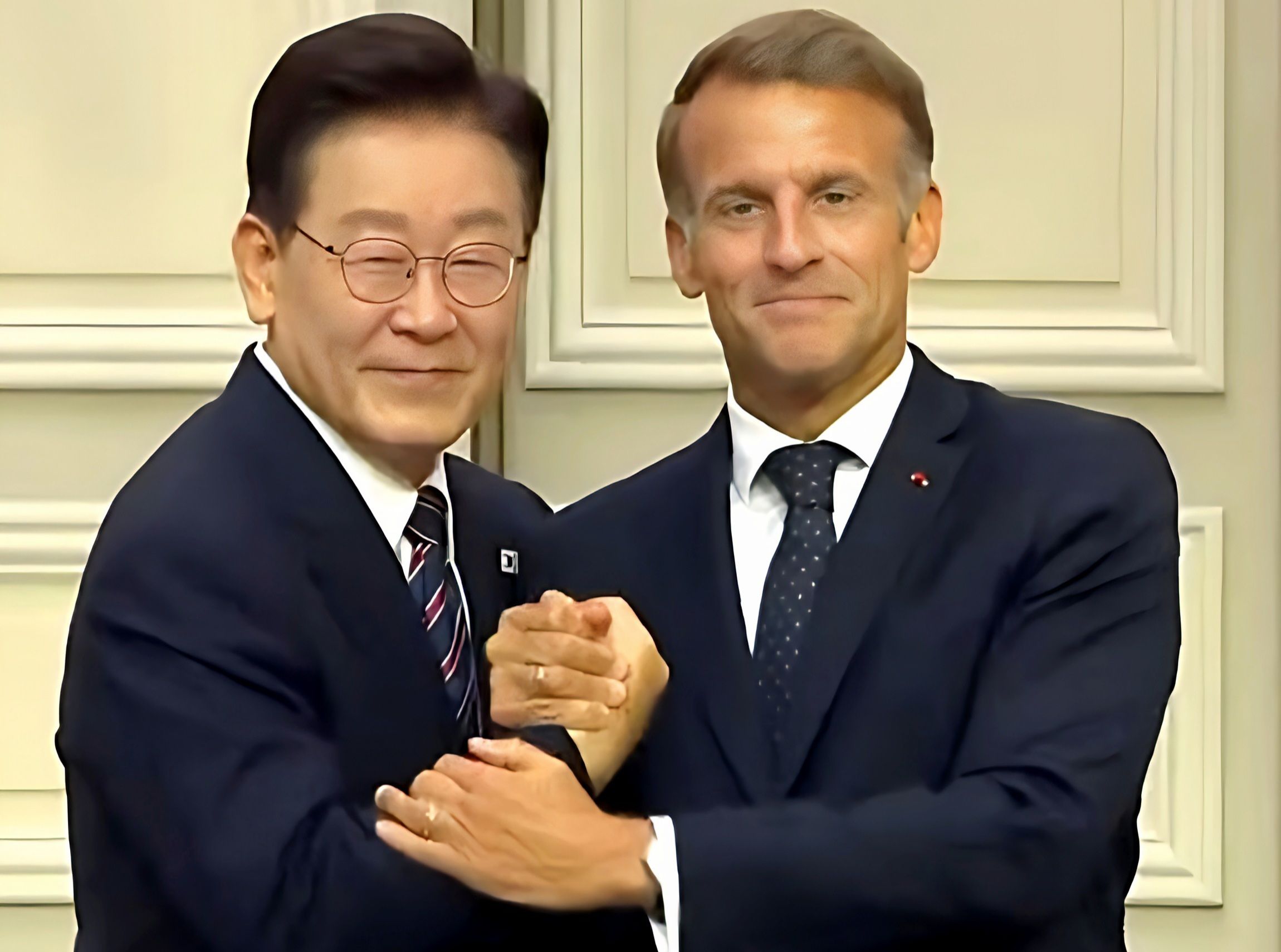
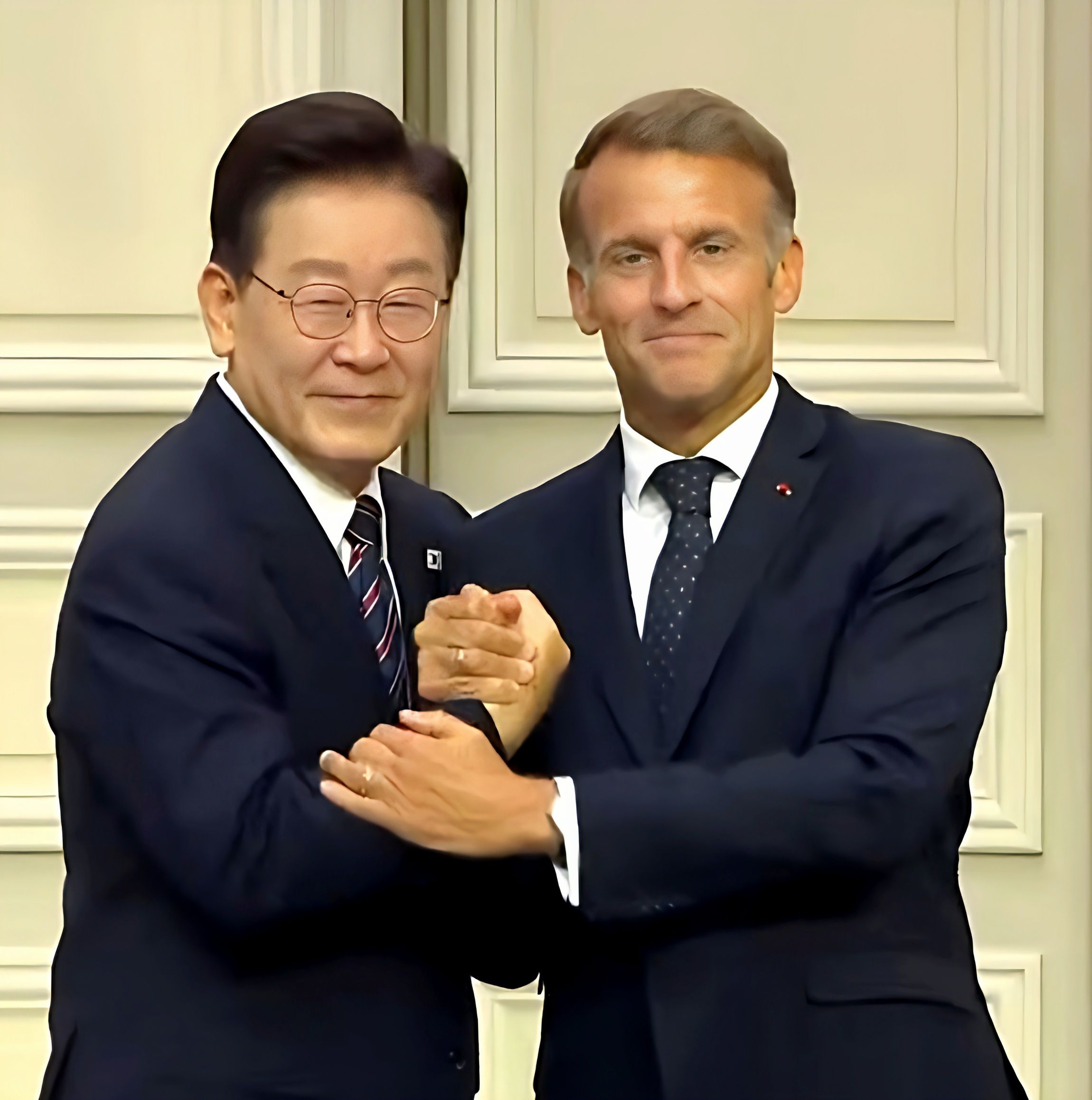
PARIS — Behind the gilded doors of the Élysée Palace and the carefully orchestrated champagne toasts celebrating 140 years of diplomatic relations, French President Emmanuel Macron and South Korean President Lee Jae Myung were conducting business of a far more consequential sort. Beneath the customary diplomatic rhetoric of shared democratic values and cultural affinities, the summit held this week in the French capital was defined by hard-nosed, transactional pragmatism. As both leaders stepped before the press corps to unveil an ambitious roadmap aiming to expand annual bilateral trade to $20 billion by 2030, the question echoing through international diplomatic circles was unmistakable: What did Paris and Seoul actually trade?
The answer lies at the strategic intersection of European aspirations for autonomy and South Korea's unmatched industrial velocity. Far from a ceremonial photo-op, the two middle-power heavyweights engineered a calculated barter of geopolitical leverage, technological resilience, and industrial defense muscle.
At the forefront of the ledger was defense and aerospace collaboration. South Korea, which has established itself as the democratic world’s most agile and dependable defense manufacturing powerhouse, brought high-speed industrial scaling, advanced robotics, and land-power artillery capabilities to the table. France, possessing sovereign aerospace architecture and world-renowned defense R&D through giants like Airbus, offered crucial technical pedigree and institutional pathways into the European defense ecosystem. By signing an amended protocol to their military secrets protection agreement and agreeing to expedite a mutual military logistics support treaty, the two nations laid the structural groundwork for joint production and operational interoperability. Seoul secures deeper technological integration with Europe's premier military apparatus, while Paris acquires an industrial partner capable of breaking the prolonged manufacturing bottlenecks that have left Western defense stockpiles badly depleted.
Energy security formed the second pillar of this cross-continental transaction. While French and South Korean conglomerates have often locked horns as fierce competitors in overseas civilian nuclear tenders, Paris and Seoul recognized that present geopolitical fracturing demands collaboration over rivalry. In a pivotal step toward stabilizing the global nuclear fuel supply chain, Korea Hydro & Nuclear Power (KHNP) and French nuclear giant Orano concluded a letter of intent for long-term uranium enrichment cooperation. By launching a high-level ministerial dialogue channel and pooling resources on next-generation small modular reactors (SMRs), Seoul insulated itself against upstream nuclear fuel disruptions, while Paris secured a proven engineering partner to assist with Europe’s ambitious nuclear renaissance.
The diplomatic bargaining was equally sharp on the maritime security front. Macron skillfully nudged Seoul toward broader international responsibilities, securing a bilateral consensus to coordinate on restoring and safeguarding freedom of navigation in the Strait of Hormuz—a precarious chokepoint through which the vast majority of South Korea's crude oil imports must travel. In exchange, France provided an unequivocal commitment to maintaining peace and stability on the Korean Peninsula and reaffirmed its Indo-Pacific presence, highlighted by the forthcoming stopover of the French Air Force's "PEGASE" mission in South Korea.
Beyond heavy metal and uranium, the bilateral portfolio produced 16 distinct pacts covering artificial intelligence, quantum computing, semiconductors, and biotechnology.
Yet nowhere was the transactional synergy more vivid than in the creative soft-power arena. Setting the stage at the Lumière Summit earlier in the week, the two leaders launched the landmark "Lumière Partnership"—a massive €1 billion (approximately 1.5 trillion won) global cultural fund dedicated to co-financing and advancing creative industries, including cinema, animation, and video games. Underpinning this financial vehicle, the culture ministries of both nations renewed their bilateral agreement on cultural cooperation, formalizing actionable frameworks for creative talent cultivation and joint-venture funding. The pact ingeniously marries France’s rich artistic heritage as the birthplace of cinema with South Korea’s dynamic storytelling genius and formidable production machinery, establishing a direct, high-caliber gateway for K-content to expand across Europe while revitalizing the continent's screen ecosystem.
For decades, the standard diplomatic script required middle powers to pick a corner and await signals from Washington or Beijing. This week at the Élysée, Paris and Seoul demonstrated an alternative path. By swapping France’s strategic depth and technological pedigree for South Korea’s manufacturing firepower, creative vitality, and supply-chain speed, Macron and Lee did not merely shake hands—they quietly engineered a formidable hedge against a volatile global order.
TAP HERE for an English-Korean bilingual version. [영한대역으로 보려면 여기를 누르세요]