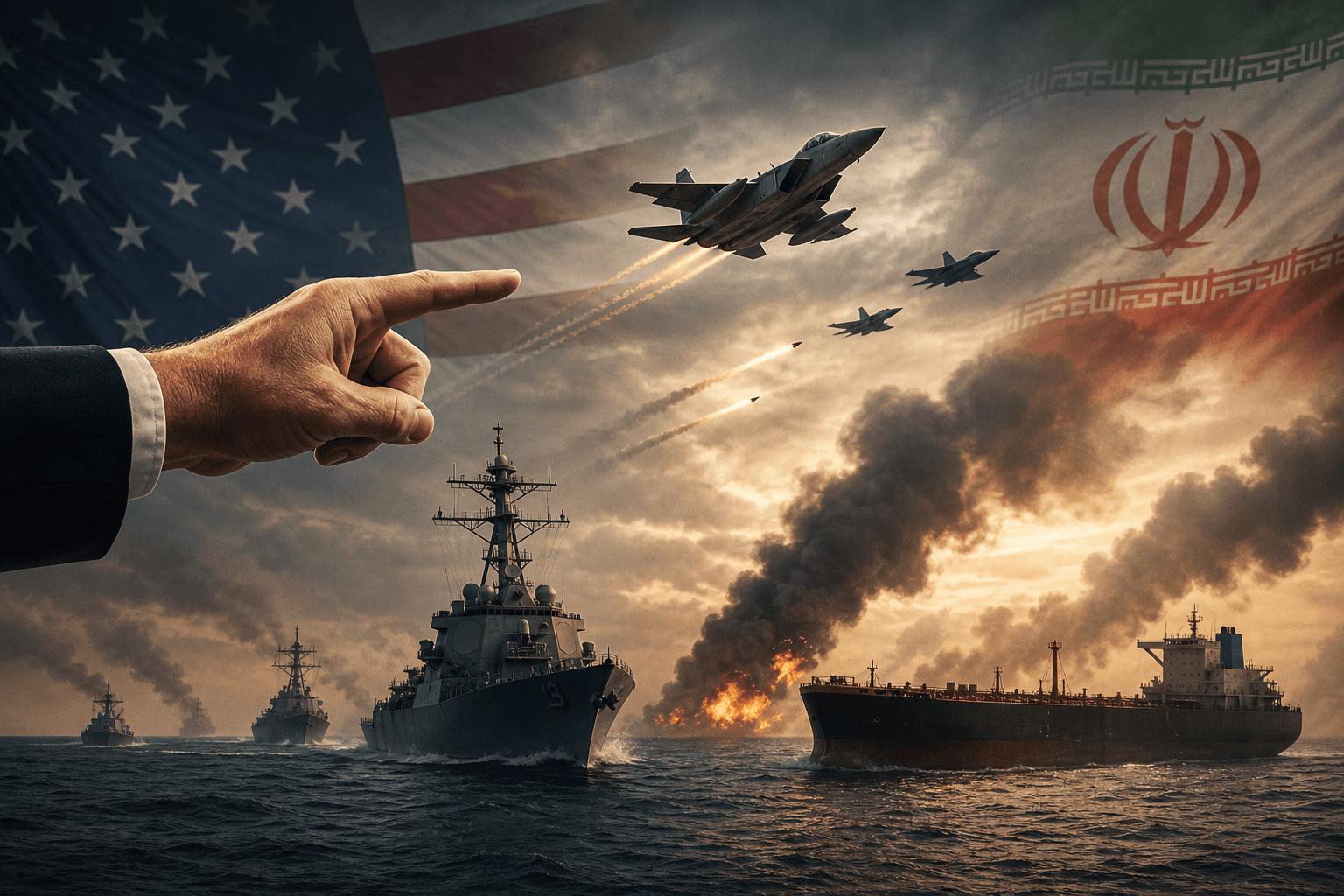
President Donald Trump said the United States would strike Iran again if necessary, a day after U.S. forces carried out another round of attacks in response to violence involving commercial vessels in the Strait of Hormuz. The renewed warning came as Washington and Tehran appeared to move further away from a fragile ceasefire, with Trump also signaling that the truce was effectively over.
U.S. Central Command said it struck more than 80 targets, including air defense systems, command-and-control facilities, coastal radar sites, anti-ship missile positions and vessels operated by the Islamic Revolutionary Guard Corps. The U.S. military said the action was meant to impose costs after attacks on shipping in one of the world's busiest maritime corridors. CENTCOM described the Iranian actions as a violation of the ceasefire and a threat to freedom of navigation, while a retired former NATO commander, Admiral James Stavridis, said Trump now faces limited and difficult choices ranging from disengagement to much broader military escalation or a more incremental increase in pressure.
Iranian officials and military authorities condemned the strikes as aggression and warned of a forceful response. Iranian media reported explosions in several southern locations, including Kharg Island, Qeshm Island, Sirik and Bandar Abbas, and said several people were injured by shrapnel at a commercial pier in Sirik. Tehran also criticized Washington's decision to revoke a license that had allowed Iranian oil sales through August, calling the move a breach of the interim framework. Iranian Foreign Minister Abbas Araghchi said talks on a final deal would not begin while threats continued, underscoring how military pressure and diplomacy are now unfolding at the same time.
The confrontation has centered on the Strait of Hormuz, a narrow waterway critical to global oil and liquefied natural gas shipments. Recent attacks on tankers, including a Qatari gas vessel and a Saudi-flagged crude carrier, have heightened concern over regional stability and energy flows. Analysts say the waterway has become a central point of leverage in the U.S.-Iran standoff: Iran retains the ability to disrupt confidence in maritime traffic, while the United States is under pressure to preserve navigational security without being drawn into a larger war.
That dynamic has left both sides pursuing a volatile mix of coercion and negotiation. Gulf states have increasingly tried to shape outcomes through diplomacy, even as Washington maintains military superiority and Tehran seeks to preserve its regional influence and oil exports under sanctions. The result is a tense equilibrium in which limited strikes, economic pressure and intermittent talks coexist, with each new incident carrying the risk of broader escalation.