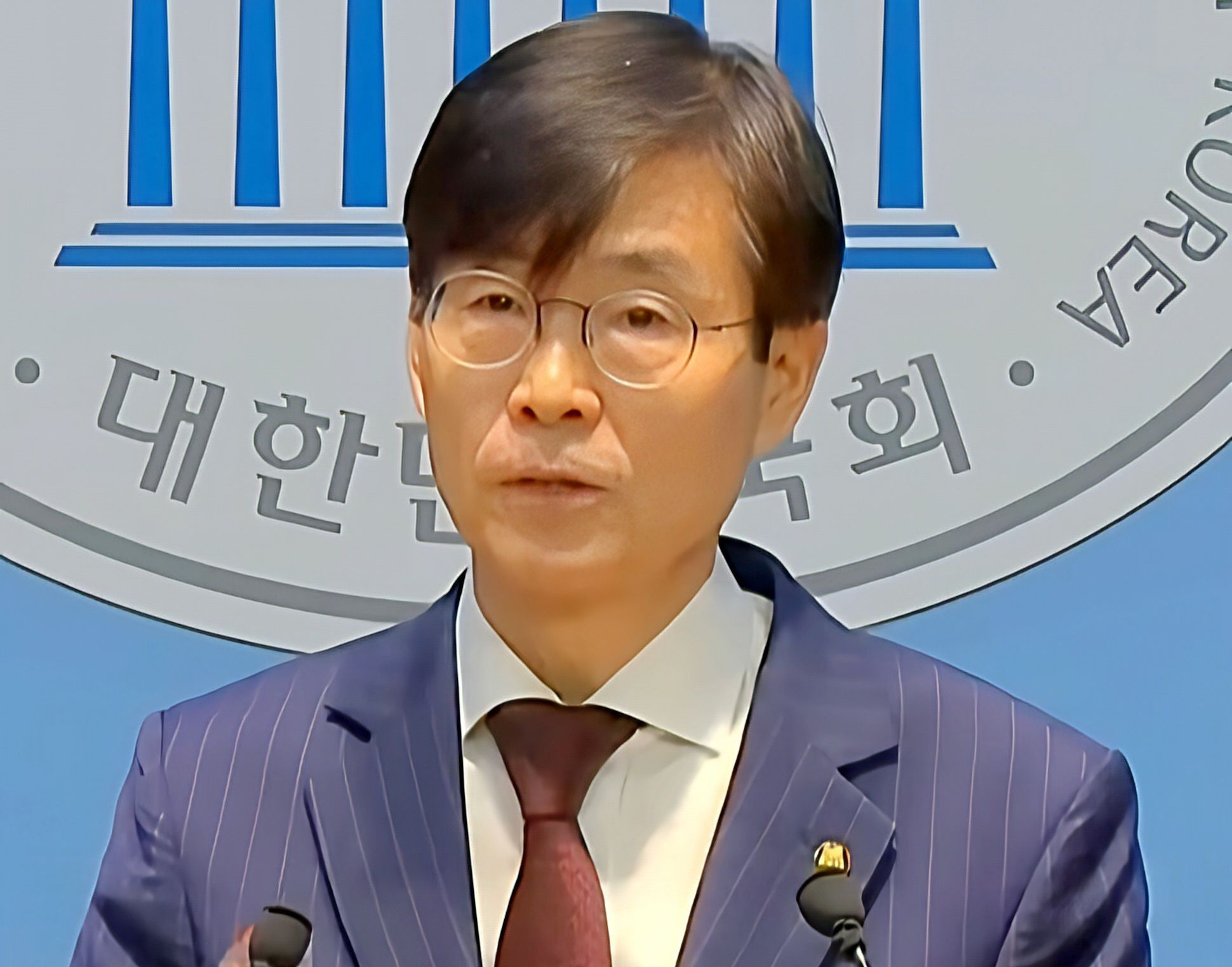
SEOUL — Seoul Mayor Oh Se-hoon has been slapped with a hefty 10 million won ($7,200) fine in his first trial regarding allegations of illegally financing public opinion polls, a devastating judicial blow that could unceremoniously end his mayoral tenure. The Seoul Central District Court delivered the verdict on July 22, local time, finding the high-profile politician guilty of violating the stringent Public Official Election Act. If this verdict is ultimately upheld by the Supreme Court, Oh will immediately be stripped of his position, paving the way for a fiercely contested mayoral by-election in either April or October of next year.
The crux of the legal battle centered on allegations that Oh's camp received unauthorized public opinion survey results provided by self-proclaimed political broker Myung Tae-kyun through a proxy payment scheme. Prosecutors indicted the mayor on charges of funneling undisclosed funds to a polling agency to conduct favorable surveys prior to a major election campaign, thereby bypassing official campaign finance regulations and mandatory reporting requirements. The court determined that the evidence presented by the prosecution overwhelmingly demonstrated that the payments were made covertly to manipulate public perception and gain an unfair electoral advantage, which fundamentally undermines the integrity of the democratic voting process.
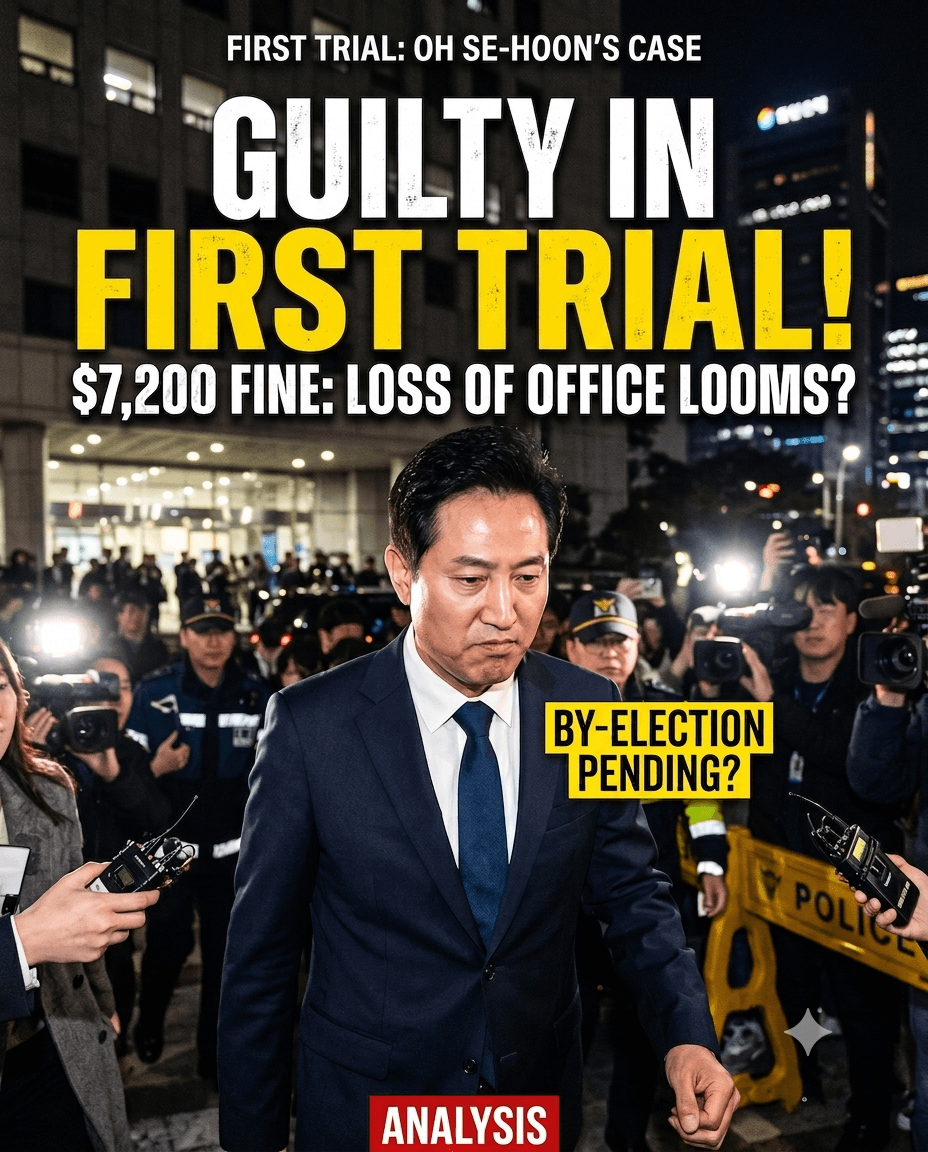
In handing down the sentence, the court also found two co-defendants guilty for their active roles in the illicit financial arrangement. Kang Chul-won, former Vice Mayor for Political Affairs in Seoul, was sentenced to a fine of 3 million won, while businessman Kim Han-jung was ordered to pay a 5 million won fine for his involvement in channeling the illegal funds.
In South Korea, the legal threshold for an elected official to maintain their seat is remarkably strict. Under the Public Official Election Act, an official automatically loses their position if they are handed a confirmed fine of 1 million won or heavier for election-related crimes. Given that the trial court's 10 million won fine is exactly ten times the statutory threshold for losing office, the political survival of the conservative heavyweight now hangs by the thinnest of legal threads.
The immediate political ramifications of the court's decision have sent shockwaves through the capital's political landscape. If Oh fails to overturn the ruling in the appellate and supreme courts, the ensuing leadership vacuum in the Seoul Metropolitan Government will trigger a high-stakes by-election. According to the National Election Commission's calendar, such an election would take place in either April or October of next year, depending on the exact timing of the Supreme Court's final adjudication.
This potential electoral showdown is already being viewed by political analysts as a critical bellwether for the next presidential race. It guarantees a brutal, all-out clash between the main opposition People Power Party, desperate to maintain its grip on the capital, and the ruling Democratic Party, eager to reclaim the influential mayoral seat as a stepping stone to broader national dominance.
Following the verdict, Mayor Oh's legal representatives expressed profound disappointment and immediately vowed to appeal the decision. They maintained that the funds in question were legitimate administrative or preliminary expenses and not illicit campaign contributions designed to sway voter sentiment. "We cannot accept this ruling, which relies heavily on circumstantial assumptions rather than concrete facts," a spokesperson for the defense team stated outside the courthouse. "We are confident that the truth will be fully vindicated in the higher courts, where the flaws in the prosecution's logic will be exposed."
Despite the defense's optimism, the severity of the initial sentence casts a long and dark shadow over Oh’s political future. A former rising star who famously resigned from the same mayoral post in 2011 over a dispute regarding free school lunches, Oh made a dramatic and triumphant return to the office a decade later. Now, facing the grim prospect of an involuntary exit, his administration's major policy initiatives—ranging from massive urban redevelopment projects to structural public welfare reforms—face an indefinite period of paralysis, bureaucratic stagnation, and profound uncertainty.
As the high-stakes case moves to the Seoul High Court, the entire nation will be watching closely. The final outcome will not only determine the personal and political fate of one of South Korea's most recognizable politicians but also fundamentally reshape the balance of power in the heart of the country's government.