STOCKHOLM — Imagine looking into the bathroom mirror one morning, only to have your reflection grin, step out, and offer a handshake.
It is a chilling thought, but the moment you extend your hand, something even more bizarre happens.
Your right hand can never completely overlap with the hand of your reflection.
The only thing that can meet your right hand is its "left hand."
In chemistry, this property where two objects look like identical doppelgängers yet can never be superimposed due to opposite orientations is called "chirality" (handedness).
Now, what if these mirror-twin molecules enter our bodies, and one turns out to be a lifesaving miracle drug while the other becomes a deadly poison?
It sounds like a dark joke, but this is both the most painful catastrophe in pharmaceutical history and a 170-year-old riddle finally laid to rest by the 2026 Nobel Prize in Chemistry.
The sinister prank of mirror twins: the thalidomide tragedy of the early 1960s
Why do we even need to bother scrutinizing the mirrored shapes of molecules?
Humanity learned that chilling lesson the hard way during the thalidomide disaster between 1957 and 1961.
Back then, thalidomide, a sedative hailed as a miraculous cure for morning sickness in pregnant women, sold like wildfire.
Soon after, however, a heartbreaking tragedy struck as more than 10,000 infants worldwide were born with severely stunted or missing limbs.
When scientists investigated the cause, they uncovered a terrifying truth.
The thalidomide molecule also existed as two mirror-image twins: "right-handed" and "left-handed."
While the right-handed molecule was a benevolent angel soothing morning sickness, its mirrored left-handed twin was an insidious demon that choked fetal blood vessel growth, causing severe limb malformations.
Proteins and receptors in our bodies act like precision locks, accepting only keys of an exact fit.
If a mirror-image molecule with the wrong handedness slips in, it can smash the lock or trigger the wrong biochemical switch.
The problem was that whenever chemists synthesized these molecules in standard laboratory flasks, they inevitably got an equal 50-50 mix of both twins.
Weeding out the evil twin in the mirror and selectively producing only one handedness was considered chemistry's impossible mission.
Pasteur’s painstaking 1848 tweezers quest and a genius physicist in 1953
The history of this curious asymmetry traces back much further into the past.
In 1848, Louis Pasteur (1822–1895), famed for his vaccines, was examining tartaric acid crystals left behind in wine fermentation dregs.
Peering through his microscope, he noticed that the faceted faces of the crystals fell into two mirror-image varieties.
Armed with a magnifying glass and tweezers, Pasteur painstakingly sorted the crystals one by one and dissolved them separately.
Lo and behold, one solution rotated polarized light to the right, while the other rotated it to the left.
Furthermore, in an 1857 experiment where he fed this tartaric acid to bacteria, the microbes ravenously consumed only the grape-derived right-handed molecules, refusing to touch the left-handed ones.
Even single-celled bacteria strictly discriminated between mirror twins.
In fact, all amino acids that make up the proteins in our bodies are 100% left-handed, while the sugars in our DNA helix are exclusively right-handed.
What on earth happened in the primordial soup of Earth to make life adopt such a stubborn "single-handed dietary preference" (homochirality)?
In 1904, German chemist Willy Marckwald (1864–1942) pioneered "asymmetric synthesis" by using a chiral catalyst to yield slightly more of one mirror image, but the margin was disappointingly small.
Then in 1953, British theoretical physicist Charles Frank (1911–1998) stepped in and challenged chemists with a provocative mathematical model.
He argued that explaining how life achieved 100% single-handedness required proving three strict chemical conditions:
1. There must be a chiral catalyst driving an asymmetric reaction.
2. As one hand becomes dominant, that difference must be automatically amplified while suppressing the rival twin.
3. The product molecule must catalyze its own creation through "autocatalysis," snowballing exponentially.
Condition 1 was solved in the late 20th century, but Conditions 2 and 3 lingered for decades as mere mathematical equations on paper.
That was when two towering giants entered the stage.

Protagonist 1: Henri B. Kagan, the French gentleman who shattered conventional wisdom
Henri B. Kagan (born 1930), a titan of French chemistry, was born in Boulogne-Billancourt, France, in 1930.
He earned his doctorate from the prestigious Collège de France in 1960 and served for decades as a professor at Université Paris-Sud (now Paris-Saclay University), making monumental contributions to organic chemistry.
In the early 1980s, Professor Kagan challenged a piece of conventional wisdom that everyone else took for granted.
At the time, scientists believed that if a catalyst was 60% right-handed, the resulting drug product would faithfully reflect a 60% right-handed yield.
In other words, they assumed a strictly linear, directly proportional relationship between catalyst and product.
Professor Kagan, however, zeroed in on a structural feature: a single metal catalyst atom can bind multiple chiral molecules at once.
What would happen if a "hybrid catalyst" formed, where a right-handed and a left-handed molecule paired up on the same metal center?
In 1986, Professor Kagan published a historic landmark paper.
As it turned out, this mismatched hybrid catalyst was sluggish as a snail, contributing almost nothing to driving the reaction.
Meanwhile, only the pristine, single-handed catalysts operated at blistering speeds.
Consequently, even a tiny excess of right-handed catalyst trapped the defective opposite molecules into sluggish hybrids, causing the right-handed product to surge dramatically.
When one plus one yields ten instead of two, chemistry terms this the "non-linear effect."
This was the breakthrough moment when Professor Kagan finally checked off Charles Frank’s Condition 2: the amplification of asymmetry.
Protagonist 2: Kenso Soai, the tenacious scientist who turned 0.001% chance into 99.9% certainty
Across the sea in Japan, another chemist was deeply inspired by Kagan’s breakthrough.
That was Professor Kenso Soai (born 1950).
Born in Hiroshima, Japan, in 1950, he earned his PhD in chemistry from the University of Tokyo in 1979 and dedicated his entire career to chiral synthesis as a professor at Tokyo University of Science.
Observing the uncanny structural resemblance between the catalyst and the resulting product, Professor Soai conceived an audacious idea.
"What if the product itself acts as the catalyst, churning out identical copies of itself?"
After countless failures, he demonstrated the first asymmetric autocatalytic reaction in 1995, starting with a mere 2% excess of one enantiomer and letting it snowball up to 87%.
Yet he did not stop there, digging into the mystery for another eight grueling years.
He wanted to achieve that absolute, 100% single-handed purity seen in living nature.
And in 2003, he unveiled the legendary "Soai reaction," revered as one of the most elegant chemical experiments in human history.
Professor Soai prepared a completely symmetrical molecular solution with zero innate handedness.
It was a completely unchiral mixture, devoid of any external guiding hand.
Yet once the reaction was initiated, a miracle unfolded.
At the very genesis of molecule formation, a minuscule statistical fluke of just 0.0001% tipped the scales ever so slightly toward one mirror twin.
Instantly, that microscopic winner began serving as an autocatalyst, cloning itself and ravenously taking over the entire reaction.
By the time the reaction concluded, the test tube was overwhelmingly filled with a single mirror image at an astounding 99.99% purity.
It was as if tossing a coin produced heads by an infinitesimal margin, and that tiny lead snowballed until hundreds of millions of heads cascaded out in a row.
Condition 3, the final missing piece proposed by Frank 50 years earlier, was thus spectacularly validated in a real-world test tube.
Two giants who broke the mirror, unlocking the cipher of life
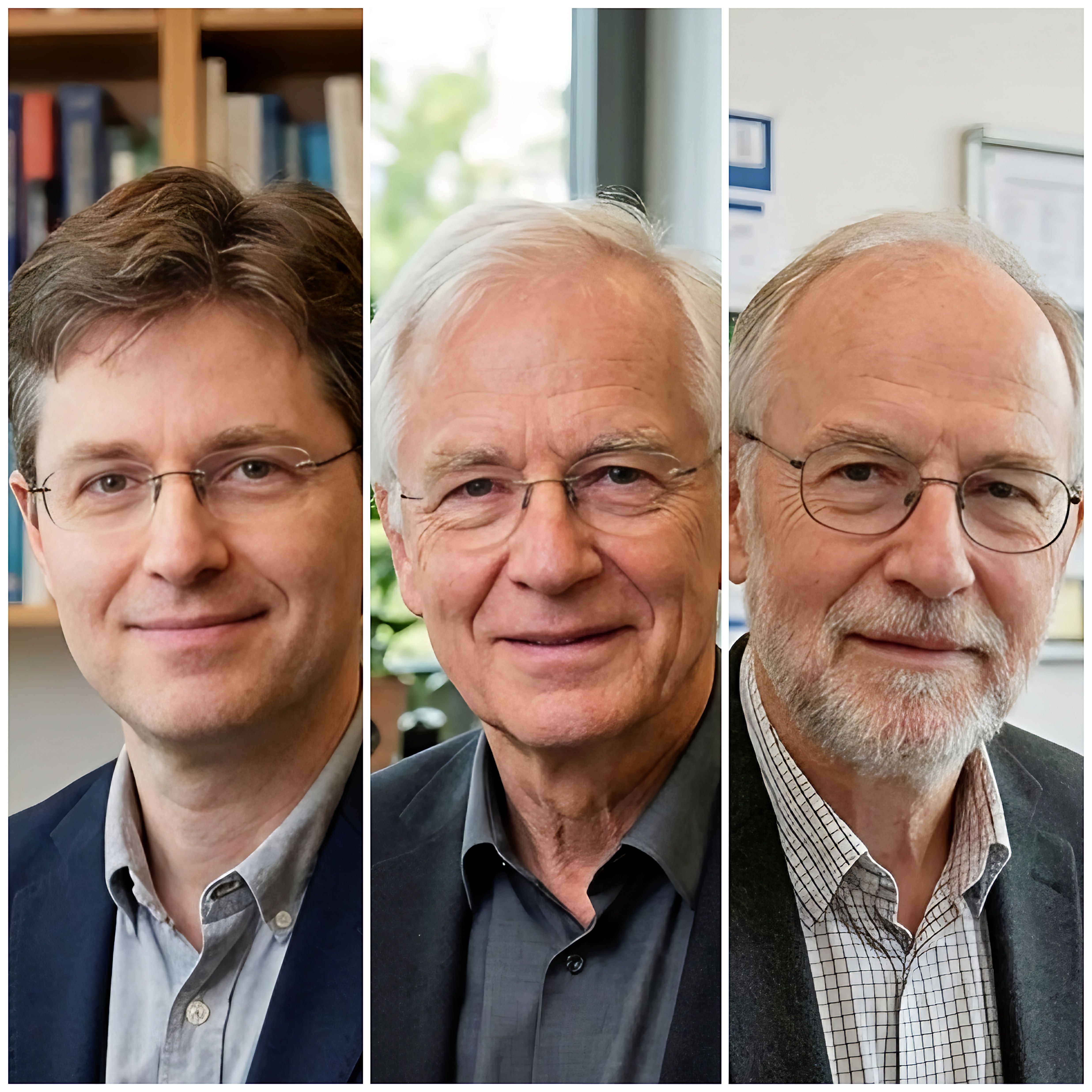
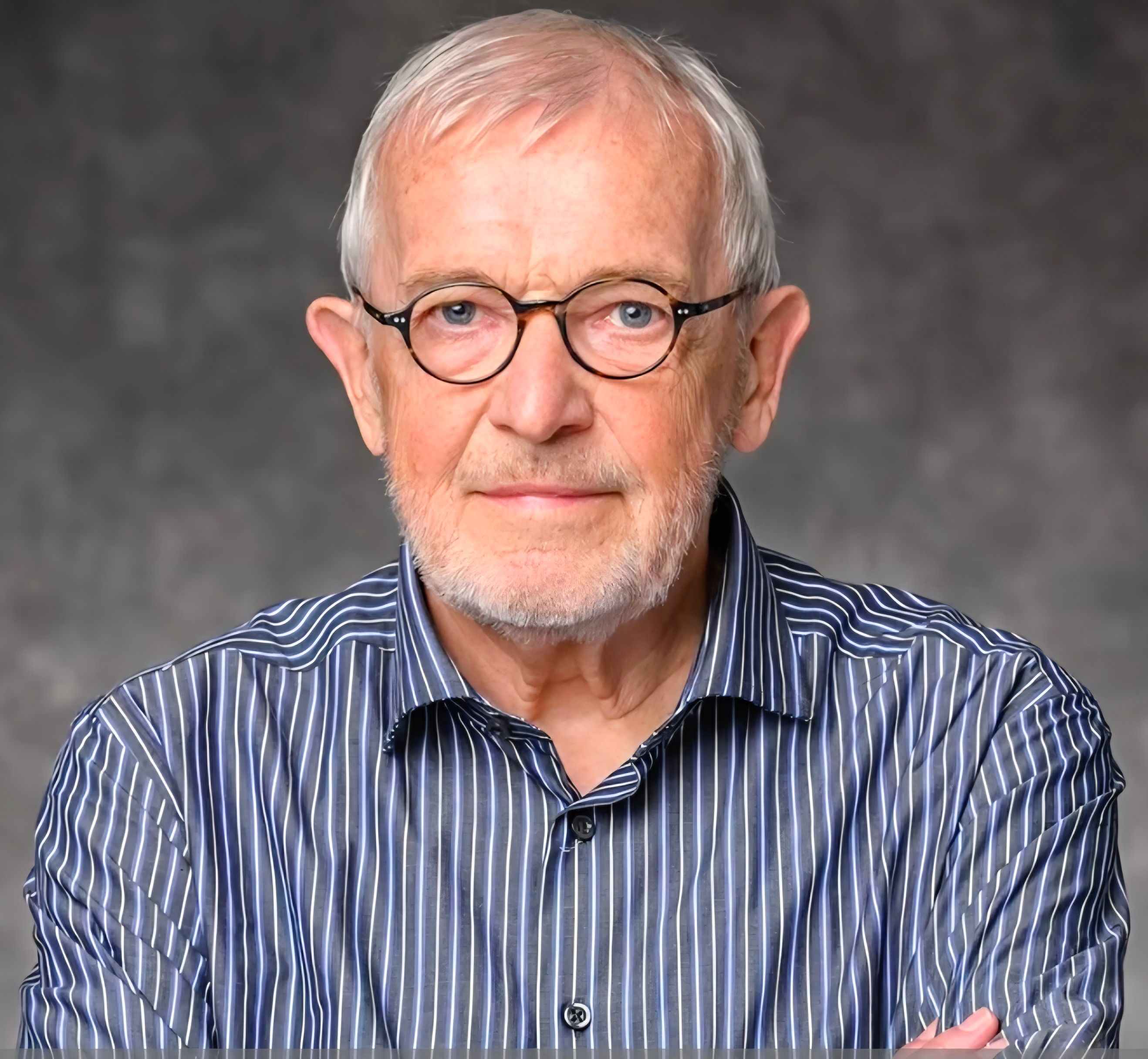
In 2026, the Royal Swedish Academy of Sciences awarded the Nobel Prize in Chemistry to these two visionaries: Henri B. Kagan and Kenso Soai.
Without their discoveries, modern pharmaceutical firms would still be hemorrhaging trillions of won trying to pluck evil twin molecules out with chemical tweezers.
Thanks to Kagan’s non-linear effect, drugmakers can mass-produce 99% pure targeted cancer therapeutics and new medicines even with inexpensive, lower-purity catalysts.
At the same time, the Soai reaction offered a compelling clue to humanity's ultimate origin question—"Why did only left-handed proteins survive on primordial Earth?"—proving that an infinitesimal seed of chance cloned itself until it swallowed the entire system.
The next time you look into a mirror, take a close, thoughtful look at your own hands.
Doesn’t it send a thrilling shiver down your spine to realize that humanity’s greatest minds spent 170 years in grueling laboratories just to tame that mirror-twin image of our hands?
TAP HERE for an English-Korean bilingual version. [영한대역으로 보려면 여기를 누르세요]