Click here to watch the launch footage.
GOHEUNG, South Jeolla Province, Oct. 7 — South Korea successfully launched its homegrown space rocket, Nuri, on its fifth orbital mission Wednesday, deploying five Earth-observation microsatellites into target orbit and cementing the nation's transition toward dependable, commercially viable space transport.
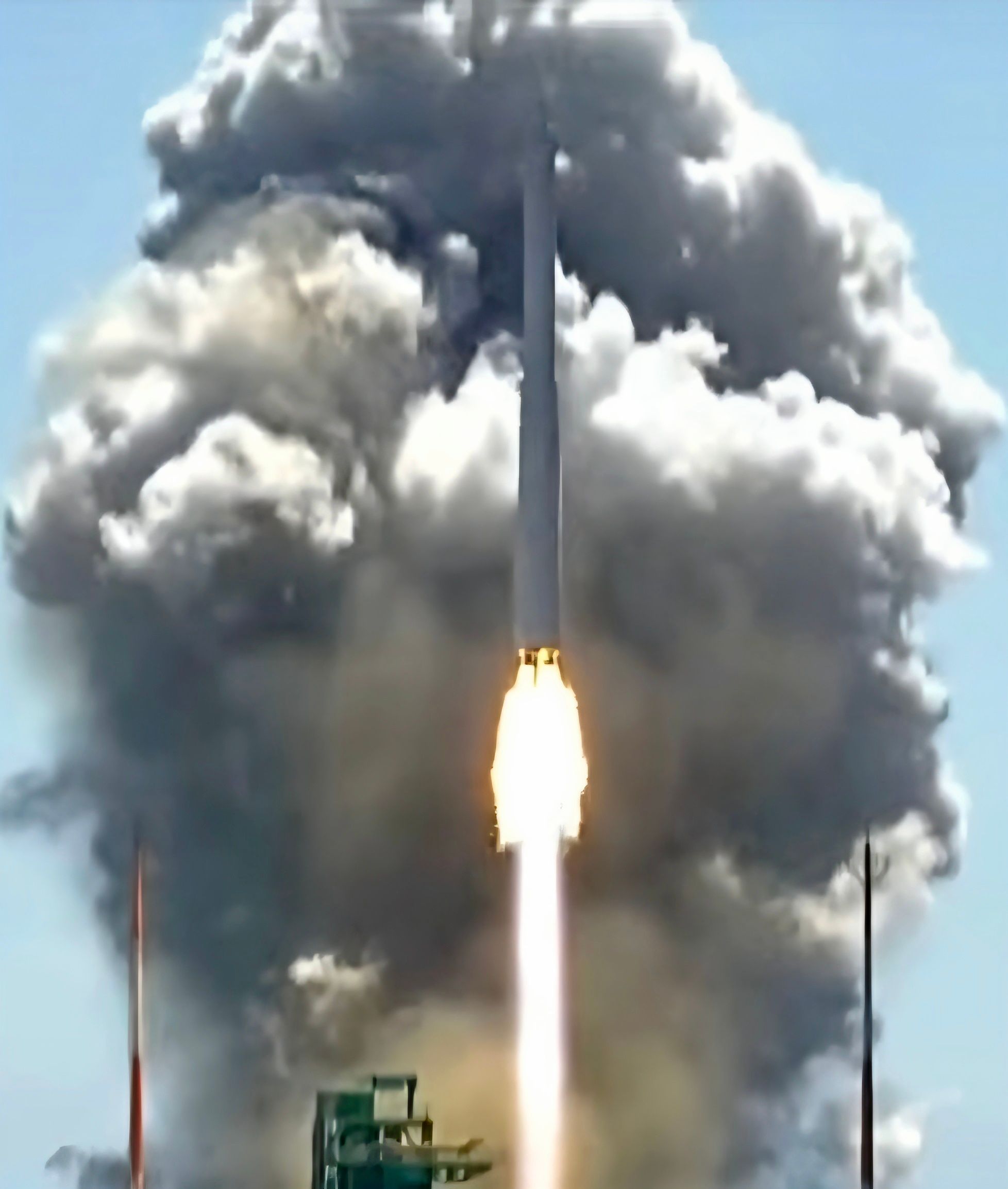
The three-stage launch vehicle, officially designated KSLV-II, roared into a cloudless sky from the seaside Launch Pad 2 at the Naro Space Center in Goheung, South Jeolla Province, at precisely 12:25 p.m. local time. The liftoff proceeded on favorable atmospheric conditions, marking the very first time in Nuri’s operational history that a launch occurred exactly at its scheduled hour without a single minute of delay.
Previous missions had faced agonizing last-minute setbacks: the third launch was delayed by 24 hours due to communication errors between ground-valve and launch-pad control computers, while the nocturnal fourth launch was held for 18 minutes following pressure-sensor irregularities. Wednesday's punctual liftoff demonstrated that ground systems, launch software, and environmental telemetry have reached operational maturity.
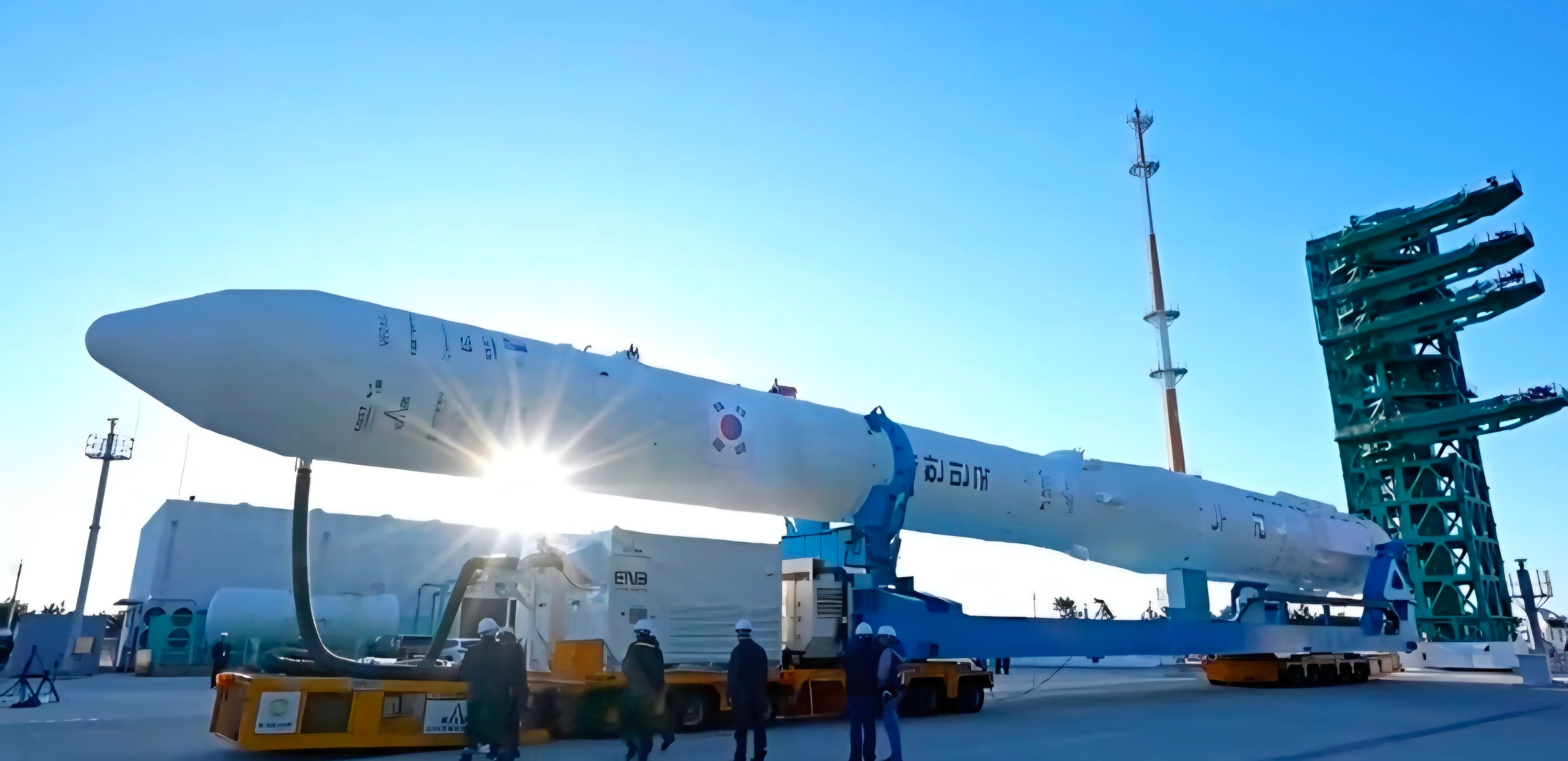
Precision Orbital Injection and Antarctic Contact
Carrying 15 satellites in total—five primary Earth-observation microsatellites and 10 secondary cubesats—Nuri executed its ascent flawlessly. The rocket completed first-stage separation, payload fairing jettison, and second-stage cutoff on schedule before its third-stage engine burned to place the vehicle into its designated trajectory.
The primary objective of the mission was the simultaneous insertion of five microsatellites (Nos. 2 through 6 of South Korea’s national Earth-observation constellation project). It marked the first time the country has deployed five operational satellites into orbit in a single mission.
To prevent catastrophic mid-space collisions, the upper stage released the satellites individually at precise intervals of 35 to 40 seconds. The mission's success criteria required placing the cluster within an altitude margin of 570 kilometers plus or minus 15 kilometers; telemetry verified that all five separated cleanly at altitudes between 575 and 580 kilometers, well within the target envelope.
Crucial ground-station confirmations arrived shortly thereafter. At 1:08 p.m.—approximately 43 minutes after liftoff—the King Sejong Station in Antarctica established bilateral communication with Microsatellite No. 6, verifying its health and deployment status. Bilateral contact procedures for Satellites 2 through 5 were subsequently initiated via domestic ground stations in Daejeon and Jeju, alongside an overseas polar station in Svalbard, Norway.
Cubesat Telemetry and Transparent Oversight
Along with the primary constellation satellites, the rocket carried 10 auxiliary cubesats designed by domestic universities and private startups for climate research and space-technology verification.
During an initial post-launch briefing, the Korea AeroSpace Administration (KASA) reported that all 10 cubesats had cleared their deployer pods. However, space officials promptly issued a factual clarification after downstream telemetry revealed that nine had successfully separated, while one cubesat—developed by aerospace startup Quaternion—failed to eject from its canister. Observers noted that transparent public reporting of such mechanical discrepancies aligns with standard international aerospace practices.
80% Track Record and the Shift to Suncheon
Wednesday’s mission marks Nuri’s fourth consecutive success following its inaugural test flight failure in 2021, when a premature shutdown of the third-stage engine left a dummy satellite falling short of orbital velocity. With four victories across five orbital attempts, Nuri’s cumulative flight success rate has risen to 80 percent—an exceptional reliability figure for an independently developed medium-lift launch vehicle.
Crucially, the launch serves as a watershed moment for the government-to-industry handover under South Korea’s "New Space" initiative. While the state-funded Korea Aerospace Research Institute (KARI) spearheaded the first three launches, primary manufacturing, assembly, and flight operations for the fourth and fifth flights were led by industrial prime contractor Hanwha Aerospace.
Looking ahead, the operational framework will shift further toward the private sector. For the upcoming sixth launch scheduled for the second half of next year, rocket stage assembly will permanently relocate from the state-run Naro Space Center to a commercial assembly plant newly constructed by Hanwha Aerospace in Suncheon, South Jeolla Province.
"This is the first time our nation has simultaneously placed five microsatellites into outer space," said KASA Administrator Oh Tae-seok in an afternoon press briefing. "By successfully placing this constellation into orbit, we have demonstrated an elevated space-logistics capability capable of delivering diverse payloads to orbits and schedules customized to client demands."
Oh added that the upcoming sixth mission will similarly loft another set of five microsatellites, noting that South Korea plans to conduct at least one Nuri launch annually through 2032 to maximize launch vehicle flight heritage and accelerate commercial competitiveness.
Bae Kyung-hoon, Deputy Prime Minister and Minister of Science and ICT, underlined the strategic impact of mass-producing and operating constellation satellites: "The successful mass deployment of constellation satellites constitutes the core achievement of this fifth flight. The government will provide steadfast administrative and financial backing to ensure Nuri's outine launch schedule remains unhindered."