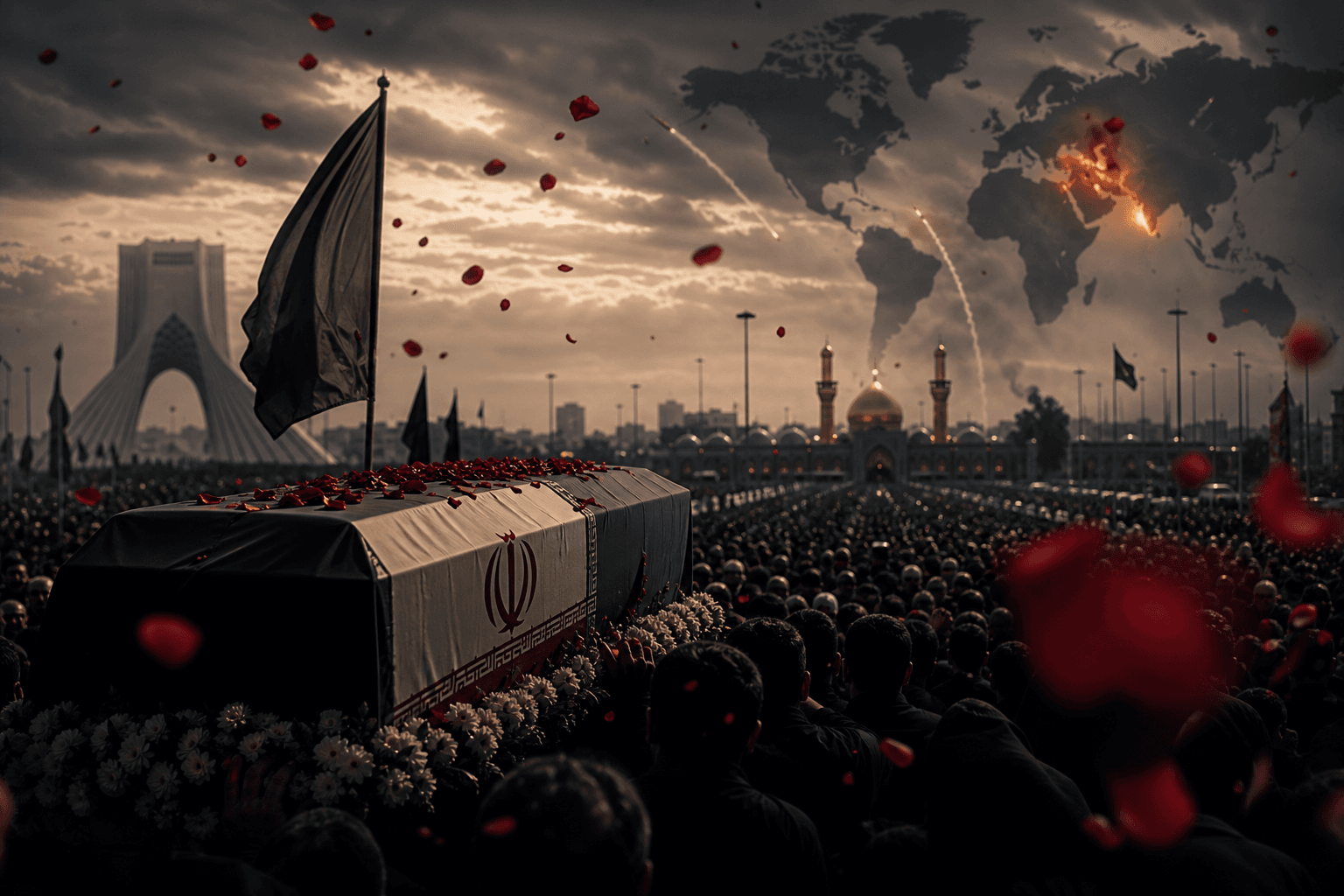
Iran began a week of funeral ceremonies for Ayatollah Ali Khamenei on Saturday, with large crowds gathering at Tehran’s Grand Mosalla as authorities launched nationwide mourning rites for the slain supreme leader. Khamenei, who led Iran since 1989, was killed in an airstrike in February at the start of the war involving Iran, the United States and Israel. State displays included Khamenei’s coffin and those of family members killed alongside him, while streets, airspace and much of daily life in Tehran were shut down for the ceremonies.
Mourners streamed to the capital’s main religious complex, where many wept, beat their chests in mourning and carried banners, portraits and red flags associated with revenge in Shiite symbolism. Some participants called for retaliation and chanted slogans directed at the United States and Israel. Iranian authorities are planning days of processions in Iran and Iraq, and the government expects turnout on a scale comparable to the 1989 funeral of Ayatollah Ruhollah Khomeini.
Iranian officials and clerics have cast the funeral as a demonstration of public loyalty after the war. A senior cleric said turnout would amount to a referendum on the Islamic Republic, while supporters attending the event said they had come to defend their country and religion. Critics, however, described the ceremonies as tightly managed political theater designed to project regime strength and unity at a moment of uncertainty. It remained unclear whether Mojtaba Khamenei, who has succeeded his father as supreme leader, would appear publicly during the rites.
The funeral unfolded against continuing regional friction and diplomatic pressure. Delegations from Hezbollah and Hamas attended ceremonies and met with Foreign Minister Abbas Araghchi, underscoring Iran’s ties to armed groups aligned against Israel and the United States. At the same time, Iran’s negotiator Kazem Gharibabadi warned Britain and France over statements about possible military patrols in the Strait of Hormuz, saying security in the waterway should remain with coastal states. The ceremonies also came as Iran continued indirect talks with Washington over a more permanent end to the war.