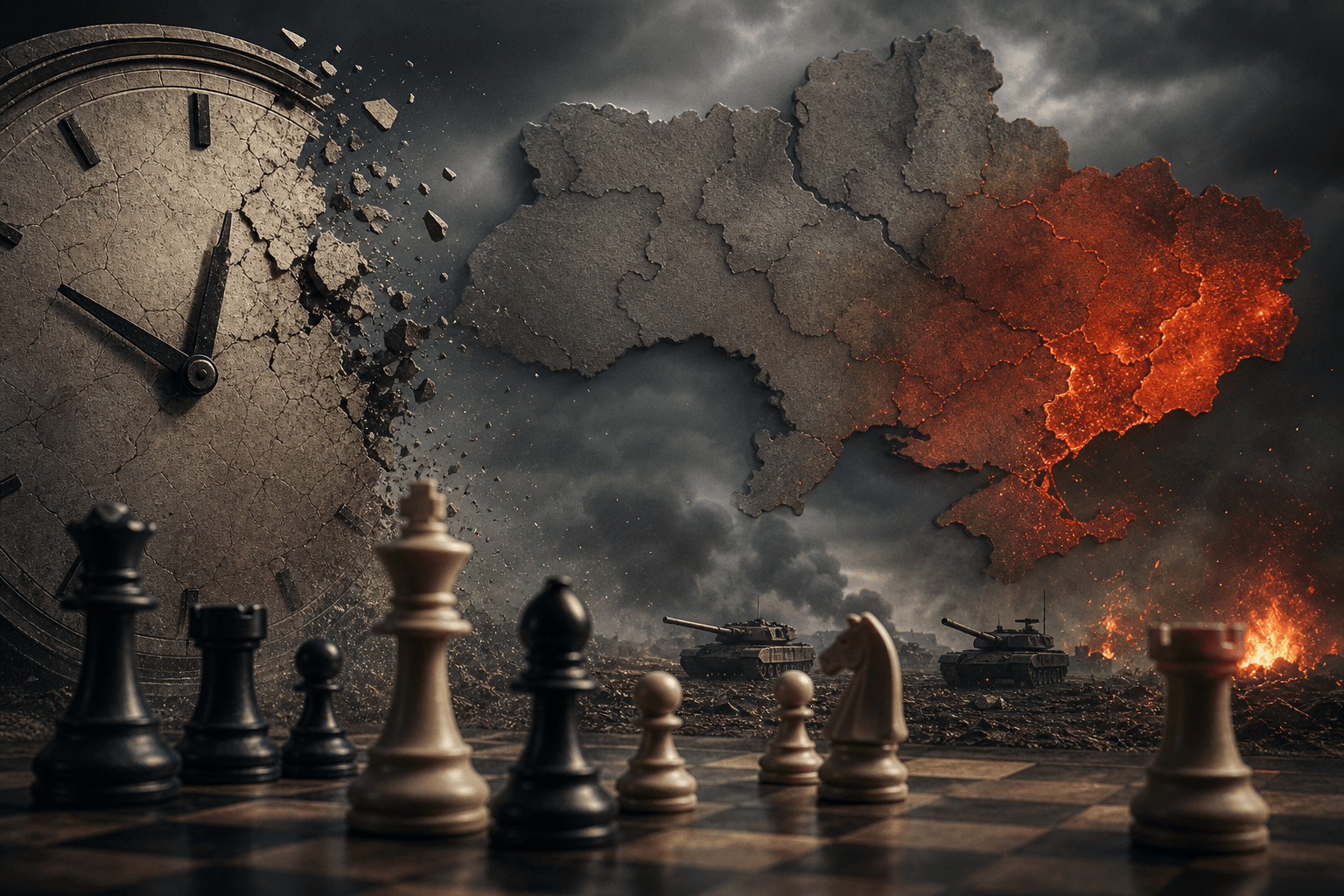
President Volodymyr Zelensky said Russia has set 15 separate deadlines to capture Ukraine's Donetsk region since launching its full-scale invasion in 2022, arguing that Moscow has repeatedly postponed its objective as its offensives failed to achieve their stated goal. In remarks published on his official channels, Zelensky said the latest Russian target date for taking the region is now Dec. 31 after earlier deadlines this year were moved from March 31 to Sept. 1. He said Russian political leaders remain fixated on Donbas and will continue shifting their timelines unless the war ends.
Zelensky laid out a chronology of the changing deadlines, saying Russia set five target dates in 2022, two in 2023, two in 2024, three in 2025 and three so far in 2026. He paired that account with a broader warning about the human cost of the campaign, saying Russia has continued to press attacks in Donetsk despite mounting battlefield losses. He also linked the war effort to wider strain inside Russia, pointing to fuel shortages and budget pressure as Ukraine pursues strikes and sanctions intended to weaken the Russian state's ability to sustain combat operations.
Other reporting on the battlefield has described heavy attrition on the Russian side as drones increasingly dominate the front. CBS News, citing Russian military bloggers and outside analysts, reported claims that some Russian soldiers survive only minutes after reaching the most dangerous front-line areas, though it said those assertions had not been independently verified. The same report said Russia has adapted by sending smaller assault groups to probe Ukrainian positions, while still making gains in key areas around Donetsk, including near Kostyantynivka. It also noted that Ukraine faces manpower strains of its own even as it relies more heavily on drones to limit troop exposure.
The fighting around Donetsk is also feeding a wider policy debate over how the war should end. In one view, advocates against a frozen conflict argue that a ceasefire without a durable political settlement would favor Moscow by preserving territorial gains, easing the costs of active fighting and leaving Ukraine vulnerable to renewed attacks. They contend that any pause in combat should be tied to enforceable guarantees, accountability measures and recognition of Ukraine's sovereignty. That position remains a matter of political argument rather than settled fact, but it underscores how the battle for Donetsk has become central not only to military planning on the ground but also to competing visions of any future settlement.