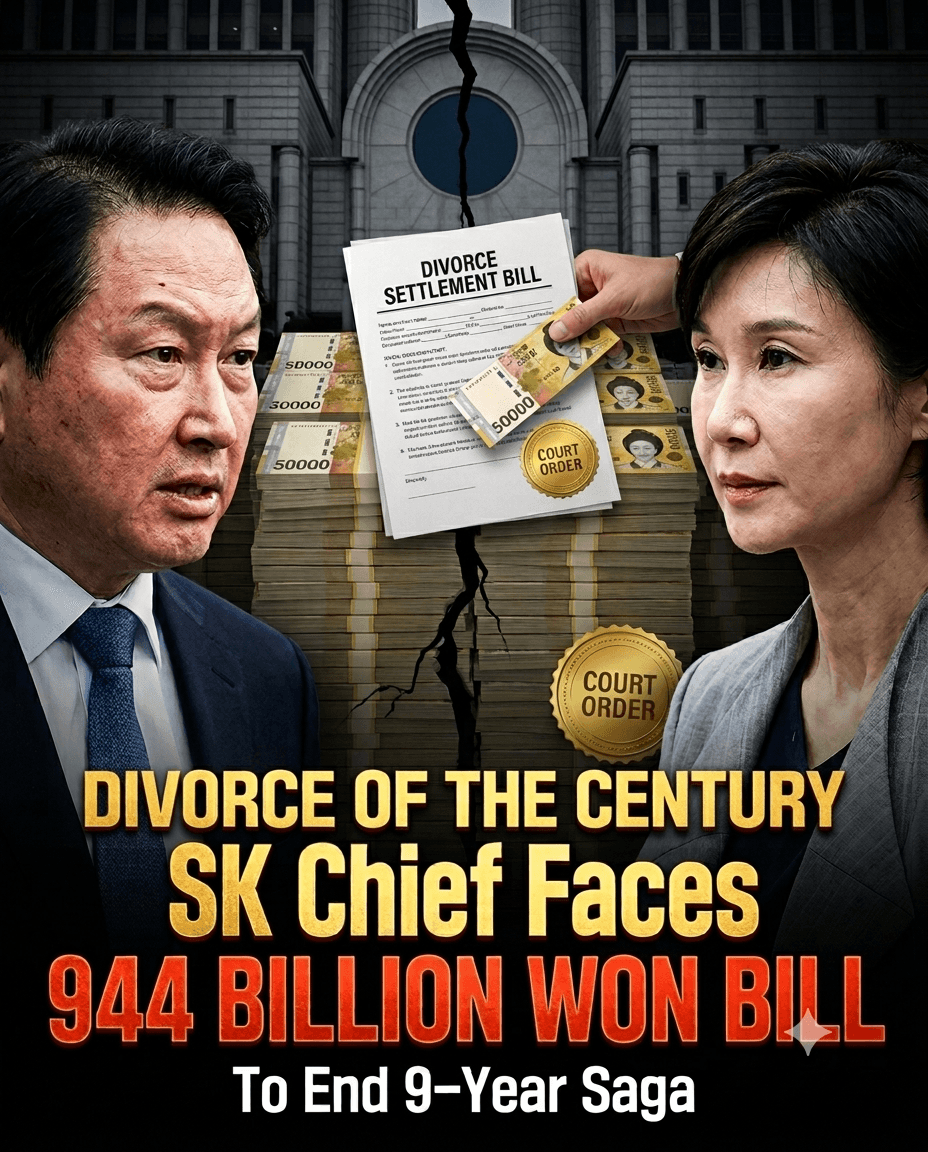
SEOUL, July 24 — In what South Koreans have long dubbed the "divorce of the century," a Seoul appellate court has ordered SK Group Chairman Chey Tae-won to pay a staggering 944 billion won (approximately $685 million) in property division to his estranged ex-wife, Art Center Nabi Director Noh Soh-yeong.
The highly anticipated ruling, delivered Wednesday afternoon by the Seoul High Court during a tense remand trial, writes the latest—and potentially final—chapter in a bitter, nine-year legal saga over the vast fortunes tied to South Korea's second-largest family-run conglomerate.
At the heart of the meticulous judgment is the court’s decision to definitively classify Chairman Chey’s substantial holdings in SK Inc. as joint marital property, subject to division. The bench officially acknowledged that Noh’s domestic labor, child-rearing, and extensive external activities on behalf of the SK Group over their decades-long marriage played a tangible, undeniable role in the massive appreciation of the company's stock value. Ultimately, the court established the final property division ratio at two-thirds (66.6%) for Chairman Chey and one-third (33.3%) for Director Noh.
However, the 944 billion won settlement, while astronomically high by ordinary corporate standards, actually represents a significant haircut from the 1.38 trillion won awarded to Noh in a previous appellate ruling. This dramatic reduction stems directly from the Supreme Court's earlier, groundbreaking intervention regarding a highly controversial 30 billion won "slush fund."
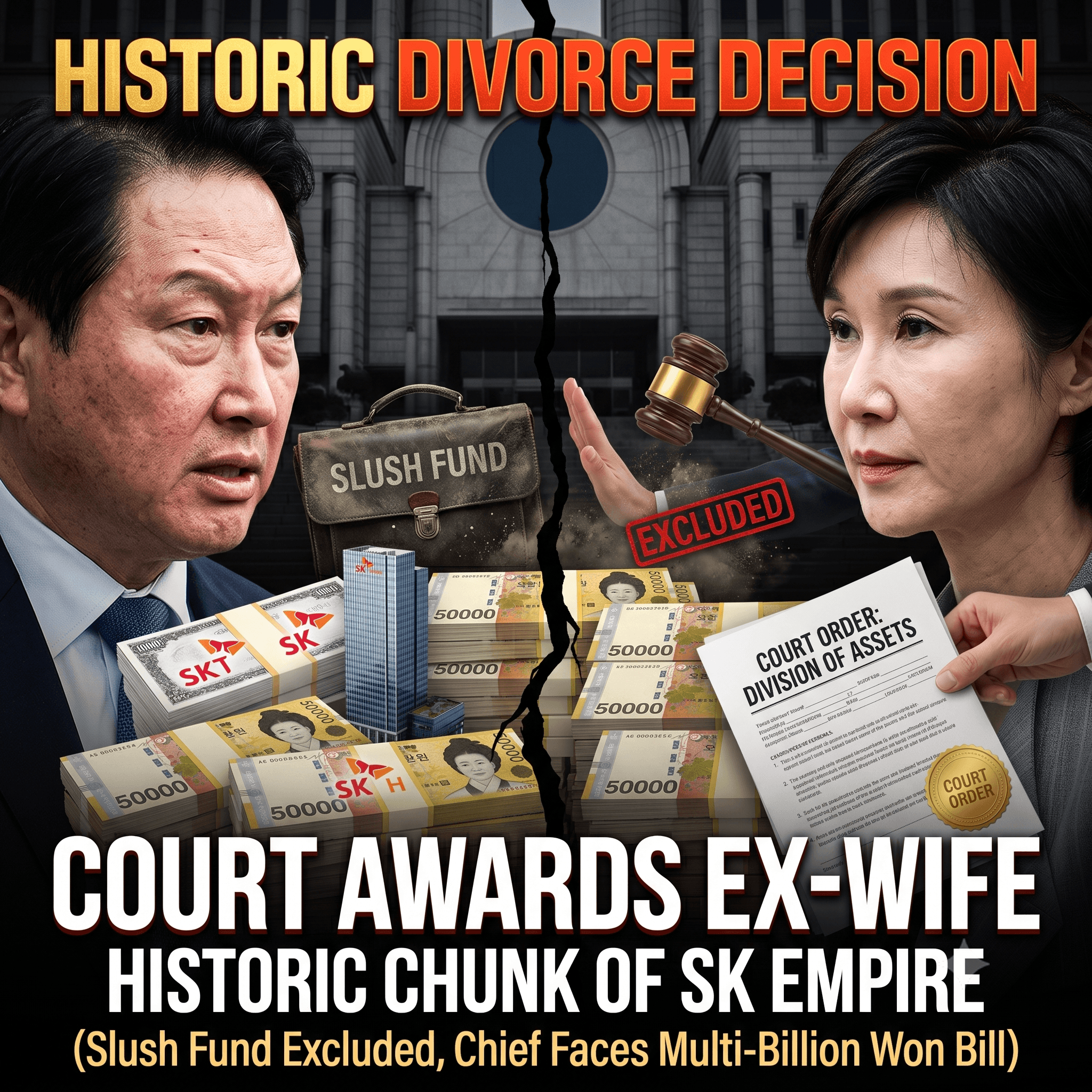
In previous iterations of the trial, lower courts had heavily factored in illicit political funds amassed by Noh's father, the late former President Roh Tae-woo. Those courts recognized the clandestine money as a crucial "seed capital" that facilitated SK Group's explosive growth and aggressive expansion in the telecommunications sector during the 1990s. But the Supreme Court explicitly struck down that logic earlier this year. The top court firmly ruled that the inherently illegal and anti-social nature of the bribery funds meant they could not legally be credited to Noh as a legitimate, recognizable contribution to the couple's overall wealth accumulation.
Complying strictly with the top court's mandate, the Seoul High Court stated on Wednesday, "In accordance with the Supreme Court's remand intent, the 30 billion won in financial support from Roh Tae-woo is not taken into consideration in assessing Noh Soh-yeong's contribution to the formation or maintenance of Chey Tae-won's stock value, nor is it factored into the final property division ratio."
The origins of this unprecedented corporate soap opera trace back to a wedding that once captivated the entire nation. Chey and Noh tied the knot in 1988 at the Blue House, a union widely perceived at the time as the ultimate, unbreakable alliance between immense corporate wealth and absolute political power. But the fairy-tale narrative shattered publicly and irreversibly in 2015 when Chairman Chey confessed to having a child out of wedlock and expressed his intention to separate from Noh. The legal warfare officially began in 2017 when Chey filed for divorce mediation, kicking off an extraordinarily complex battle over chaebol succession, corporate governance, and historical political favors.
In its latest ruling, the appellate bench also drew a firm line on the specific timeline used for the stock valuation. It calculated the shares' worth based on April 16, 2024—the conclusion of the previous appellate hearings—rather than current, real-time market prices. While acknowledging that SK shares have surged significantly since that date due to Chey’s active management efforts and broader market conditions, the court stated it factored that subsequent financial windfall solely into determining the final division ratio, ensuring an equitable split without jeopardizing current corporate stability. Furthermore, the court excluded shares Chey had explicitly gifted to his relatives as part of corporate management strategies before the marriage irrevocably broke down.
Following the heavy verdict, legal representatives for Chairman Chey maintained a highly cautious, defensive stance. "We will clarify our detailed position and decide whether to appeal to the Supreme Court once again only after closely and thoroughly reviewing the written judgment," his legal team stated to the press gathered outside the courtroom.
Whether Chairman Chey will choose to take the deeply convoluted matter back to the highest court remains to be seen. But for now, as the dust settles on Wednesday's historic ruling, the 944 billion won price tag stands firmly as one of the most expensive, exhausting, and closely watched marital unravelings in global corporate history, leaving a lasting mark on the legacy of the SK empire.