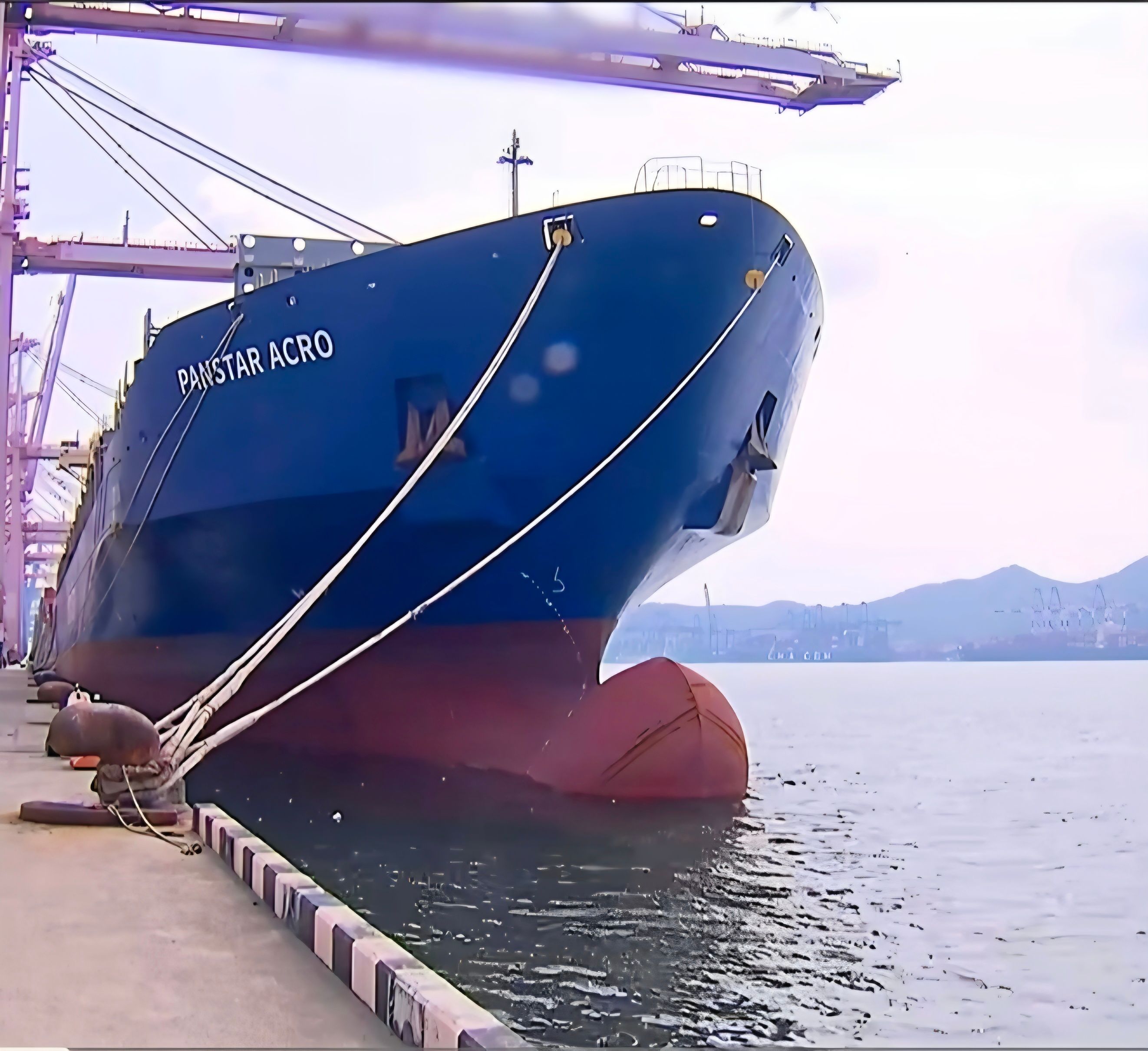
BUSAN — At the stroke of midnight on August 22, the harbor lights of Busan New Port cast a long, shimmering glow across the calm waters as the Panstar Acro, an ice-strengthened container vessel, blew its deep departure horn, charting an ambitious course directly toward the high latitudes of the Arctic Ocean. Cutting through the night mist of the Korea Strait, the pioneering cargo ship officially embarked on a landmark 45-day round-trip test voyage destined for Northern Europe via the Northern Sea Route (NSR).
This marks the first time a South Korean shipping company has undertaken a round-trip container voyage through the Arctic, a momentous event that perfectly coincides with the 150th anniversary of the opening of Busan Port. Loaded securely on board are 737 TEU of export cargo—ranging from chemical products and used cars to auto parts—along with 100 empty containers. The vessel will navigate the icy waters to call at Felixstowe in the UK, Rotterdam in the Netherlands, and Gdansk in Poland before making its return journey to Busan.
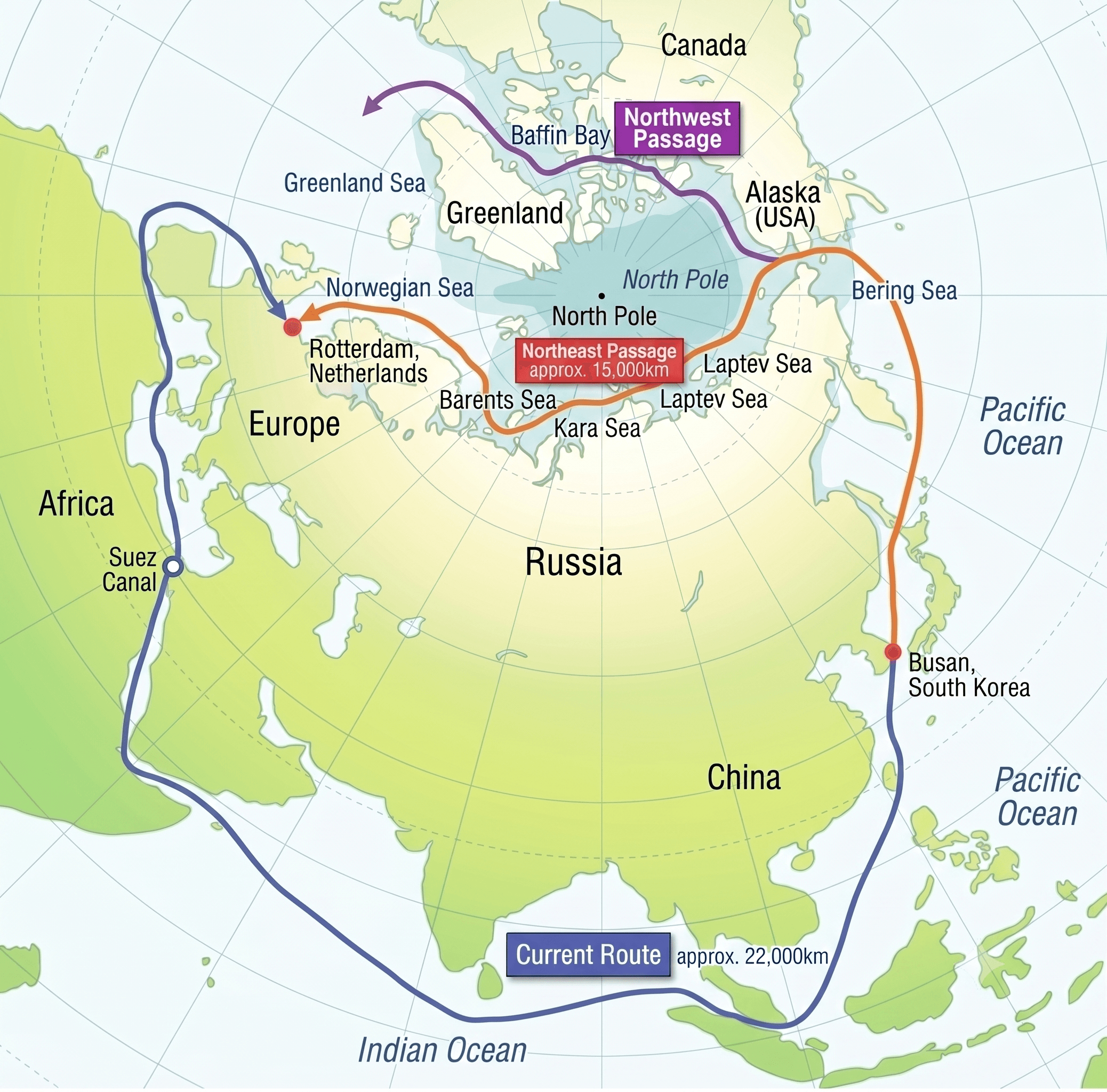
For generations, commercial shipping between East Asia and Western Europe has remained tethered to the southern maritime highway—a grueling 20,000-kilometer passage through the heavily congested Malacca Strait and the Suez Canal. By traversing the Siberian coastline, however, the Arctic shortcut to Rotterdam spans only about 13,000 kilometers, slashing the total sailing distance by roughly 7,000 kilometers, or 35 percent.
Through this monumental voyage, the South Korean government plans to meticulously analyze transit times, fuel consumption, and overall operating costs to definitively verify the commercial viability of the Arctic route. Shaving such a massive distance translates into millions of dollars in bunker fuel savings, reduced vessel depreciation, and substantial cuts in carbon emissions per cargo unit.
Yet, turning this frozen frontier into a reliable trade artery remains a formidable endeavor heavily dependent on unpredictable sea ice and extreme weather conditions. To mitigate these risks, the captain and navigators underwent rigorous specialized training for polar navigation, and the crew spent three months preparing for survival in extreme arctic environments. Furthermore, the vessel is equipped to monitor ice distribution and weather conditions in real-time, allowing the crew to make instant navigational decisions or deploy detour plans if the ice has not fully melted.
Environmental and geopolitical considerations also loom large over the corridor, as marine biologists caution that increased vessel traffic could introduce severe risks to fragile polar ecosystems. Positioned at the geographical gateway of Northeast Asia, Busan is uniquely primed to serve as the primary transshipment hub and maintenance base for ice-class fleets entering and exiting the Arctic.
As the Panstar Acro pushes northward, international maritime observers and logistics titans are watching every nautical mile with keen interest. If this voyage proves commercially viable and operationally sound, the midnight departure on August 22 from Busan New Port will undoubtedly be remembered as the moment the ice finally broke on the world's most lucrative trade revolution.
TAP HERE for an English-Korean bilingual version. [영한대역으로 보려면 여기를 누르세요]
#북극항로 #ArcticRoute #NorthernSeaRoute #펜스타아크로호 #PanstarAcro #부산항 #BusanPort #BusanNewPort #해운업 #ShippingIndustry #물류혁명 #LogisticsRevolution #MaritimeNews #글로벌무역 #GlobalTrade #공급망 #SupplyChain #SuezCanal #해운항만 #수출입물류 #쇄빙선 #Icebreaker #기후변화 #ClimateChange #친환경해운 #EcoShipping #KoreaShipping #TheSeoulGlobe #해운뉴스 #비즈니스트렌드 #김기섭 #KimKih-sohp