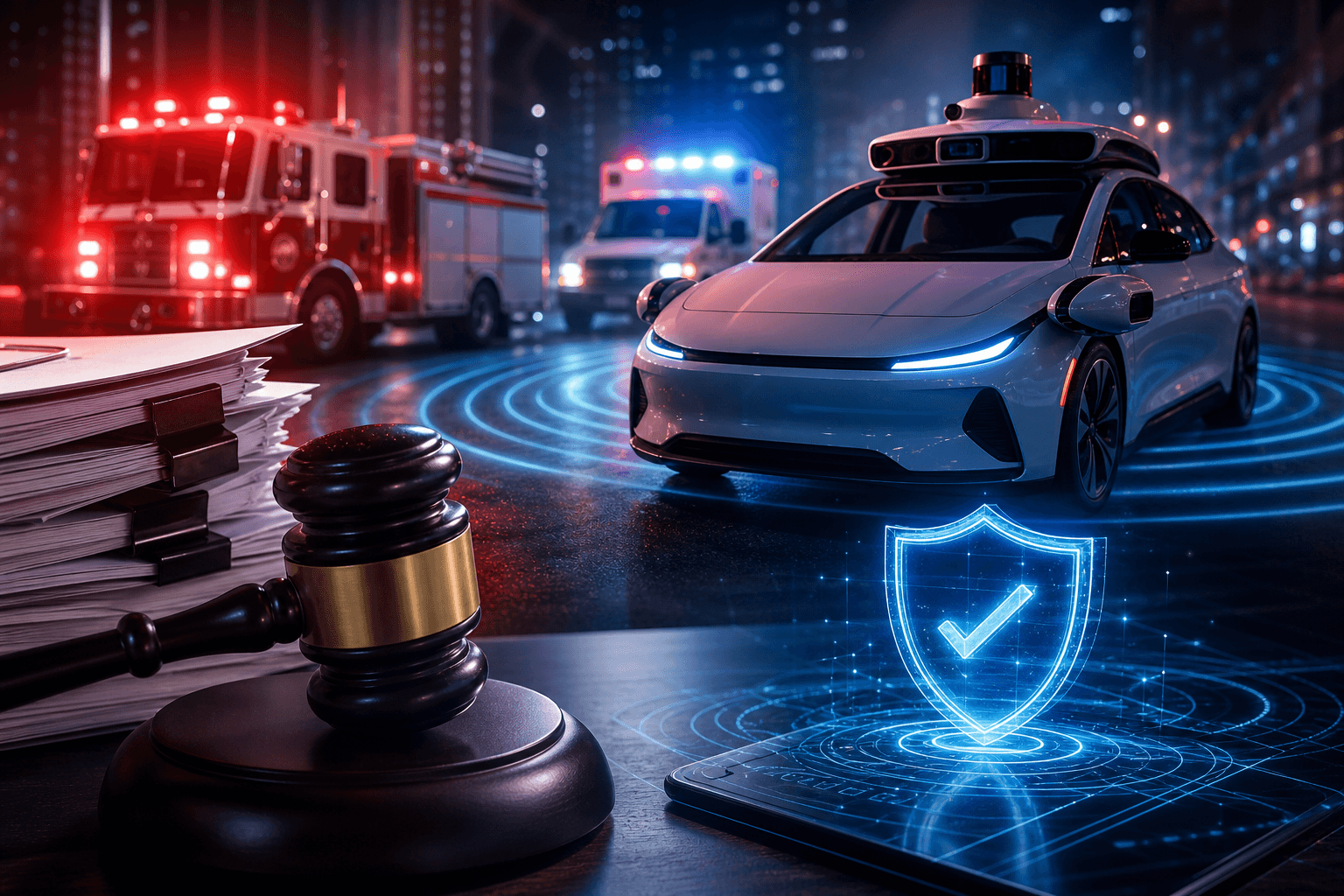
The National Highway Traffic Safety Administration has directed autonomous vehicle developers to address situations in which self-driving cars interfere with first responders or law enforcement, calling such failures a functional deficiency rather than a rare edge case. NHTSA Administrator Jonathan Morrison said companies covered by the Department of Transportation’s standing general order must present solutions by the end of the month, marking a significant federal intervention in the fast-growing robotaxi sector.
The letter did not name any specific company, but scrutiny has intensified around Waymo, which operates the largest robotaxi fleet in the United States, including in Los Angeles, Phoenix and San Francisco. Waymo has had repeated encounters with first responders, and in San Francisco, Supervisor Bilal Mahmood said he plans to submit a letter of inquiry into how autonomous vehicles affected transit service and emergency responders after severe gridlock following a July 4 fireworks event. Local reports said multiple Waymo robotaxis were towed after their batteries were depleted during the traffic jam.
The federal action comes as policymakers also weigh broader rule changes that could reshape the industry. The government’s updated 2026 Regulatory Plan and Unified Agenda includes proposed revisions to Federal Motor Vehicle Safety Standards, which set vehicle design and equipment requirements. Those changes could benefit companies such as Tesla and Zoox that are developing vehicles without steering wheels, pedals or other features associated with human-driven cars.
The wider robotaxi market is also becoming more competitive and more closely watched. Uber and Waymo have ended their partnership in Phoenix, while maintaining service partnerships in Atlanta and Austin. In Miami, Tesla has quietly launched a limited robotaxi service, its first market outside Texas since deployments began there in June 2025. Critics argue Tesla still trails more established rivals in scale and operational maturity, while Elon Musk has said safety validation, rather than mapping, is the main constraint on broader unsupervised deployment. Together, the regulatory push and expanding commercial rollouts underscore a sector facing pressure to prove both technical capability and public safety.