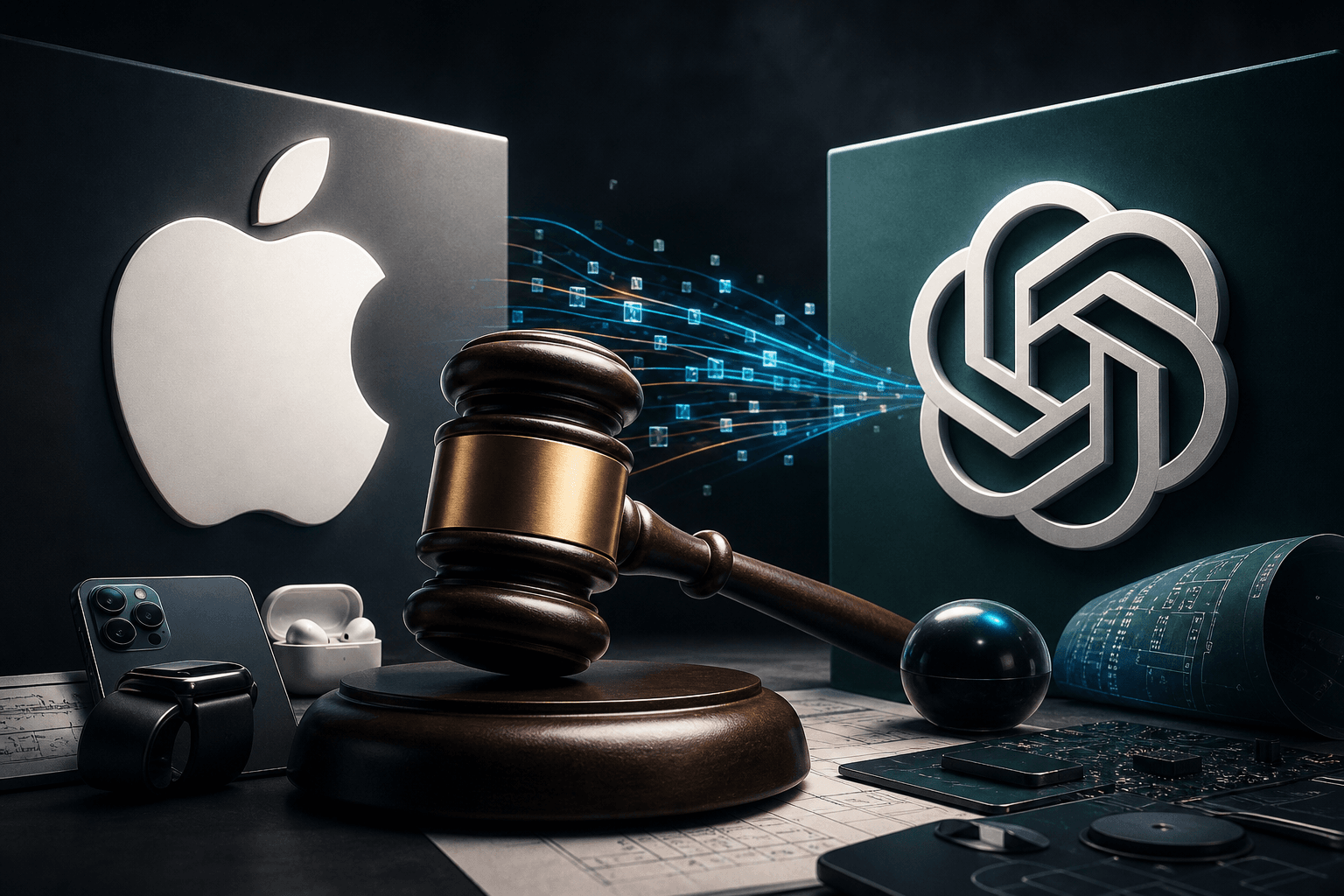
Apple has filed a lawsuit against OpenAI in the U.S. District Court for the Northern District of California, accusing the company of trade secret theft and seeking damages, injunctions and an order barring further use of its confidential information. Apple alleges OpenAI obtained intellectual property related to unreleased technologies, processes and products as it builds out its own consumer hardware ambitions. The case names OpenAI, its Chief Hardware Officer Tang Tan and io Products, and also identifies former Apple engineer Chang Liu as a defendant.
In its complaint, Apple alleges Tan, a former longtime Apple executive, used Apple project codenames during recruiting, asked candidates still employed by Apple to bring hardware parts to interviews, and directed efforts to gather details about unannounced products. Apple also claims OpenAI coached departing employees on how to avoid Apple security procedures. The company further alleges Liu kept an Apple-issued laptop after joining OpenAI and used it to download confidential technical documents, then shared information with other Apple employees pursuing jobs at OpenAI. Apple says it raised concerns with OpenAI in February but did not receive a response.
Apple argues the alleged conduct reflects a broader effort to use its proprietary information in OpenAI’s hardware development, including a metal finishing technique that Apple says was presented to a partner as if OpenAI had permission to use it. The company contends the court process could reveal the extent of any misuse through discovery. OpenAI had not announced a response in the materials, and it remains unclear how the lawsuit may affect the companies’ existing partnership, under which ChatGPT was integrated into Apple’s software ecosystem in 2024.
The dispute comes as OpenAI expands beyond software and into hardware, a move widely seen as potentially setting up competition with the iPhone maker. Tensions had already grown after OpenAI acquired Jony Ive’s startup io in a multibillion-dollar deal, and Apple later shifted its upgraded Siri system toward Google’s Gemini models instead of ChatGPT. More broadly, the case emerges amid intense competition for AI talent and increasing legal scrutiny of OpenAI, which has faced other lawsuits over its business practices as it weighs future growth plans, including a possible public listing.