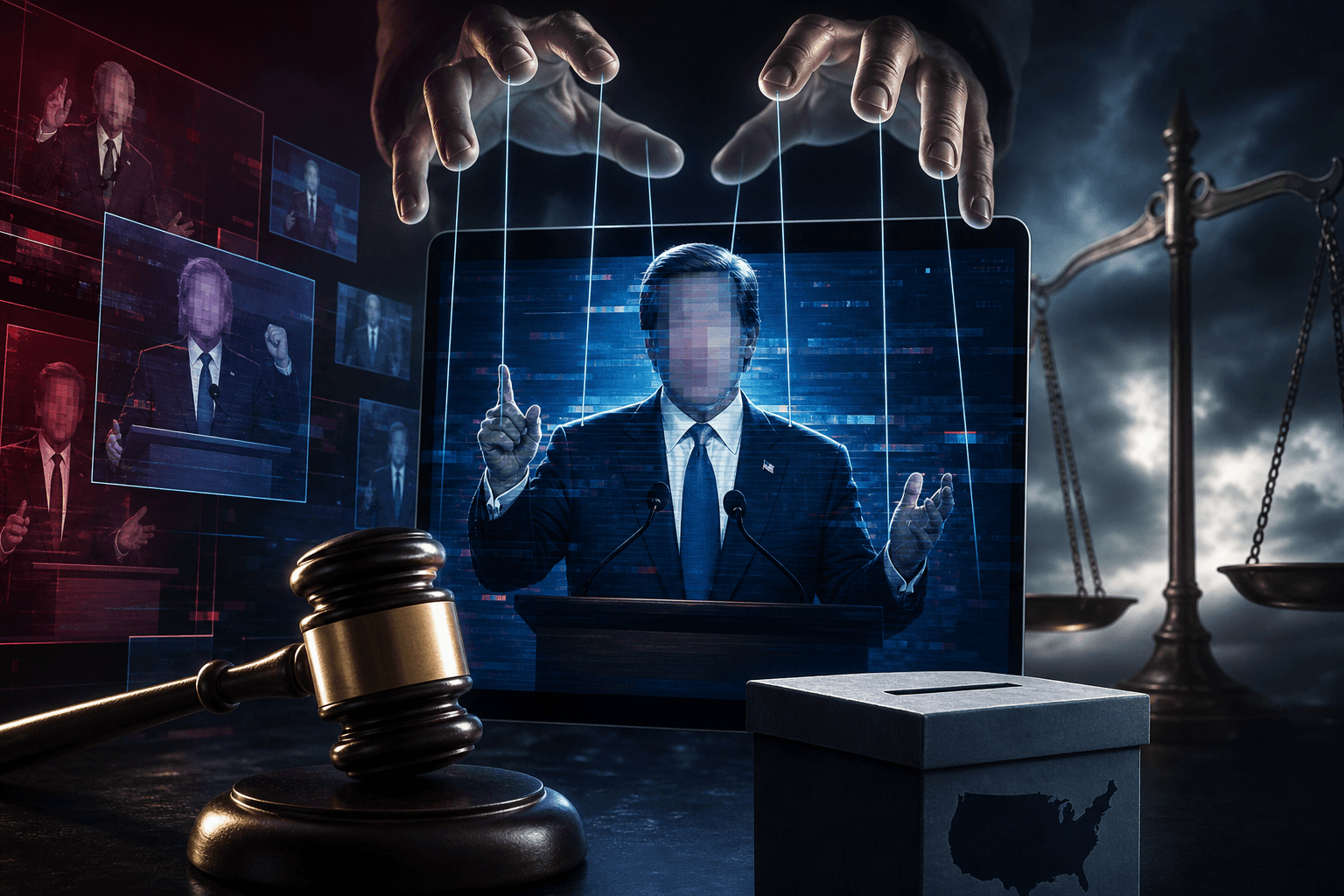
The arrest of former Queens city council candidate Jonathan Rinaldi on misdemeanor forgery charges has added a new legal dimension to the growing use of artificial intelligence in U.S. political campaigns. Prosecutors say Rinaldi circulated altered endorsements and fabricated news-style posts during his 2025 race, including a false claim that opponent Lynn Schulman had dropped out. Rinaldi disputes that he broke the law, describing his posts as satire and protected speech. The case is unusual because the charges rely on laws that predate generative AI, but it has become a prominent example in a broader national argument over whether existing election rules are equipped to address AI-generated deception.
AI-produced campaign material has become increasingly common, ranging from exaggerated or theatrical attack ads to more overtly deceptive fabrications. Recent examples have included manipulated or synthetic depictions of candidates in congressional and local races, as well as earlier incidents such as AI-generated robocalls imitating Joe Biden ahead of New Hampshire's 2024 presidential primary. Public concern appears widespread: a March 2026 poll by PBS News, NPR and Marist found that 85% of Americans believe AI-generated political content is likely to spread misinformation about the November elections. Analysts including Bruce Schneier and Peter Loge say political deception long predates AI, but argue the technology now makes it far easier to produce and distribute false or misleading material at scale.
That concern has fueled calls for tighter oversight. The Brennan Center for Justice has urged the Federal Election Commission to address deliberately deceptive AI-produced content, particularly deepfakes that impersonate candidates or could mislead donors and voters. More than 30 states have enacted some form of regulation on deepfakes in campaign messaging, often requiring disclosure of synthetic content or identifying who paid for it. Minnesota and Texas restrict deepfakes during periods close to elections, while federal courts struck down laws in California and Hawaii on First Amendment grounds. Nathan Sanders of Harvard said the regulatory landscape for political communication remains inconsistent and difficult to enforce.
At the same time, some consultants and campaign technology firms argue AI can lower costs and help lesser-funded candidates compete with wealthier rivals. Julie Sweet of the American Association of Political Consultants said AI can be used for both truthful and deceptive content, and the group's disclosure framework advises against publishing realistic synthetic media that could be mistaken for genuine recordings or that depict events that never happened. The group argues that blanket labels such as "fake" or "manipulated" can undermine trust even when content is not deceptive, preferring narrower terms like "dramatization" or "synthetic voice." BattlegroundAI, a platform for political ad creation, says it has incorporated state compliance rules into its tools. That tension between accessibility and abuse is likely to remain central as campaigns expand their use of low-cost AI-generated media.