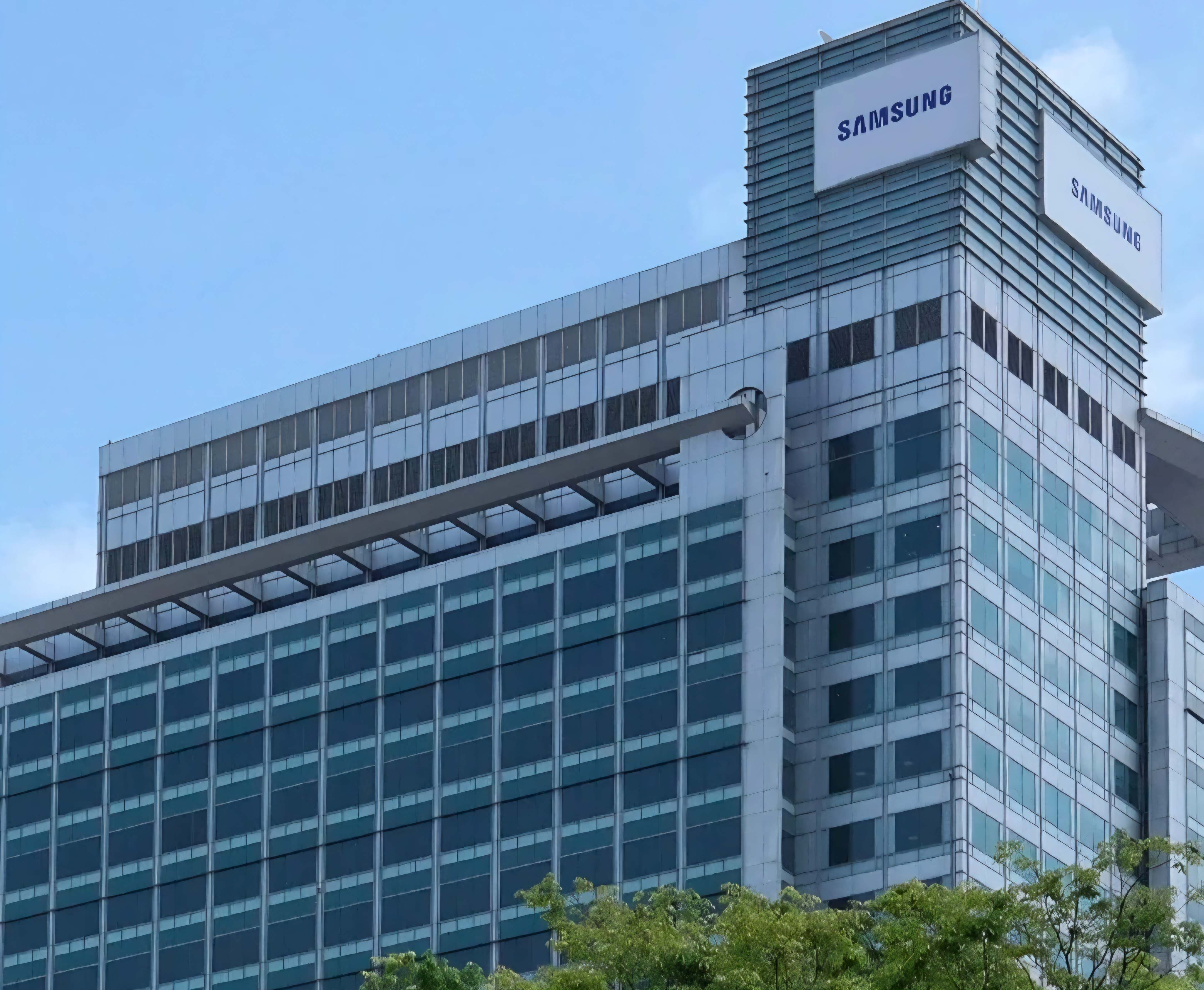
SEOUL — Samsung Electronics has delivered a jaw-dropping performance for the second quarter, riding an unprecedented boom in the semiconductor industry. The South Korean tech giant outperformed the world's biggest Silicon Valley giants, rewriting global corporate history with its latest financial results.
According to the company's regulatory filing on Tuesday, Samsung generated 171 trillion won in revenue and 89.4 trillion won in operating profit. Operating profit refers to the net income a business earns from its core operations after deducting production and daily running costs. This specific announcement represents the company's preliminary earnings, which are early financial estimates released to the public before the final, officially audited report is completed at the end of the month.
The latest operating profit marks an astronomical 1,810.3% surge compared to the same period last year. It comfortably beat the market consensus — the average forecast made by stock market analysts — of 84.16 trillion won by 6.2%.
To put this historic milestone into perspective, the money Samsung earned in this single three-month quarter is greater than its combined operating profit for the entire past three years from 2023 to 2025 (82.87 trillion won). Furthermore, this figure completely eclipses the all-time quarterly profit records of global heavyweights like Nvidia (approx. 82 trillion won) and Apple (approx. 78 trillion won).
What makes this performance even more stunning is that Samsung achieved it after setting aside a massive 17 to 20 trillion won for employee performance bonuses. In corporate accounting, this is known as an incentive provision — money intentionally booked as an expense on the current balance sheet to cover guaranteed future payouts. Industry experts note that if you strip away this one-off, temporary expense, Samsung's actual underlying operating profit for the quarter was close to an unimaginable 110 trillion won.
The primary engine behind this explosive growth was the DS (Device Solutions) division, which is Samsung's core component business that manufactures semiconductors. As tech companies worldwide aggressively build out infrastructure for Artificial Intelligence (AI), a severe shortage of microchips has driven prices through the roof.
While early AI demand focused primarily on digital chatbots, the market has rapidly expanded into "Physical AI" — advanced AI systems that are integrated into physical machinery, robotics, and real-world hardware. This shift has triggered a massive price surge not just for premium HBM (High Bandwidth Memory), which are ultra-fast, next-generation memory chips stacked vertically to process massive AI data sets, but also for standard computer memory. Samsung leveraged the world's largest memory production capacity — the maximum volume of goods a manufacturing plant can physically produce — to absorb this global demand. The company is currently tightening its grip on the market by becoming the first in the world to mass-ship 6th-generation HBM4 chips.
Recently, some Wall Street analysts raised concerns over a potential "peak-out," a financial term describing the moment an industry growth cycle hits its maximum ceiling and begins to decline. However, Samsung completely erased these fears by signing consecutive LTAs (Long-Term Agreements) — extended multi-year supply contracts that lock in stable prices and volumes — with major big tech clients. Driven by these secure contracts, market analysts have upgraded Samsung's projected annual operating profit for this year to a staggering 374 trillion won.
In stark contrast, the DX (Device Experience) division, which oversees Samsung's finished consumer products, experienced a noticeably tougher quarter. The segment suffered from rising raw material costs, largely because the very microchips Samsung makes became more expensive to purchase for its own devices.
The MX (Mobile Experience) business unit, which handles smartphones and wearable tech, saw its operating profit restricted to an estimated 500 billion to 1 trillion won. Meanwhile, the VD (Visual Display) business unit, which manufactures televisions, and the DA (Digital Appliances) business unit, responsible for home appliances like refrigerators and washing machines, scraped in a combined operating profit of less than 100 billion won. For the remaining units, Samsung Display contributed roughly 500 billion won, while Harman, Samsung's automotive electronics and audio subsidiary, brought in an estimated 200 billion to 300 billion won to anchor the company's historic quarter.