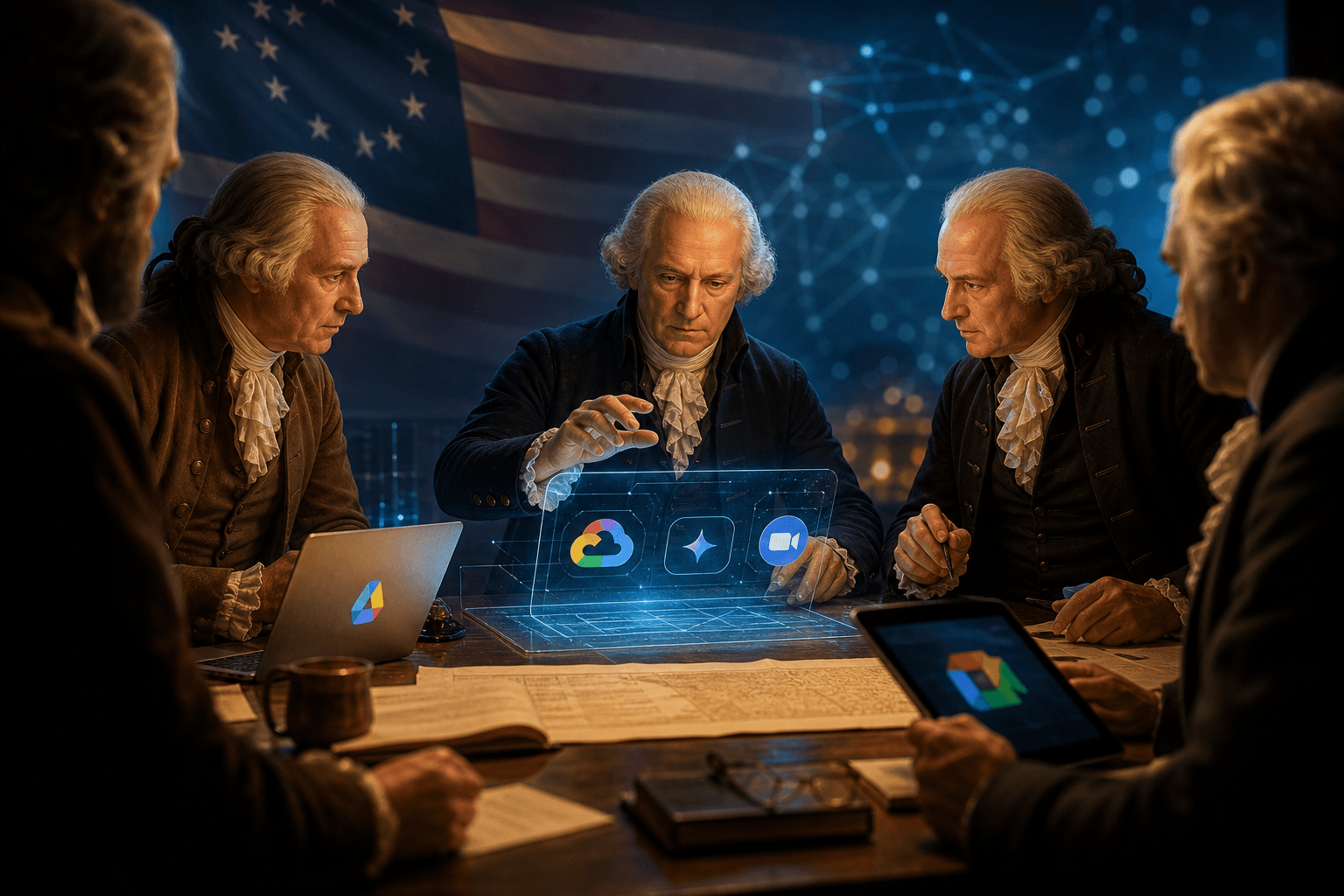
Google has released a new commercial imagining how the Declaration of Independence might have been drafted if the founders had access to modern workplace software and artificial intelligence. Timed ahead of the 250th anniversary of U.S. independence, the ad centers on Thomas Jefferson, Benjamin Franklin and other founding figures using Google Workspace tools such as Docs, Calendar and Meet, with the document ultimately completed through electronic signatures.
The commercial also incorporates Google’s AI products into the historical parody. In the spot, Gemini takes meeting notes, helps with visual ideas for the national seal and offers advice before King George III is denied access to the document. The ad adopts a humorous tone, using the line “Group project, but make it 1776,” and presents the scenario as a stylized, modern office collaboration transplanted into the founding era. Some coverage also noted that the video itself appeared to have the polished look often associated with AI-generated imagery.
Reaction online has been divided. Comments on YouTube and Instagram were described as largely positive, with some viewers appearing to embrace the joke and the campaign’s creative framing. Supportive interpretations held that the ad effectively showcased Google Workspace and Gemini while illustrating how the company wants its tools to be seen as useful in both practical and imaginative settings.
Critics, especially on Bluesky, argued that the concept mishandled a politically and historically significant document. Some users called the ad awkward or tone-deaf, while historian Angus Johnston said the commercial underscored, rather than resolved, doubts about whether AI is genuinely useful for political organizing, writing or human collaboration. More broadly, the debate reflects continuing tension around how technology companies market AI: proponents see playful demonstrations of convenience and creativity, while critics question whether inserting AI into weighty historical narratives feels artificial or insincere.