For the past several years, the artificial intelligence landscape has operated much like an exclusive, members-only country club situated comfortably between the borders of Silicon Valley and Seattle. The global tech community has grown thoroughly accustomed to a very predictable, almost comforting rhythm: OpenAI releases a groundbreaking iteration of its GPT model, Anthropic promptly counters with a brilliant and nuanced version of Claude, and the rest of the world frantically scrambles to catch up. Software engineers, developers, and tech enthusiasts alike have treated these Western titans as the undisputed, invincible sovereigns of coding proficiency and logical reasoning.
But the throne has just been violently usurped. The new king of code hails not from the sun-drenched campuses of California, but from the bustling tech hubs of Beijing. Enter Kimi K3, the latest open-source marvel from Moonshot AI, a release that has fundamentally rewritten the established rules of the global AI coding race and sent shockwaves through the corridors of American tech giants.
To understand the magnitude of this disruption, one must first look at the sheer, unadulterated scale of what Moonshot AI has achieved. Kimi K3 is not merely an incremental update or a slight optimization of existing frameworks; it is a sprawling, 3-trillion-parameter leviathan. To put that astronomical figure into perspective, this open-source behemoth possesses a neural architecture so vast and intricately woven that it makes several previous-generation frontier models look like rudimentary pocket calculators.
However, as any seasoned developer will tell you, raw parameter size is merely a vanity metric if it does not translate directly into functional brilliance. Where Kimi K3 truly flexes its monumental computational muscles is in the highly demanding realm of software development, algorithmic problem-solving, and advanced code generation. It is an artificial intelligence that does not just blindly output lines of code based on probabilistic guessing; it seems to possess a holistic comprehension of software engineering architecture.
How exactly did a Chinese startup manage to dethrone the reigning industry champions so swiftly? The answer lies in a devastating combination of flawless logical reasoning and an astonishingly expansive context window. Kimi K3 boasts the ability to process up to 1 million tokens simultaneously. While GPT and Claude have historically exhibited tendencies to struggle when force-fed massive, enterprise-level repositories of code—occasionally hallucinating non-existent variables, forgetting early instructions, or simply losing the thread of the original logic—Kimi K3 swallows entire codebases whole without a single algorithmic hiccup.
In recent, rigorously conducted coding benchmarks across the industry, Kimi K3 consistently outmaneuvered Claude’s previously unmatched logical reasoning and effortlessly outpaced GPT’s celebrated versatility. It debugs legacy systems with surgical precision, refactors convoluted code with elegant efficiency, and generates complex, multi-tiered applications from mere conversational prompts. Interacting with Kimi K3 is the functional equivalent of having a tireless, senior staff engineer available twenty-four hours a day, seven days a week, minus the requisite coffee breaks and the occasional human error.
Perhaps the most terrifying aspect of the "Kimi Shock" for the Western tech hegemony is not solely its unprecedented capability, but its radical accessibility. Moonshot AI made the audacious decision not to lock this phenomenal power behind an exorbitant paywall or a highly restrictive API tier system. By releasing Kimi K3 into the wild as an open-source (or open-weight) model, they have effectively democratized access to frontier-level artificial intelligence. Independent developers, academic researchers, and bootstrapping startups around the globe can now harness the kind of computational wizardry that was previously hoarded exclusively by a select few multibillion-dollar corporations.
This strategic move by Moonshot AI is a direct, heavy blow to the monetization strategies of established AI monopolies, forcing a radical reevaluation of what consumers and enterprises should reasonably expect to pay for premium, top-tier machine intelligence. The comfortable six-to-nine-month technological lead that American software firms once enjoyed with absolute certainty has evaporated into thin air, shrinking to a razor-thin margin of just weeks, if not days.
The global technology sector is currently waking up to a harsh new reality. Kimi K3 has unequivocally proven that the epicenter of AI innovation is no longer a monopoly held securely by the West. For developers worldwide, this marks the dawn of a thrilling, hyper-productive golden age of coding. For Claude, GPT, and the executives orchestrating their development, it is a deafening wake-up call. The coding kingdom has officially crowned a new ruler, and its name is Kimi.
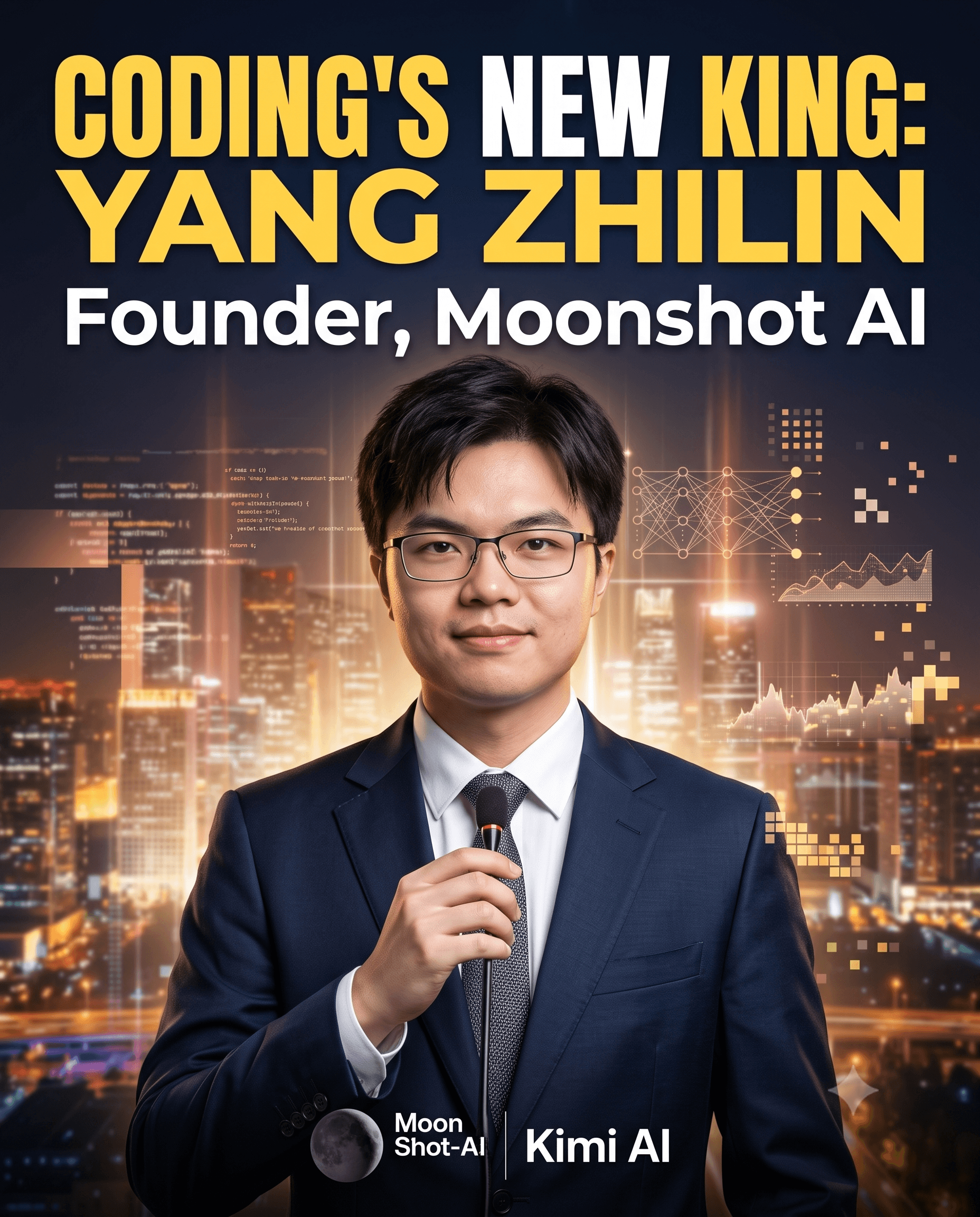
The Mastermind Behind the Disruptor: Who is Yang Zhilin?
Behind this unprecedented seismic shift in the AI landscape stands a 30-something computational prodigy: Yang Zhilin (杨植麟), the founder and CEO of Moonshot AI. A graduate of Tsinghua University with a Ph.D. from Carnegie Mellon University, Yang is no stranger to foundational AI breakthroughs, having co-authored influential research on architectures like Transformer-XL and XLNet during his time at Google Brain and Meta AI.
Unlike traditional Silicon Valley executives, Yang built Moonshot AI with a singularly focused mission: mastering long-context comprehension and democratizing frontier-level AI reasoning. Under his visionary leadership, Moonshot AI transformed from a quiet Beijing startup into a multi-billion-dollar unicorn in record time, earning Yang the title of "China's AI Wunderkind."
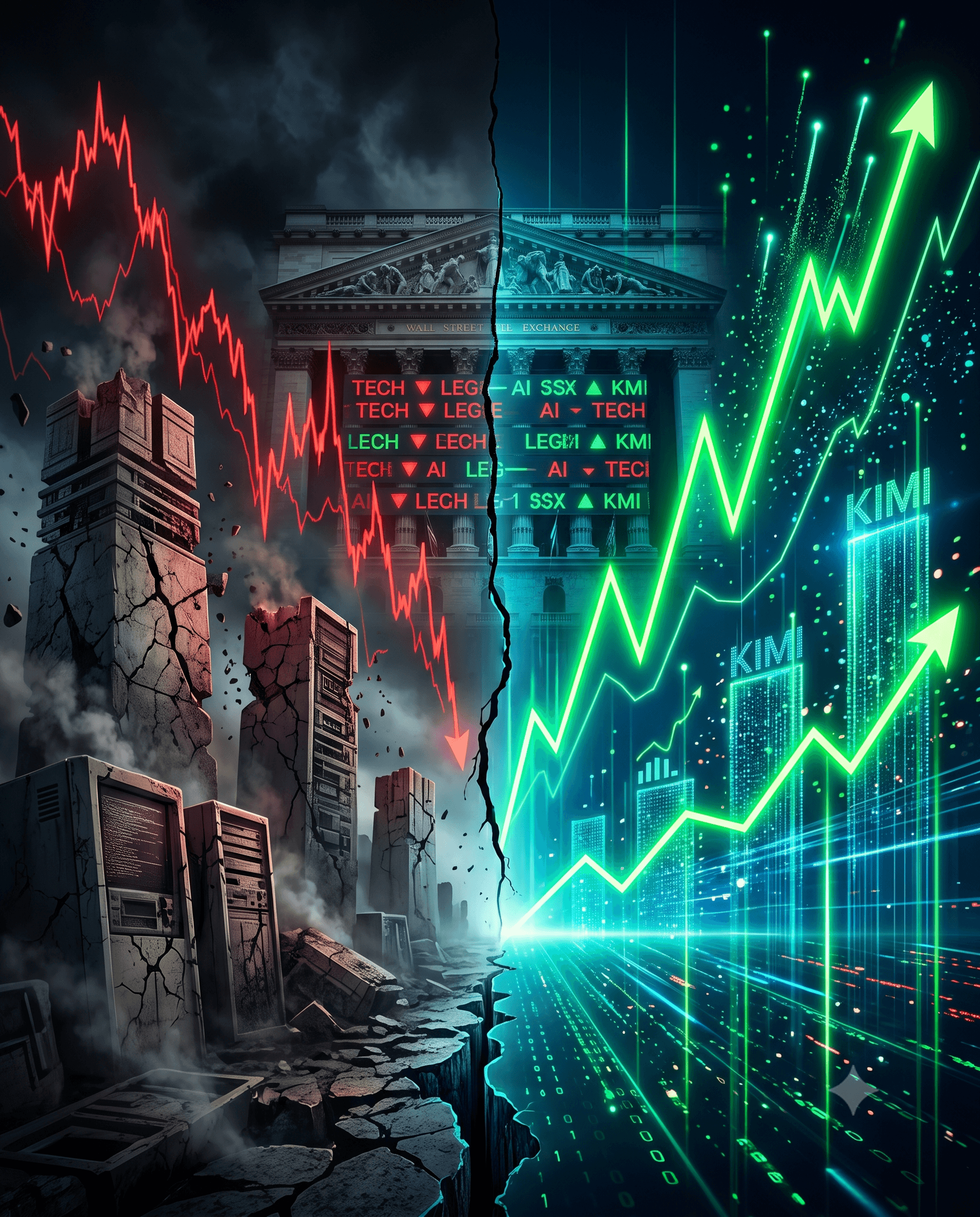
Market Aftershocks: Wall Street Jitters and the Surge of "Kimi Stocks"
The global financial markets were swift to react to Kimi K3’s surprise debut. On Wall Street, shares of legacy AI titans and cloud infrastructure heavyweights experienced immediate volatility as investors wrestled with the disruptive reality of open-weight, 3-trillion-parameter models challenging proprietary, subscription-based revenue models.
Analysts at top investment banks hastily revised their margin projections for Western software vendors, warning that the pricing power of closed-source AI might be permanently eroded. Conversely, across Asian equity markets, a dramatic "Kimi Concept Rally" erupted, with tech firms, cloud partners, and data processors affiliated with Moonshot AI’s ecosystem surging by their daily limits. The market message was unequivocal: the economic calculus and profit margins of artificial intelligence have been fundamentally recalibrated overnight.