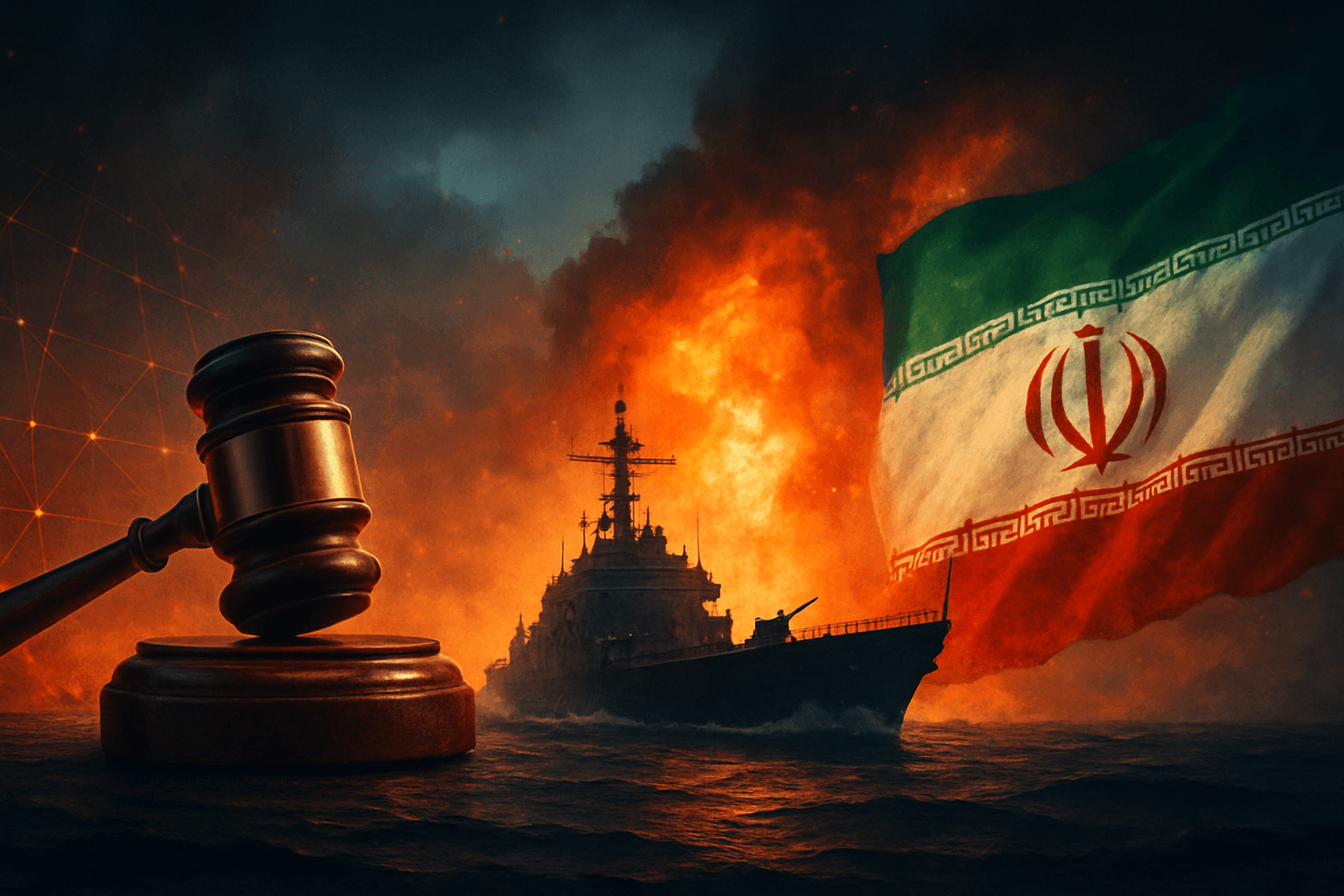
Fighting between the United States and Iran has intensified after a ceasefire framework broke down, with both sides exchanging attacks across the Persian Gulf region. The Institute for the Study of War and the Critical Threats Project assessed on July 13 that the ceasefire had effectively ended, citing more frequent strikes, Iran's renewed attacks on shipping and the planned resumption of a U.S. naval blockade of Iranian ports.
The assessment said Iran's Revolutionary Guards Navy announced it had closed the Strait of Hormuz on July 11 and struck vessels on July 11 and 12. It said the United States hit dozens of Iranian military targets on July 12 and had carried out more than 300 strikes in Iran since July 10, largely against sites in southern Iran. Iran, in turn, launched strikes against U.S. bases in Jordan, Bahrain and Kuwait, according to the assessment. Iran also claimed to have hit a U.S. radar site in Oman, a claim that had not been publicly confirmed by either the United States or Oman.
The latest escalation has included reported deaths of U.S. service members following an Iranian attack on a base in Jordan, according to a U.S. Central Command statement cited by Fortune. The White House did not say whether the deaths would lead Washington to return to a wider phase of war. Fortune reported that President Donald Trump had previously told aides he would regard the killing of U.S. troops as a threshold for ending the earlier ceasefire, citing the Wall Street Journal.
The conflict is also disrupting maritime traffic and raising economic concerns. Fortune reported that oil prices had risen amid the fighting and that no crossings were detected on July 17 through a U.S.-backed transit route in the strait, while seven transits used Iran's route. ISW and the Critical Threats Project said the current exchanges remained geographically narrower and involved fewer total strikes than the March and April fighting, but warned that Iran's attacks on Gulf states were expanding the conflict's reach. The groups also assessed that the resumed blockade could revive internal Iranian debate over the strait, the economy and negotiations with Washington.