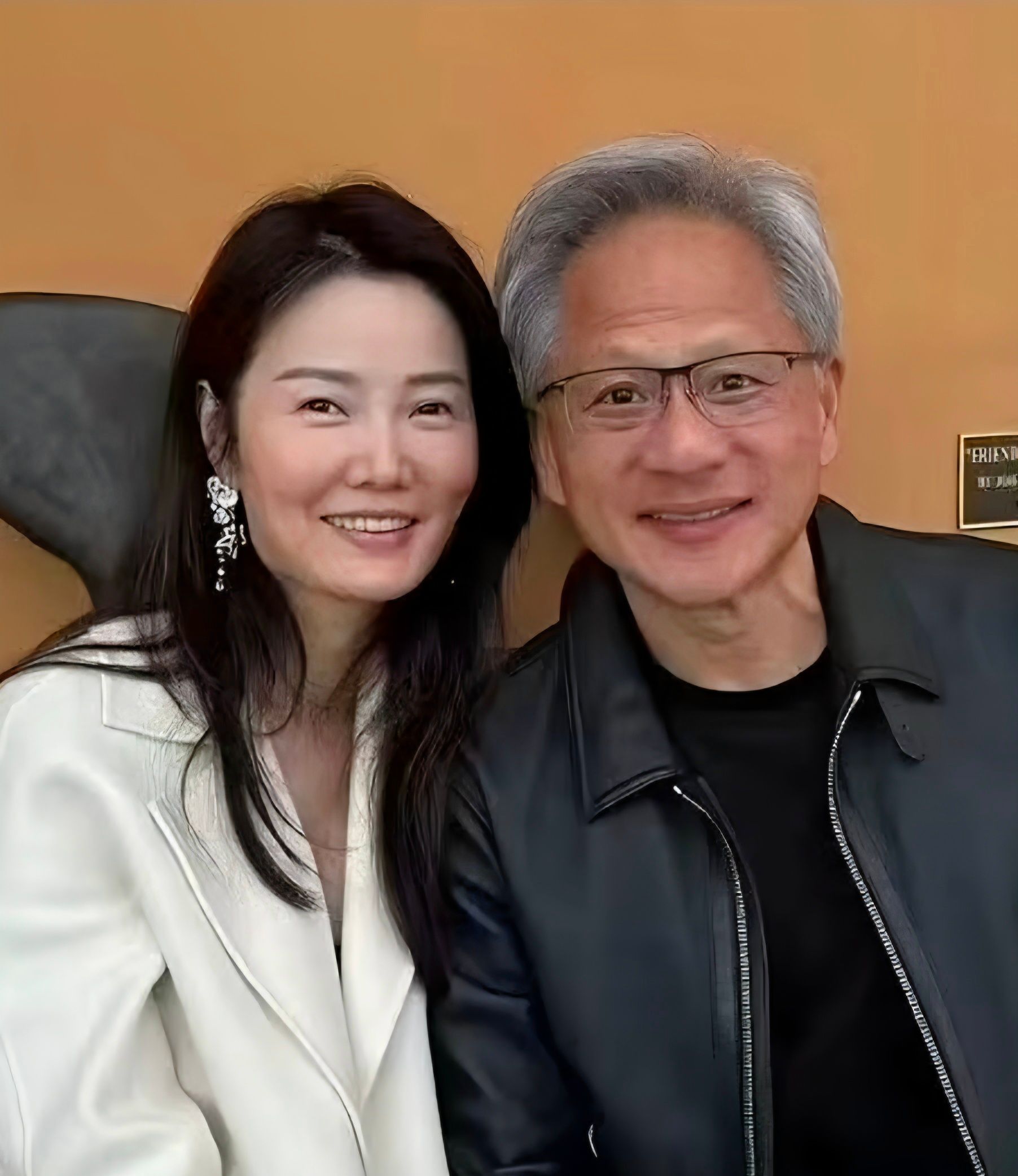
STOCKHOLM -- Let’s be honest with ourselves. Every October, when the news announces who won this year's Nobel Prize in Economics, what crosses your mind? You probably think, "Wow, good for them, the prize money is 1.6 billion won? Must be nice... but why is my Samsung Electronics stock acting like this today?" and quietly close the browser tab.
In particular, the reason behind the Nobel Prize in Economics announced on October 12, 2026, is enough to give anyone a headache just by hearing it. The official rationale given by the Nobel Committee of the Royal Swedish Academy of Sciences is none other than "laying the microeconomic foundations for macroeconomic stabilization." Just reading the words feels like swallowing three sleeping pills at once.
Hold on, though. What if the research of these two grandfatherly professors explains how the mortgage rates on our hard-earned apartments are decided, and why the Nasdaq and KOSPI ride a rollercoaster every time the U.S. Fed Chair grabs a microphone? What if even our hesitation over whether to open our wallets when stimulus checks or consumption coupons arrive was already in the palm of their hands?
Without a doubt, this 2026 Nobel Prize in Economics is more directly tied to our bank balances, brokerage accounts, and mortgage interest payments than any prize before it. Even if you don't know the first thing about economics, I will break it down in the easiest and most entertaining way in the world so you can show off to the coworker sitting next to you in just five minutes!
1. Who Are the Winners of the 1.65 Billion Won Prize? (Birth Years and Surprising Backgrounds)
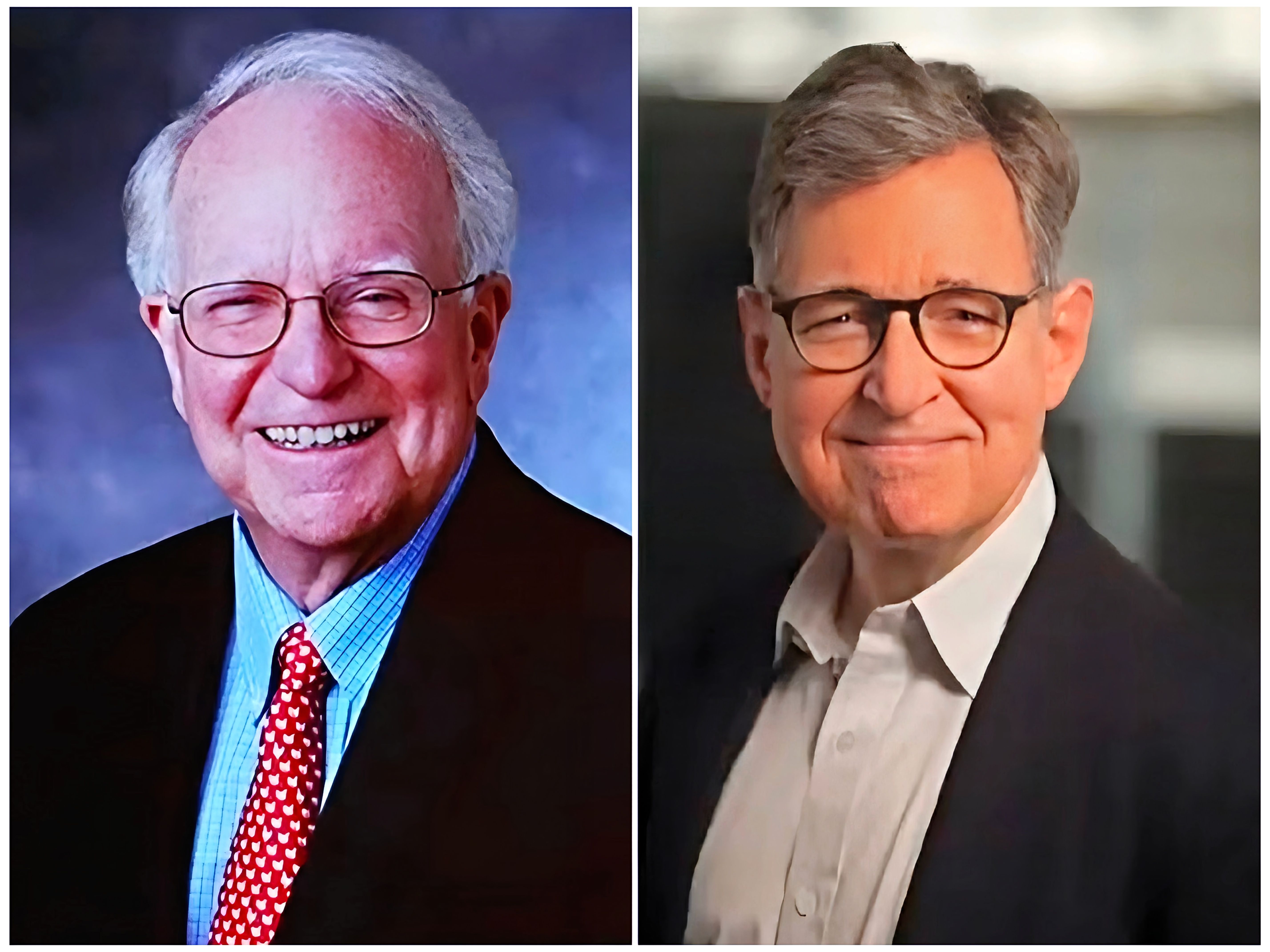
First, let's meet the two main characters who will happily split the 11 million Swedish kronor prize money (about 1.65 billion KRW) in Stockholm, Sweden, on December 10, 2026.
First Laureate: Robert E. Hall (born 1943) — "Humans are smarter than you think, so they don't open their wallets just anytime!"
Professor Robert Hall was born in 1943 in Palo Alto, California, USA. He is a brilliant scholar who earned his bachelor's degree from UC Berkeley and received his Ph.D. in economics from MIT in 1967 at the young age of 24. He has spent his life as a professor at Stanford University and a senior fellow at the Hoover Institution, and he is a towering figure who even served as President of the American Economic Association (AEA), the head of economists worldwide, in 2010. For reference, he is also a hands-on economist who spent decades acting as the official referee (Chair of the NBER Business Cycle Dating Committee) deciding whether the U.S. economy is in a recession or not.
Second Laureate: Michael D. Woodford (born 1955) — "A central bank must tame the economy with its 'mouth (words)' rather than interest rates!"
Professor Michael Woodford was born in 1955 in Chicopee, Massachusetts, USA. His background is quite unique. After graduating from the University of Chicago, he went to Yale Law School and earned a Juris Doctor (JD) first, before suddenly pivoting to receive another Ph.D. in economics from MIT in 1983. After conquering both law and economics, he taught at the University of Chicago and Princeton University, and currently serves as a professor at Columbia University. In 2003, he published the legendary masterpiece "Interest and Prices," dubbed the bible of all modern central bank governors, completely revolutionizing the landscape of monetary policy.
2. Professor Robert Hall’s Discovery: "Did You Really Think People Would Buy Beef Right Away Just Because the Government Gave Them Pocket Money?"
Let’s turn the clock back to the 1970s. At the time, the global economy was experiencing utter chaos, with prices skyrocketing and growth stagnating due to oil shocks. Until then, governments thought in very simple terms: "Is the economy bad? Then cut taxes a bit or hand out bonuses! Once people have cash in their pockets, they'll go to department stores to buy clothes and dine out, right?"
Then in 1978, a 35-year-old Robert Hall published a paper that turned the academic world upside down. It was the "Random Walk Hypothesis" of consumption. The name sounds tough, but the idea will make you slap your knee in realization.
Shall we put it into an easy analogy? One day, the boss at your company calls you in and says this: "Hey, I'll give you a special bonus of 500,000 won just for this month, but starting next month, it's back to your regular salary—oh, and the company might be in a tight spot next year."
Now, the moment you get that 500,000 won, do you book a Korean beef omakase dinner that very evening? Not a chance! Nine times out of ten, you will use it to pay off loan interest or tuck it safely into your savings account. Why is that? Because you have no confidence that your future income will steadily grow.
Through this 1978 study, Professor Hall mathematically and empirically proved that "people open their wallets today not based on the cash wired into their accounts right now, but by calculating the expected future income they will earn over their lifetime." He also explained why companies freeze hiring altogether during a recession instead of cutting wages (wage rigidity), using the micro-level psychology and cost structures of employers and workers.
In other words, even if the government or central bank clumsily scatters one-off cash handouts to boost the economy, people aren't fooled. To get households to open their wallets, you must give them the fundamental belief that "the economy will continue to be fine down the road"—and this is the first pillar Professor Hall built.
3. Professor Michael Woodford’s Magic: "Taming Inflation Just by Playing a 'Trailer' Without Even Touching Interest Rates?"
While Professor Hall saw right through the psychology of household wallets, Professor Woodford took it a step further and perfected the art of how central banks tame the market.
Imagine going to a famous restaurant where a bowl of Jjajangmyeon costs 8,000 won. What if, starting tomorrow, the owner changed the menu price every single morning to 8,050 won, 8,120 won, and 7,980 won whenever flour prices fluctuated slightly? Reprinting the menu would cost more money, and customers would get annoyed. So in the real world, businesses avoid changing prices often, until they become convinced that "ah, inflation is going to keep rising from now on!"—at which point they hike prices all at once.
From the mid-1990s up to the publication of his book in 2003, Professor Woodford synthesized the "New Keynesian Model," showing that these very "expectations about the future" are the core engine driving the current economy. From this emerged the exact term that stock and real estate investors lose sleep searching for every night today. That term is "Forward Guidance"!
In the old days, central bank governors lived by mysticism. They kept whether they would raise or cut interest rates tightly under wraps until the very morning of the decision. However, Professor Woodford’s theory was the exact opposite: "Stop pulling surprise shows! Have the central bank drop a 'spoiler (trailer)' to the market in advance about what it plans to do with interest rates six months or a year from now. Then, without even having to drastically raise or cut rates today, households and businesses will adjust their behavior on their own to match that trailer!"
In fact, there are historic moments when this theory saved the world.
- During the 2008 global financial crisis, the U.S. Federal Reserve (Fed) slashed its benchmark interest rate all the way to 0%. With no room left to cut rates further, it followed Professor Woodford’s theory and issued a strong forecast (forward guidance) saying, "We will not raise rates and will keep them at 0% for a very long time!" which calmed market panic.
- In 2012, the U.S. Fed went so far as to introduce the "Dot Plot" for the first time, visually plotting where Fed members expected future interest rates to be.
- During the 2020 COVID-19 pandemic and the inflation war that followed, central banks broke the market's inflation expectations with their "mouths (words)" first, even before moving actual interest rates.
- And finally, on February 26, 2026, South Korea's central bank, the Bank of Korea, introduced and unveiled its so-called "K-Dot Plot" for the first time in history! It is a system where the seven Monetary Policy Board members, including the Bank of Korea Governor, each place three dots—21 dots in total—to give the public an advance spoiler of where the benchmark interest rate will be in six months. All of this is thanks to the blueprint that came out of Professor Woodford’s head.
4. So What’s the Bottom Line? What Does It Mean for Our Stocks and Real Estate?
Now, here is the most important question: "So what should I do with my stocks and real estate?" Professor Hall and Professor Woodford’s Nobel Prize gives retail investors like us three crystal-clear investment formulas.
① First, stocks and real estate move not on the "current interest rate," but on the "dots six months from now (expectations)."
Many beginner investors scratch their heads saying, "Huh? The Bank of Korea froze interest rates today, so why are stocks falling and why is real estate quiet?" Once you know Professor Woodford’s theory, the answer is clear. The market does not care about the interest rate decided today. Instead, it reads whether rates will be cut or raised six months from now from the 21 dots placed by the seven board members (K-Dot Plot) and the Governor's tone at the press conference, pricing it in today in advance. In short, if you wait until you see a news headline saying "Interest Rate Cut Confirmed!" to buy stocks or shop for a home, you are already too late. To make money, you have to catch the very first moment the central bank's "spoiler (forward guidance)" shifts.
② Second, do not be swayed by the government’s "one-off real estate or economic stimulus packages."
As Professor Robert Hall proved in 1978, people do not open their wallets for short-term, temporary sweeteners. Even if the government rolls out temporary tax breaks or short-term special loans, both consumption and home-buying momentum will quickly cool down unless people are convinced in their minds that "my real income will steadily grow and the economy will improve in the long run." When investing in domestic demand stocks or real estate, you need to look first at whether households' "long-term expectations" are reviving rather than chasing short-term policy news.
③ Third, "expected inflation" is the future of your loan interest payments.
What Professor Woodford emphasized most is "expected inflation" (the expectation that prices will rise in the future) inside ordinary people's heads. Once people start believing, "Home prices and Jjajangmyeon prices are going to keep climbing from now on!" the central bank can never lower interest rates, even if the economy hurts a bit. Conversely, when people's inflation expectations stabilize, the central bank can confidently cut interest rates and blow a warm spring breeze into the stock and real estate markets.
Wrapping Up: The Magic That Makes Economic News as Fun as a Drama
How was that? At first, the Nobel Prize rationale of "microeconomic foundations for macroeconomic stabilization" sounded like an alien language, but doesn't it now click at a glance as "the art of calculating when my wallet will open (Professor Hall) and playing a trailer in advance to tame my psychology (Professor Woodford)"?
Thanks to this precise driving technique refined over the past half-century by Professor Robert Hall (born 1943) and Professor Michael Woodford (born 1955), the global economy can now hit the brakes without plunging off a cliff like it used to, even when energy crises or financial shocks strike.
From now on, whenever terms like the Bank of Korea's "Dot Plot" or the U.S. Fed's "Forward Guidance" pop up on the news, don't just scroll past them—think, "Oh, it's spoiler time from Grandpa Woodford, the 2026 Nobel laureate! Let's see if the trailer for the next six months has a happy ending!" and casually check it out. Because that one small habit will make your stock portfolio and home-buying timing half a beat faster than everyone else's!
TAP HERE for an English-Korean bilingual version. [영한대역으로 보려면 여기를 누르세요]