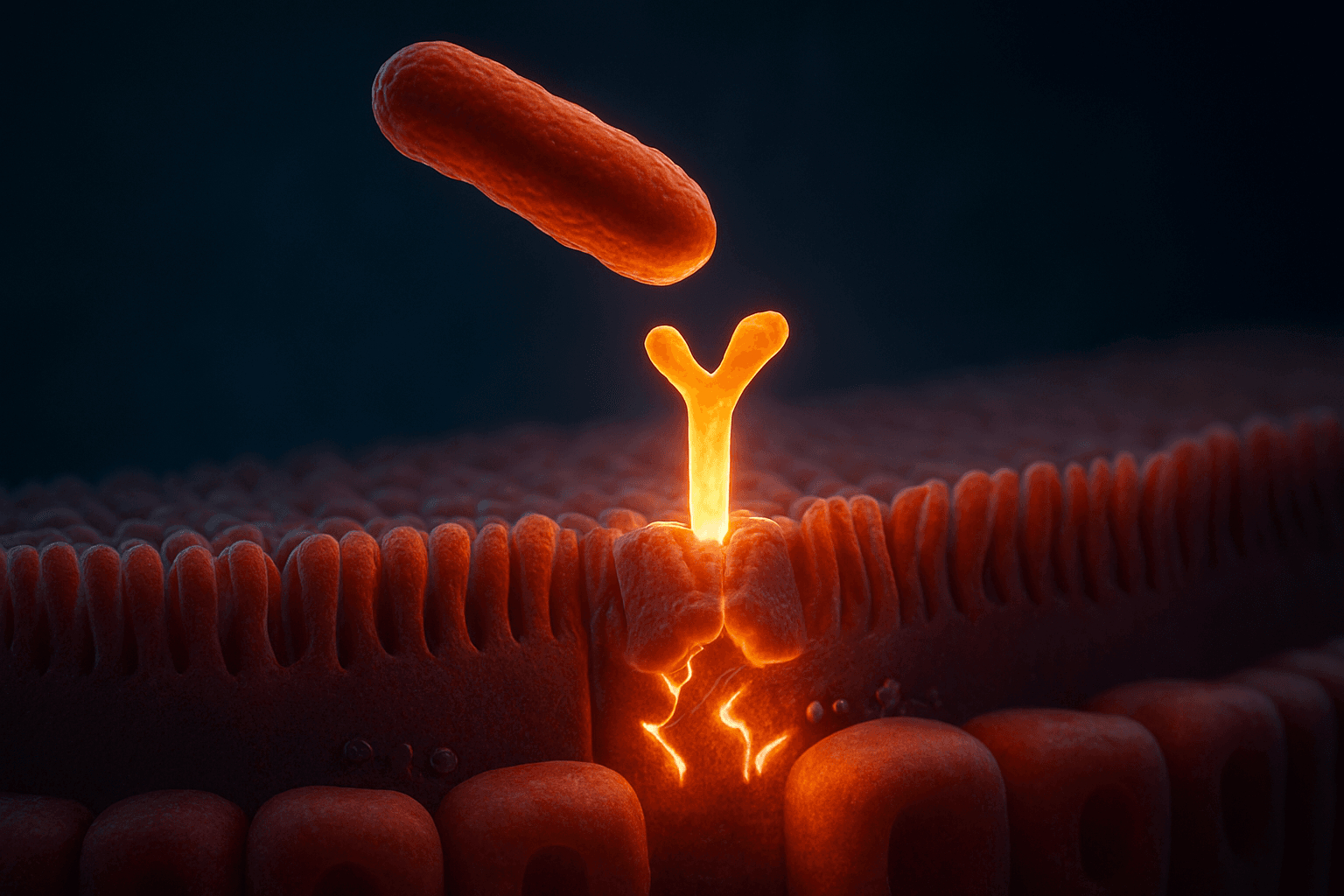
A research team led by Johns Hopkins scientists has identified how Bacteroides fragilis toxin, or BFT, gains access to colon cells. In experiments reported in Nature, the researchers found that BFT binds first to the host protein claudin-4, a step required before the toxin can damage E-cadherin, a protein that helps maintain the colon’s protective barrier.
The team used a genome-wide CRISPR screen in colon epithelial cells, systematically disabling genes to identify those necessary for the toxin’s activity. Claudin-4 emerged as the key factor: when it was removed, BFT did not attach to the cells and E-cadherin remained intact. Biophysical laboratory experiments also found that BFT and claudin-4 form a tightly bound one-to-one complex.
Earlier work from the Sears laboratory found that BFT can cut E-cadherin, drive chronic inflammation and promote colon tumor formation. Bacteroides fragilis is present in up to 20% of healthy people, though only certain strains are described as capable of triggering colon inflammation and promoting tumor growth. The newly identified claudin-4 interaction explains why the toxin could reach E-cadherin despite not appearing to bind directly to it.
In mouse models, the researchers tested a soluble claudin-4-based decoy designed to intercept BFT before it reached colon cells. The decoy protected mice from BFT-related colon damage. The result suggests a potential direction for therapies, but it is limited to animal models and no human treatment has been established.
Important molecular questions remain. Although the researchers demonstrated the BFT–claudin-4 interaction, they have not yet obtained a precise experimental structure showing how the two proteins fit together; the team said AlphaFold modeling did not fully resolve the interaction. Researchers are now examining whether small molecules or other biologic approaches could block the toxin more effectively.