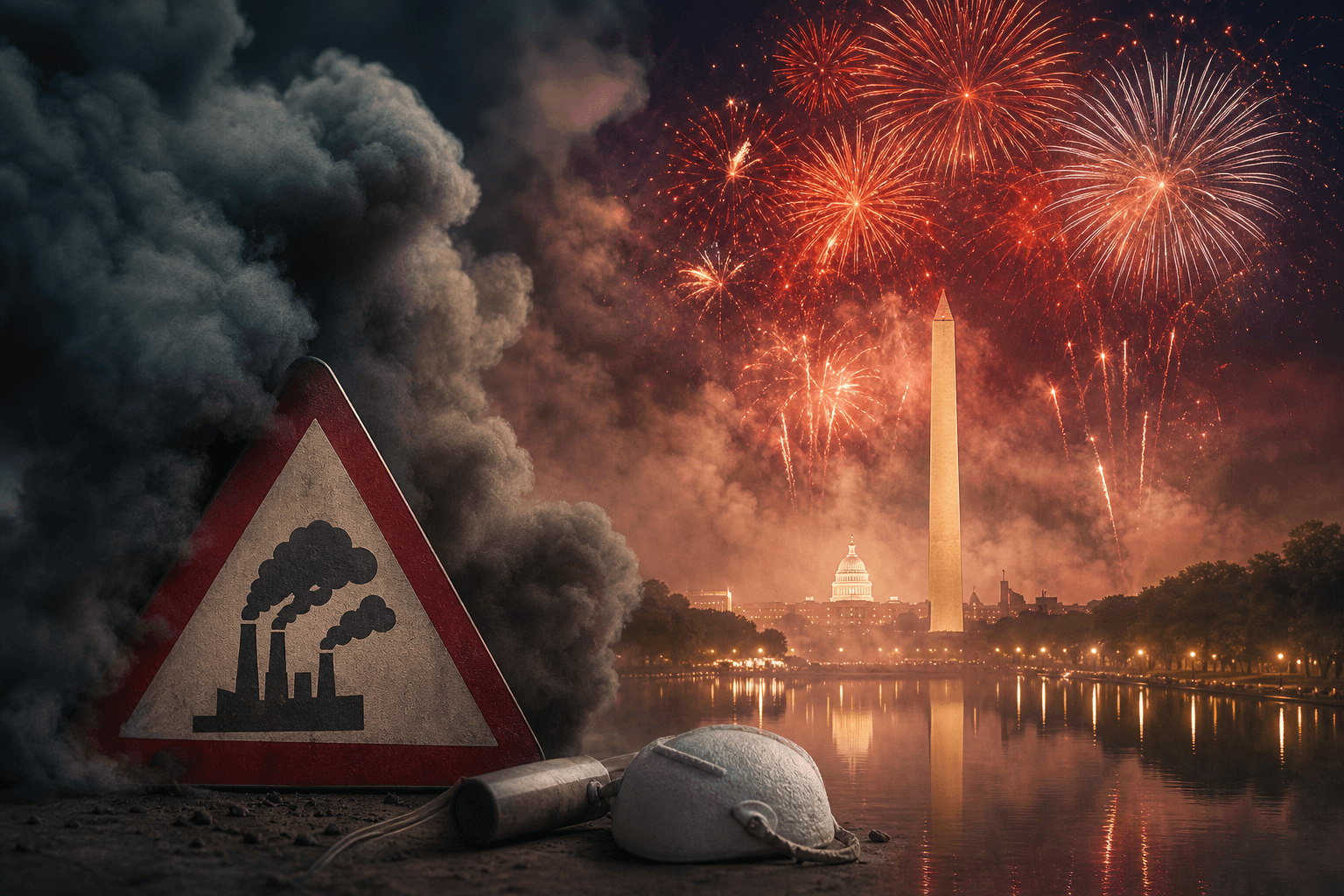
Washington is preparing for an unprecedented July 4 fireworks display tied to the nation’s 250th anniversary, with more than 850,000 pyrotechnic effects scheduled to be launched around the National Mall, West Potomac Park and the Potomac River. The National Park Service is overseeing the event, and internal agency analyses reviewed by news outlets indicate the show could produce hazardous pollution near the Mall and “very unhealthy” air conditions in central Washington for several hours after the display. Draft guidance in that analysis advised people to avoid prolonged exposure to fine particulate pollution and said N95 masks could reduce risk outdoors.
Scientists and health advocates say large fireworks shows can sharply increase PM2.5, the fine particulate matter that can penetrate deep into the lungs. Research cited by the American Lung Association found July 4 air pollution levels rise on average after fireworks displays, and researchers studying New York’s Macy’s celebration recorded brief but dramatic spikes in particulate concentrations after the event. Experts cited in recent coverage said Washington’s much larger display could produce an even greater short-term pollution surge, though they also noted that smoke from fireworks usually dissipates within about a day. Health groups say exposure can be especially problematic for people with asthma, COPD and other respiratory or cardiovascular conditions.
Environmental concerns extend beyond air quality. Experts said fireworks residue can deposit perchlorates and heavy metals into the Potomac River, with possible effects on wildlife and aquatic ecosystems. Concerns have also been raised about drought conditions in the region, which could slow the dilution of contaminants, and about disturbance to animals including ospreys in the middle of breeding season. At the same time, some researchers view the scale of the Washington show as an unusual opportunity to study the effects of fireworks pollution more closely, an area they say remains less developed than research on wildfire smoke or routine urban air pollution.
The administration has not signaled plans to recommend masking or other personal protections for spectators, and the Environmental Protection Agency said it is not responsible for permitting the event. Supporters of cleaner holiday practices, including environmental and public health advocates, argue that Americans can still celebrate Independence Day while reducing pollution by attending a single organized display instead of multiple private ones, using reusable supplies, limiting waste and considering alternatives such as drone or laser shows. Those suggestions reflect a broader debate over how to balance large-scale public celebrations with concerns about health, waste and environmental impact.