SEOUL — "I feel like a walking pharmacy," says Park Min-woo, a 45-year-old office worker in Seoul. Every morning, Park lines up his kitchen counter with an array of colorful bottles: a multivitamin, Omega-3, probiotics, milk thistle, and Korean red ginseng. Like millions of others chasing the dream of active longevity in a fast-paced society, he spends over 200,000 won a month on health functional foods.
Yet, his daily confession remains the same: "I’m still exhausted."
Park’s frustration is a common symptom of a modern health paradox. In an era where the promise of a "centenarian life" (Baek-se Geon-gang) drives a multi-billion-dollar supplement boom, many consumers are essentially pouring money down the drain. Health experts warn that without addressing fundamental bodily mechanics, those expensive pills are doing little more than creating "expensive urine."
If you are pouring a fortune into supplements but seeing zero results, you likely fall into one of these three self-sabotaging categories.
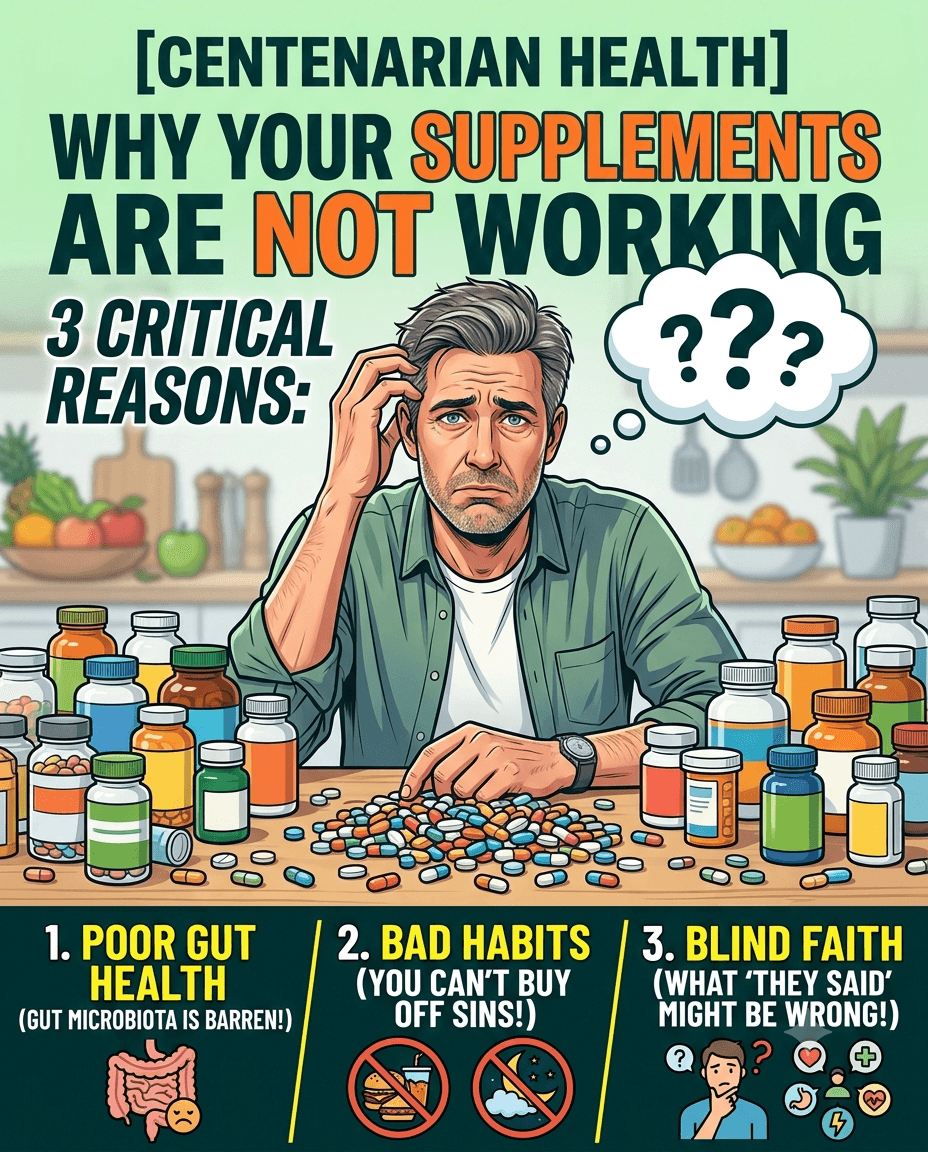
1. The Gut-Ignorers: Knocking on a Locked Door
The most critical mistake is expecting a damaged digestive system to magically absorb complex nutrients. When we swallow a capsule, its journey has only just begun; the real work happens in the small and large intestines, where nutrients are filtered into the bloodstream.
However, a modern lifestyle fueled by chronic stress, alcohol, and processed delivery foods turns the gut into a barren wasteland. When the intestinal lining is inflamed and harmful bacteria outnumber the good, the body simply cannot absorb the incoming nutrients. No matter how high the dosage or how premium the brand, the vitamins will pass right through you.
Before trying to "add" nutrients, you must first "repair" the vessel. Optimizing gut microbiota through a balanced diet is the prerequisite; otherwise, you are merely throwing gold into a bottomless pit.
2. The Habit-Traders: Buying a License to Sin
"I took my milk thistle today, so a few rounds of Soju tonight won’t hurt."
This dangerous mindset treats supplements not as a "supplement" (Nutritional Supplement), but as a spiritual indulgence to absolve lifestyle sins. Many individuals use their morning pill routine as a psychological hall pass to justify sleep deprivation, a sedentary lifestyle, and high-calorie binges.
The cold truth is that supplements are pacemakers, not the actual runners. They are designed to amplify the benefits of a solid foundation—proper sleep, regular exercise, and real food. Relying on vitamins to fix a broken lifestyle is like building a luxury mansion on a foundation of quicksand. It is bound to collapse.
3. The 'They Said' Believers: Turning the Body into a Lab Rat
With algorithms constantly feeding us video clips claiming "This one pill will change your life," health anxiety has become a lucrative business. Many consumers buy health products based on what a YouTuber or a neighbor recommends, without ever understanding their own body's chemistry.
This blind consumption often leads to dangerous supplement cocktails. For instance, taking calcium and iron simultaneously can cause them to cancel each other out, while an overdose of Vitamin C can increase the risk of kidney stones. Furthermore, certain supplements can drastically interfere with prescription medications for hypertension or diabetes, inadvertently straining the liver and kidneys.
True health optimization begins with data, not hearsay. A simple blood test at a local clinic can reveal what your body actually lacks, saving you both your money and your organs.
The Golden Rule for the Centenarian Journey
To ensure your health investment yields actual dividends, remember the rule of "Selection and Focus."
Strip away the unnecessary clutter on your desk. Focus on a clean diet, a consistent sleep schedule, and pair them with two or three targeted supplements that genuinely match your current biological needs. Longevity is not achieved by the number of pills you can swallow in one breath, but by how wisely you listen to your body.